Bilawal Bhutto Calls for Democratic Reset, Launches Sindh Youth Card for 100,000 Young People
- PPP Chairman Bilawal Bhutto-Zardari has called for a democratic reset to rebuild public confidence in parliament, the judiciary and the electoral system.
- The Sindh Youth Card programme will initially benefit 100,000 young people, offering banking facilities and access to the formal economy.
- Bilawal highlighted the construction of one million houses for flood victims and financial assistance to farmers through the Hari Card programme.
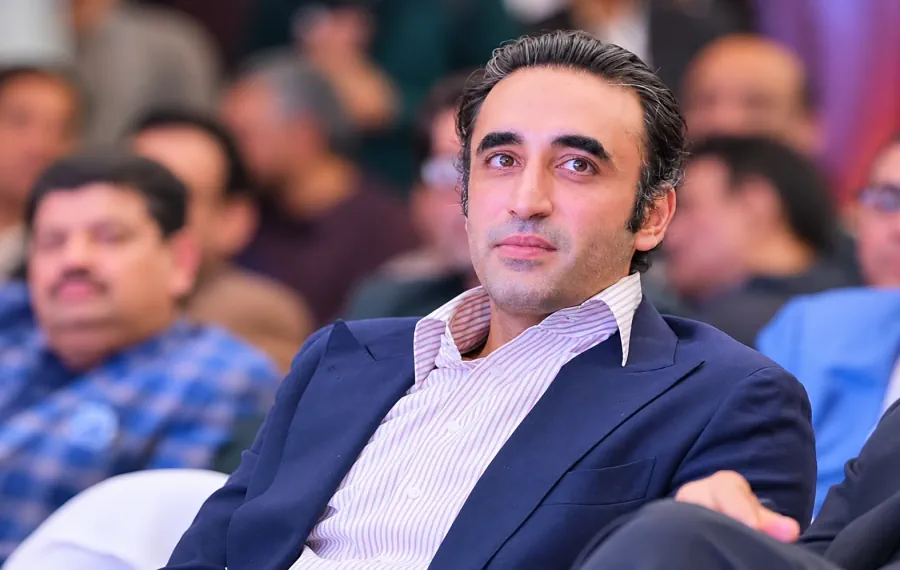
Pakistan Peoples Party (PPP) Chairman Bilawal Bhutto-Zardari has urged political leaders to work towards a democratic reset in Pakistan, warning that declining public confidence in national institutions, increasing poverty and economic uncertainty are creating serious challenges, particularly for the younger generation.
Speaking at the launch ceremony of the Sindh Youth Card in Karachi on Monday, Bilawal said restoring trust in parliament, democracy, the judiciary and the electoral process was essential to strengthening the country’s political system.
Also Read:
He expressed concern over growing disappointment among young Pakistanis, saying the country’s political leadership must recognise their frustrations and take practical measures to rebuild confidence in democratic institutions.
According to Bilawal, the proposed democratic reset should begin with restoring public trust in parliament. He also emphasised the importance of improving relations between the government and opposition, arguing that cooperation between political forces was necessary for the country to move forward.
The PPP chairman said confidence in the democratic process could not be restored without addressing concerns surrounding the judicial system and elections.
Discussing Pakistan’s economic difficulties, Bilawal warned that rising inflation and poverty were placing increasing pressure on ordinary citizens. He said the ongoing economic crisis could create additional challenges if political leaders failed to respond effectively.
Expressing his own frustration with the country’s economic circumstances, he questioned how young Pakistanis could remain hopeful when even experienced political leaders were deeply concerned about the situation.
Bilawal stressed that political stability and national unity were necessary to overcome the economic problems affecting millions of households.
The PPP chairman has repeatedly advocated a political and democratic reset in recent statements, arguing that Pakistan’s governance system has either broken down or been pushed towards failure.
He has maintained that meaningful political reforms and cooperation among democratic forces are essential to addressing the country’s continuing economic difficulties.
During his address, Bilawal also criticised the politics of hatred and division, urging politicians and influential figures to prioritise public welfare instead of engaging in prolonged political confrontations.
He called on political parties to put aside their differences and develop a broader consensus on issues affecting the country.
Bilawal warned that continued disputes among political leaders would deepen divisions within society and reduce Pakistan’s ability to respond to economic and political crises.
He said cooperation among political parties, government institutions and other stakeholders was necessary to create a more stable political environment.
Alongside his political remarks, Bilawal formally launched the Sindh Youth Card programme, describing it as an important initiative aimed at improving economic opportunities for young people across the province.
He said the Sindh government had taken the lead in introducing the programme ahead of both the federal government and other provincial administrations.
Under the first phase of the initiative, 100,000 young people will receive Sindh Youth Cards, allowing them to access financial services and participate more actively in the formal economy.
Bilawal explained that the Youth Card would operate similarly to a conventional bank card, offering beneficiaries facilities comparable to those available to bank account holders.
Participants will also receive access to a mobile banking application, enabling them to use digital financial services.
The initiative is intended to improve financial inclusion among young people, particularly those who have previously had limited access to formal banking facilities.
The PPP chairman said the programme would be expanded gradually to cover all districts of Sindh, allowing more young people across the province to benefit from the scheme.
Bilawal also highlighted the Sindh government’s housing initiatives, particularly the Apna Ghar programme introduced to support families affected by devastating floods.
He said one million houses had been constructed and provided to flood-affected families under the initiative, describing it as a major achievement in the province’s rehabilitation efforts.
According to Bilawal, the housing programme has also attracted international recognition because of its scale and the assistance provided to families who lost their homes during the floods.
The PPP chairman further discussed the Hari Card programme, which is designed to provide financial support to farmers.
He said the initiative was helping agricultural communities through financial assistance, reflecting the provincial government’s efforts to support farmers and strengthen the agricultural sector.