Hamid Mir Takes Sarcastic Swipe at Karachi Mayor Over City’s Poor Conditions
- Hamid Mir directly addressed Karachi Mayor Murtaza Wahab in a brief but pointed social media post.
- “I hope you are well. The people of Karachi are not well,” the senior journalist wrote.
- An accompanying video showed residents struggling to retrieve a motorcycle from a garbage-filled muddy drain.
- The post triggered debate over Karachi’s drainage, sanitation and municipal infrastructure, with reactions divided along political lines.
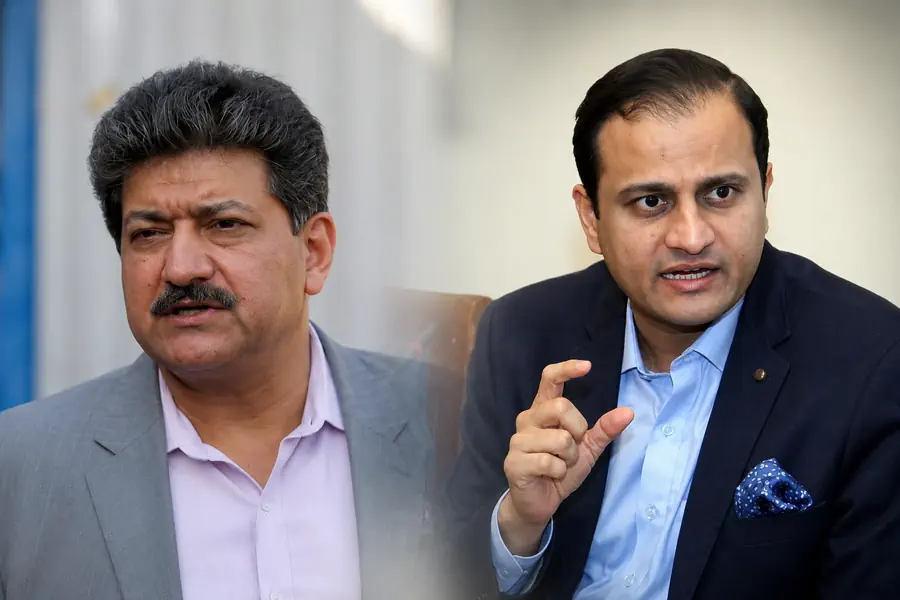
Senior journalist Hamid Mir has taken a pointed swipe at Karachi Mayor Murtaza Wahab over the conditions faced by residents of the city, using a short message and a video of deteriorating civic infrastructure to question the performance of the city administration.
جناب مئیر کراچی صاحب ! اُمید ہے آپ خیریت سے ہونگے۔ کراچی کے عوام خیریت سے نہیں ہیں pic.twitter.com/pZCckaBHjk
— Hamid Mir حامد میر (@HamidMirPAK) August 20, 2026
In a social media post on Thursday, August 20, Mir directly addressed the Karachi mayor and wrote: “Respected Mayor of Karachi Sir! I hope you are well. The people of Karachi are not well.”
Also Read:
Although the message contained only two short sentences, its wording appeared deliberately sarcastic, contrasting the mayor’s personal well-being with the difficulties being experienced by ordinary residents of Karachi.
Mir accompanied the post with a nearly two-minute video showing a troubling scene on a rundown street. In the footage, local residents can be seen attempting to pull a motorcycle out of a deep, muddy and garbage-filled drain or pit. The motorcycle appears trapped among waste, dirty water and tangled wires, while one visibly frustrated resident gestures toward the conditions and speaks to the camera.
The footage drew attention to problems that have repeatedly affected parts of Karachi, including open drains, accumulated garbage, damaged streets and inadequate drainage infrastructure. Rather than presenting a lengthy criticism or listing demands, Mir allowed the visuals to form the central part of his message.
The post came at a time when Mayor Murtaza Wahab and the city administration have been highlighting development and improvement projects in Karachi. Recent updates from the mayor have focused on initiatives including street paving, sewerage-related work, walking tracks and urban forest projects.
Mir’s post, however, presented a contrasting picture by drawing attention to conditions being faced by residents at the neighbourhood level. The message effectively questioned whether development announcements reflect the everyday experience of people living in poorly maintained parts of the city.
Notably, Mir did not mention the Pakistan Peoples Party by name, demand the mayor’s resignation or present a detailed political argument. His criticism remained focused on the contrast between those running the city and citizens dealing with basic municipal problems.
A large number of users critical of the PPP and the Sindh government amplified Mir’s message, arguing that the video reflected years of poor governance and neglect in Karachi. Some users blamed corruption and administrative failure for problems ranging from broken roads and open gutters to poor sanitation and street crime.
An MQM-linked former provincial assembly member also responded by highlighting a wider range of problems in the city, including children falling into open drains, mobile phone snatching, inadequate cleanliness and poor road conditions outside affluent areas. The response also criticised delays in development projects and accused the provincial rulers of failing Karachi despite being in power for many years.
Other users, however, challenged Mir’s criticism and accused sections of the media of selectively highlighting Karachi’s problems. Some questioned why similar attention was not given to civic and environmental problems in cities and districts elsewhere in the country, including Rawalpindi, Multan and Layyah.
Several users directly tagged Mayor Murtaza Wahab and questioned the progress being made in Karachi, further widening the debate around the condition of municipal services.