Gold Prices Plunge 32% From Record High, Raising Concerns Over Safe-Haven Investment
- Gold prices have fallen 32% from their January record of $5,594.82 per ounce, dropping below $3,800 for the first time since September 2025.
- Rising US Treasury yields, a stronger dollar and expectations of further Federal Reserve interest rate increases have put pressure on the precious metal.
- The sharp decline has resulted in substantial losses for investors who relied on gold to protect their retirement savings.
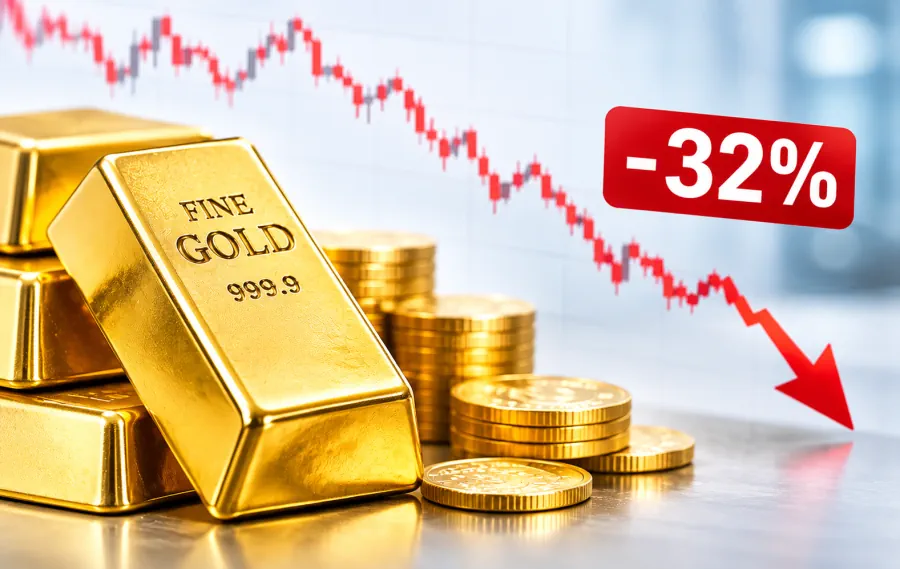
Gold prices have fallen sharply in international markets, losing 32% of their value from January’s record high as rising interest rates and a stronger US dollar reduce demand for the precious metal traditionally considered a safe-haven investment.
Spot gold dropped below $3,800 per ounce on Tuesday, its lowest level since September 2025, after reaching an all-time high of $5,594.82 on January 29.
Also Read:
The decline has raised concerns among investors who increased their exposure to gold during its record-breaking rally, particularly retirees who considered the metal a relatively secure way to preserve their savings.
Gold has historically attracted investors during periods of economic uncertainty, inflation and financial market instability. However, the latest selloff has demonstrated that the precious metal can also experience substantial price fluctuations.
The SPDR Gold Shares exchange-traded fund (GLD), a widely held investment fund that tracks gold prices and is commonly included in retirement portfolios, has declined approximately 11% this year.
Investors who purchased gold near its January peak have faced particularly heavy losses.
For example, a 68-year-old investor who allocated $400,000 of a $1.2 million retirement portfolio to gold near its record high would now hold an investment worth approximately $271,000.
That represents a loss of around $129,000, reducing the value of what was intended to be a relatively secure portion of the investor’s retirement savings.
The decline has been driven by several developments in the US economy, including expectations that the Federal Reserve may introduce further interest rate increases to control inflation.
The yield on the benchmark 10-year US Treasury bond has climbed to 5.07%, making government securities more attractive to investors seeking returns.
Short-term US Treasury bills are also offering yields of approximately 4%, encouraging some investors to reduce their gold holdings in favour of interest-paying assets.
Unlike bonds and Treasury bills, gold does not generate regular interest income. Higher interest rates can therefore reduce its appeal when investors have access to alternative investments offering comparatively attractive returns.
The US dollar has also strengthened to an 18-month high, adding further pressure on international gold prices.
A stronger dollar generally makes gold more expensive for buyers using other currencies, which can weaken demand in global markets.
Expectations surrounding the Federal Reserve’s next monetary policy decision have contributed to the uncertainty.
According to the CME FedWatch tool, traders are pricing in a 10% probability that the US central bank will raise interest rates by 50 basis points at its next meeting in December.
The possibility of further monetary tightening has encouraged investors to reassess their exposure to gold, particularly those holding a large proportion of their savings in the precious metal.
The selloff has also affected gold-backed investment funds, which provide investors with exposure to bullion prices without requiring them to purchase and store physical gold.
For investors in Pakistan, international gold prices remain an important factor in determining domestic bullion rates, alongside movements in the Pakistani rupee against the US dollar.