PM Shehbaz Says Civil-Military Cooperation Can Help Accelerate Pakistan’s Economic Growth
- Prime Minister Shehbaz Sharif says coordination between the civilian and military leadership has created new opportunities for economic development and investment.
- The government is prioritising export-led growth, electric vehicle production, private-sector investment and reforms to strengthen Pakistan’s economy.
- American companies operating in Pakistan have generated Rs956 billion in revenue, invested over Rs74 billion in five years and supported nearly two million jobs.
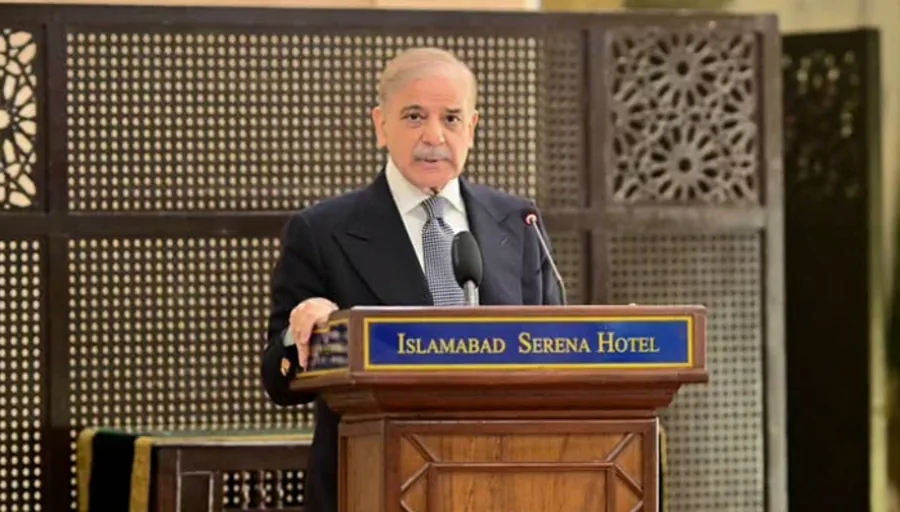
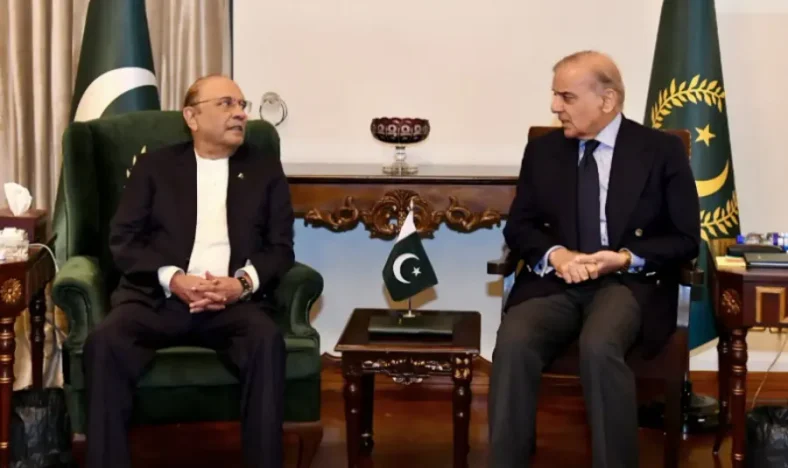
Prime Minister Shehbaz Sharif on Thursday said close cooperation between Pakistan’s civilian and military leadership had created an opportunity to strengthen the economy, attract investment and accelerate national development.
Addressing a gathering of the Pakistan-American Business Council (PABC), the prime minister said Pakistan needed to build on recent economic improvements by expanding exports, encouraging private investment and implementing reforms to improve business conditions.
Also Read:
He stressed that export-led growth remained the only sustainable option for Pakistan’s economy and said the government was committed to strengthening trade relations with international partners, particularly the United States.
“It has to be export-led, nothing else, export-led growth,” the prime minister said.
Shehbaz Sharif said Pakistan was exploring opportunities to increase imports of American agricultural products, including soybeans, while seeking greater access to the US market for Pakistani surgical instruments, sports goods and other manufactured products.
He assured American investors that the government would take practical steps to address their concerns, particularly those involving bureaucratic procedures, unnecessary regulations and delays in official approvals.
The prime minister said he was prepared to listen to investors’ complaints and establish a mechanism to resolve legitimate grievances without unnecessary delays.
He praised American companies for maintaining their business operations in Pakistan during challenging economic conditions and acknowledged their contribution to employment, investment, exports and government revenue.
Referring to Pakistan’s economic recovery, Shehbaz Sharif said the country’s combined foreign exchange reserves held by the central bank and commercial banks had reached approximately $27 billion.
He recalled that Pakistan faced a serious risk of default in 2023 but had since made progress in stabilising its financial position.
According to the prime minister, inflation had declined from approximately 32% to 11.5%, while the policy interest rate had fallen from 23.5% to 12%.
He attributed the improvement to fiscal discipline, economic reforms and coordinated efforts by government institutions despite continuing regional and international challenges, including the ongoing Gulf crisis.
The prime minister acknowledged that ordinary Pakistanis, particularly low-income families, had faced considerable difficulties during the economic adjustment period.
He said the government had introduced targeted subsidies to support deserving households and reduce the financial burden on vulnerable communities.
Shehbaz Sharif also highlighted tax relief worth Rs400 billion provided in the current federal budget to encourage economic activity and investment.
He said the International Monetary Fund (IMF) had expressed confidence in Pakistan’s economic management and reform measures.
The prime minister added that he personally reviewed progress on major economic decisions with his team every week to ensure their timely implementation.
Discussing the role of businesses in economic development, he said the government should concentrate on creating favourable conditions for entrepreneurs rather than directly engaging in commercial activities.
He emphasised that the private sector must take the lead in investment, industrial expansion, job creation and export development.
The prime minister said reforms had been introduced in the Export Development Fund, with private-sector entrepreneur Omar Saeed appointed to lead the institution and improve its effectiveness.
He added that the Export-Import Bank of Pakistan had received Rs4 billion to provide subsidised financing to potential exporters and support businesses seeking access to international markets.
Shehbaz Sharif also announced that the government was encouraging electric vehicle manufacturing as part of efforts to reduce Pakistan’s dependence on imported petroleum products.
He said the decision to promote electric vehicles and discourage conventional internal combustion engine vehicles had been taken following extensive consultations with relevant ministries.
The prime minister criticised the performance of Pakistan’s automobile industry, saying manufacturers had received government protection and incentives for decades without achieving the expected level of local production.
He noted that the industry had previously committed to achieving 80% localisation of automobile components but had managed to reach only around 50%.
According to the prime minister, increasing electric vehicle production would help reduce fuel imports, save foreign exchange, improve industrial efficiency and support environmental protection.
Highlighting other investment opportunities, Shehbaz Sharif identified agriculture, livestock, information technology, artificial intelligence, manufacturing and mineral resources as sectors with considerable potential.
He said work on developing Pakistan’s mineral resources had gained momentum over the past two to three years after remaining under discussion for decades.
The prime minister also emphasised the importance of Pakistan’s young population, saying millions of young people needed technical and vocational training to participate in emerging industries.
He referred to government initiatives involving professional training programmes, laptops, iPads and financial stipends to help young people acquire skills and improve their employment prospects.
Shehbaz Sharif described agriculture and livestock as particularly important sectors for increasing productivity and strengthening the national economy.
He said the government had separated the livestock department from the Ministry of Agriculture and established it as an independent unit to improve its management and performance.
Private-sector specialists and international consultants from Turkiye and Brazil were also being engaged to introduce modern practices and improve livestock production, he added.
The prime minister further outlined measures taken to address inefficiency and corruption in public institutions.
He cited the dissolution of the Pakistan Public Works Department (PWD) as part of efforts to eliminate unnecessary administrative structures and improve accountability.
He also referred to changes in the government’s subsidised food distribution system, which had been replaced with direct digital cash transfers to eligible families.
According to Shehbaz Sharif, the government had distributed Rs27 billion through digital transactions during the current year, allowing beneficiaries to receive financial assistance without waiting in long queues.
Earlier, Pakistan-American Business Council President Adnan Asad presented details of the contribution made by American businesses operating in Pakistan.
He said approximately 80 American companies were represented at the gathering, including 60 existing council members and another 20 companies seeking membership.
According to Asad, all participating companies were profitable and satisfied with their business operations in Pakistan.
He said the combined revenue of these companies stood at approximately Rs956 billion, while their capital investment over the previous five years had exceeded Rs74 billion.
The companies directly employed around 96,000 people and indirectly supported nearly two million jobs across Pakistan, he added.
Asad said American businesses represented at the event had reinvested Rs32 billion in Pakistan during the past two years.
Their combined exports amounted to approximately $123 million, while their contribution to the national exchequer reached around Rs185 billion.
He also shared details of corporate social responsibility programmes undertaken by the participating companies.
According to Asad, these businesses had collectively planted more than 500 million trees and provided healthcare assistance to approximately 12 million patients.
They had also supported 15 million people through food assistance programmes during flood-related relief operations.
He said around 300,000 students were benefiting from scholarship programmes supported by the companies, while their combined spending on corporate social responsibility initiatives stood at nearly Rs3 billion.
Prime Minister Shehbaz Sharif appreciated the contribution of American businesses and assured the council that the government would continue working with investors to remove obstacles, increase exports and encourage industrial development.