Trump says Iran war is ‘effectively over’ militarily as US blockade stays in place
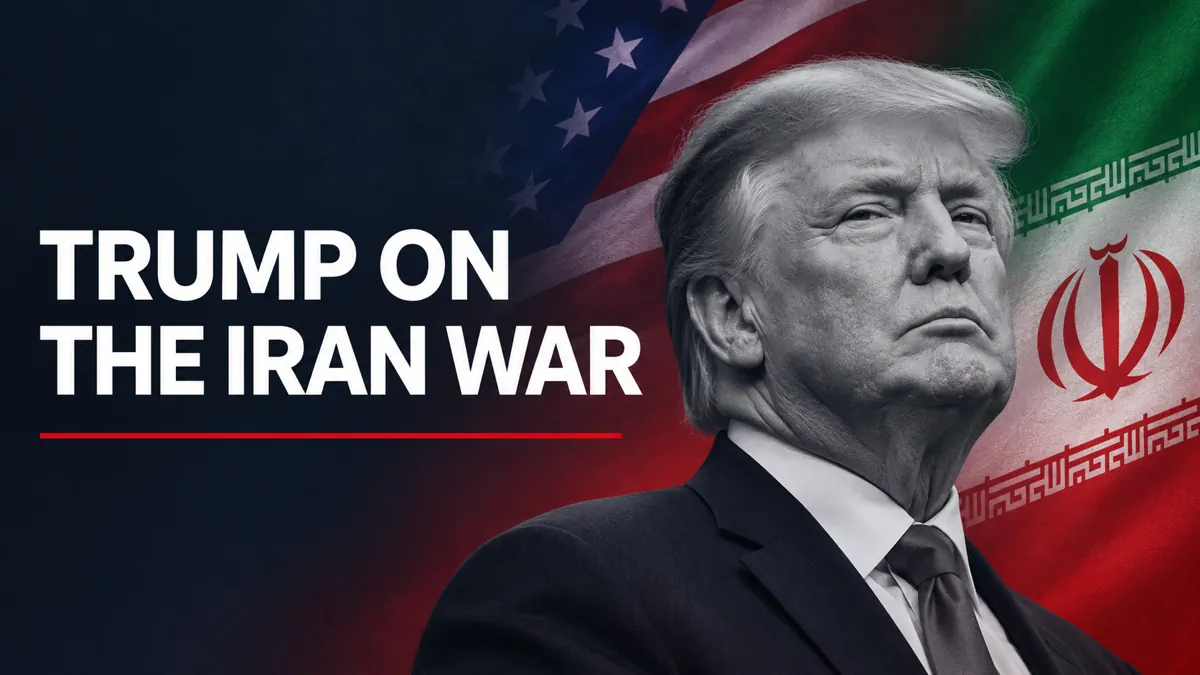
U.S. President Donald Trump, facing the political fallout of last week’s midterm elections in which Democrats seized both chambers of Congress, declared on Monday that the eight-month war against Iran is “militarily effectively over.” Speaking after a meeting with Qatari Prime Minister Sheikh Mohammed bin Abdulrahman Al Thani, Trump said Washington would maintain the “status quo” — including the naval blockade of Iranian ports — largely at the behest of Gulf neighbors, while remaining “locked and loaded” for any resumption of major strikes.
- Trump called the war militarily “effectively over” but said US forces were ready to strike again.
- Tehran denied talks were under way and demanded an end to the US blockade and sanctions.
- Pakistan and Qatar mediated, Turkey urged restraint, and China explored a summit with US and Russian leaders.
“Iran, militarily, is effectively over,” Trump told reporters at the White House. “We’re just keeping it the status quo, and we’re doing that really at the behest of countries that are their neighbors.” He cited positive momentum toward a deal, hoped the conflict would end “fairly soon,” and repeated that Iran would never obtain a nuclear weapon, while insisting U.S. forces remain positioned for rapid action if needed. The remarks mark a shift after Republicans’ heavy losses, which Trump and Vice President JD Vance partly attributed to the unpopular war and its impact on fuel prices and the global economy.
Also Read:
Iran’s Defiant Response
Tehran rejected Trump’s framing as “fake news” and imaginary negotiations. Major General Mohsen Rezaei, secretary of Iran’s Supreme National Security Council, demanded that the United States “surrender to Iran’s seven conditions.” These reportedly include ending hostilities on all fronts (including Lebanon), lifting the U.S. naval blockade, immediately reopening the Strait of Hormuz, ending economic sanctions, releasing frozen Iranian assets, and ceasing interference in Iran’s internal affairs.
Iranian officials have warned of a geographically unrestricted response if the U.S. resumes large-scale attacks, with Foreign Minister Abbas Araghchi earlier stating that forces could “rain down hell.” Hardliners, viewing Trump as weakened by the midterms, have pressed Supreme Leader Mojtaba Khamenei’s line against any “inclination towards submission.” Limited exchanges of strikes, including recent U.S. action near Qeshm Island, have continued even as both sides signal interest in preserving diplomatic channels.
Turkey’s Call for Restraint
Turkish President Recep Tayyip Erdogan said he had spoken with Trump in recent days and conveyed Ankara’s strong opposition to any new wave of attacks. “We do not want a new wave of attacks on Iran and our region to be dragged into further instability,” Erdogan told reporters returning from Azerbaijan. He stressed that problems must be solved through dialogue and diplomacy, offered Turkey’s readiness to help open channels, and noted that the costs of war fall on a wide geography stretching from Turkey through the Gulf, Iraq, Syria, Europe and Asia.
Turkish intelligence chief Ibrahim Kalin has indicated that regional mediators, including Turkey, are working on frameworks that could pair sanctions relief and access to frozen funds with nuclear commitments and reopening of Hormuz.
Pakistan’s Central Mediation Role
From Islamabad’s perspective, Trump’s latest comments create space for the quiet but high-profile mediation that Pakistan has pursued for months. Field Marshal Asim Munir and Prime Minister Shehbaz Sharif have repeatedly been praised by Trump for facilitating contacts, including earlier ceasefire extensions. Pakistan hosted key talks that produced the June 2026 Islamabad Memorandum of Understanding (MoU), which called for an immediate end to military operations on all fronts (including Lebanon), reopening of Hormuz, phased lifting of the blockade, a 60-day window for a final deal, sanctions relief, and a major reconstruction plan.
Although the MoU later frayed amid disagreements over implementation and nuclear issues, Pakistan remains “cautiously optimistic.” Army spokesman Lt. Gen. Ahmed Sharif Chaudhry has highlighted Munir’s recent visits to Tehran alongside Saudi and Turkish officials. The Foreign Office has reiterated support for any successful mediation (including Qatar’s), described nuclear issues as a core sticking point, and pointed to Israel as a potential spoiler whose expansionist actions undermine regional peace. Officials have stressed Pakistan’s role in bringing the two sides together after decades without direct high-level contact, while preparing for possible broader U.S. engagement beyond the Trump White House after the midterms.
China and Russia: Calculated Neutrality and Possible Trilateral
China confirmed it is in communication with relevant parties about a possible meeting involving Trump, President Xi Jinping and President Vladimir Putin during next week’s APEC summit in Shenzhen, which Trump has said he hopes will address ending the Iran war (and broader denuclearization). Beijing has consistently urged dialogue, citing the conflict’s damage to energy security and regional stability; China is a major buyer of Iranian oil. Russia has publicly maintained a neutral stance while focusing on Ukraine, though reports over the course of the war have pointed to limited intelligence and technical support to Tehran. Both powers have condemned U.S.-Israeli strikes as violations of sovereignty while avoiding direct military involvement.
What’s Next: Analysis
Trump’s post-midterm posture — status quo with blockade intact, no immediate major offensive, but forces ready — reflects domestic political constraints more than a decisive military victory. Gulf partners, already hit by Iranian and proxy attacks and economic disruption, favor de-escalation. For Pakistan, this is an opportunity to revive or expand the Islamabad channel, potentially alongside Qatar and Turkey, while managing risks of escalation or spoilers.
Key variables in the coming days and weeks include progress (or lack thereof) in mediated talks, any breakthrough at the prospective Trump-Xi-Putin meeting, Iran’s willingness to show flexibility on its seven conditions versus U.S. insistence on nuclear constraints, and whether limited strikes remain contained. A comprehensive deal would lower global energy prices and stabilize the region; prolonged status quo or renewed fighting would continue to impose costs on Pakistan’s neighborhood, energy markets and diplomatic positioning.
Islamabad has framed its approach as consistent with a preference for dialogue over war and non-partisan engagement with Washington. With Democrats now controlling Congress, the durability of the personal channel with Trump will face tests, but Pakistan’s established mediation record and regional relationships leave it well-placed to keep pressing for a negotiated end.