North Korea Tests New High-Speed Torpedo System, Plans Naval Deployment in 2027
- North Korea has successfully tested a new high-speed torpedo system in the East Sea, according to state media.
- The advanced underwater weapon is expected to enter service with the North Korean navy in early 2027.
- The test follows recent trials of AI-assisted torpedoes, attack drones and hypersonic missiles as Pyongyang strengthens its military capabilities.
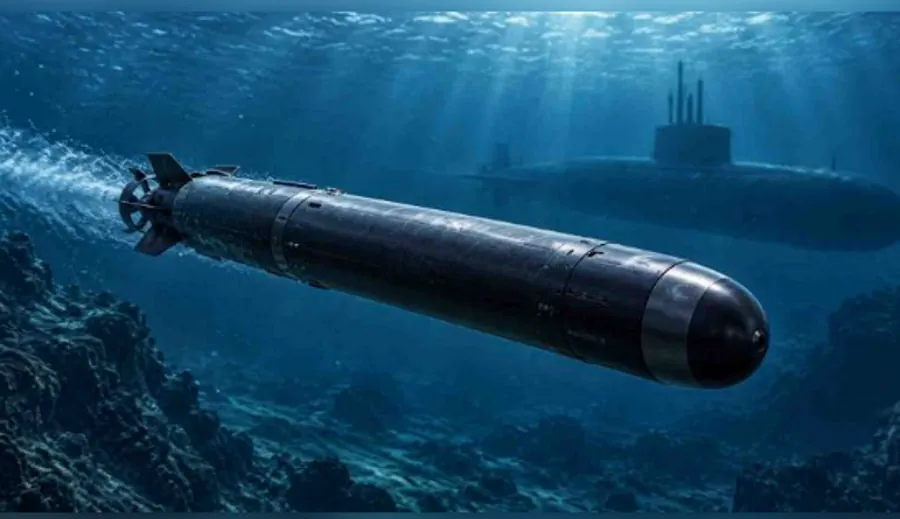
North Korea has conducted a test of a newly developed high-speed torpedo system as the nuclear-armed country accelerates efforts to modernise its navy and expand its underwater strike capabilities amid continuing tensions on the Korean Peninsula.
According to the state-run Korean Central News Agency (KCNA), the weapon was tested on Monday in the East Sea, also known as the Sea of Japan, with plans to introduce the system into operational service with the North Korean navy in early 2027.
Also Read:
The latest trial forms part of a broader military modernisation programme under leader Kim Jong Un, whose government has increasingly focused on strengthening maritime defence capabilities and developing more advanced naval weapons.
KCNA reported that the test was conducted by the Academy of Defence Sciences, the Missile Administration and the Torpedo Weapon Research Bureau to evaluate the combat effectiveness of the newly developed weapon system.
The state news agency described the trial as part of ongoing defence research activities aimed at advancing the technological capabilities of North Korea’s military equipment.
However, Pyongyang did not disclose technical specifications, including the torpedo’s maximum speed, operational range, guidance technology or the type of platform used to launch it.
The announcement follows a series of weapons tests conducted by North Korea in recent weeks, including trials involving attack drones, precision-guided underwater weapons and an intermediate-range hypersonic missile.
These developments highlight Pyongyang’s growing emphasis on improving its ability to conduct military operations at sea, particularly through advanced torpedoes and other underwater strike systems.
Last month, North Korea announced a separate test of its Zam-2.0 torpedo, which it described as a super-speed precision-guided underwater weapon incorporating artificial intelligence technology.
According to KCNA, the Zam-2.0 system uses AI-assisted target detection and guidance capabilities designed to improve its effectiveness against enemy vessels.
North Korean authorities claimed that the programme had undergone more than 180 tests over five years, focusing on improvements to propulsion efficiency, rocket-powered movement and other technical features.
The tests were reportedly intended to verify technologies that could enable the weapon to travel at higher speeds while maintaining greater accuracy during underwater operations.
Military analysts have suggested that incorporating artificial intelligence into torpedo guidance systems could potentially allow such weapons to adjust their movements, avoid defensive countermeasures and respond to changing underwater conditions.
AI-assisted targeting could also improve a torpedo’s ability to track moving vessels and make limited autonomous navigation decisions, although the actual capabilities of North Korea’s systems have not been independently verified.
Modern torpedoes are designed to strike ships and submarines below the waterline, making them important weapons in naval warfare. High-speed systems can reduce the time available for targeted vessels to detect incoming threats and deploy defensive measures.
North Korea’s expanding interest in underwater weapons is closely connected to its wider naval development programme, which includes the construction of larger warships and the introduction of new surface and underwater combat technologies.
In 2025, Pyongyang unveiled a new 5,000-tonne destroyer, representing a significant development in its efforts to strengthen the capabilities of its naval fleet.
At the time, Kim Jong Un indicated that North Korea was working on several additional naval weapon systems, including advanced surface-based weapons and new torpedo technologies.
The destroyer programme is part of Pyongyang’s attempt to modernise a navy that has traditionally relied heavily on smaller vessels and submarines.
The latest torpedo announcement comes against a backdrop of persistent security tensions involving North Korea, South Korea, Japan and the United States.
Pyongyang has continued developing and testing advanced military systems despite international concerns over its weapons programmes, presenting these activities as necessary measures to strengthen national defence.
KCNA has not released detailed performance data from Monday’s trial, and the reported results and planned deployment schedule remain based on North Korean official statements.