Tarar Hits Back at Bilawal, Says Debate on New Provinces and Governance Cannot Be Stopped
- Information Minister Attaullah Tarar criticised the PPP for being part of the federal government while adopting an opposition-like stance.
- Tarar defended public consultation through a referendum, saying citizens had the right to debate provincial governance and administrative reforms.
- Bilawal Bhutto-Zardari opposed any division of Sindh without public consent but expressed support for a South Punjab province and provincial status for Gilgit-Baltistan.
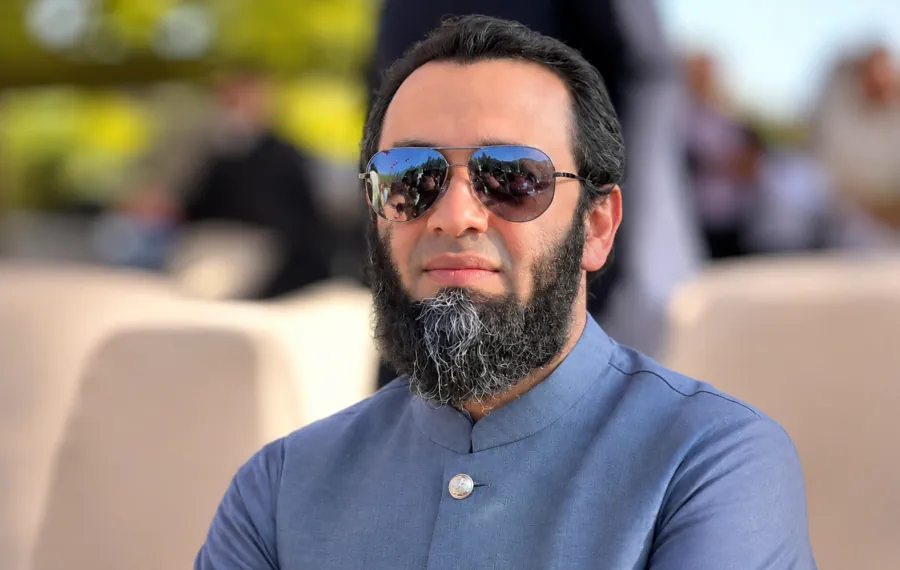
Federal Minister for Information and Broadcasting Attaullah Tarar has responded sharply to Pakistan Peoples Party (PPP) Chairman Bilawal Bhutto-Zardari, saying political parties cannot enjoy the benefits of being part of the government while simultaneously positioning themselves as the opposition.
Tarar’s remarks came in response to Bilawal’s press conference in Karachi on Tuesday, where the PPP chairman called for a political reset and reiterated his party’s opposition to any attempt to divide Sindh against the wishes of its people.
Also Read:
The information minister defended the ongoing debate over the creation of new provinces and improvements in provincial administration, maintaining that discussions concerning public welfare, governance and administrative reforms could not be restricted.
He said seeking public opinion through a referendum was a legitimate constitutional mechanism and questioned why political leaders should object to consulting citizens on matters directly affecting them.
Tarar maintained that the people had every right to express their views on the administrative structure of their provinces and that no political party could prevent such discussions.
Questioning the PPP leadership’s position, the minister said it was contradictory to remain part of the government, benefit from that association and simultaneously adopt the political posture of an opposition party.
He argued that decisions concerning the country’s administrative future should reflect public aspirations rather than the preferences of individual political leaders.
“Representatives come from the people, not the other way around,” Tarar said, stressing that elected representatives derived their authority from the public and were accountable to those who elected them.
The minister said any major decision involving Sindh, Punjab, Balochistan or Khyber Pakhtunkhwa should take into account the views of the people living in those provinces.
He maintained that a referendum provided a means of determining public sentiment and questioned why anyone would oppose allowing citizens to express their preferences through a democratic process.
Tarar also challenged what he described as attempts to discourage discussion on provincial restructuring, asking why political unrest should be encouraged instead of engaging in a debate about the public’s wishes.
He said citizens could not be denied their democratic rights or prevented from discussing administrative changes that could improve governance and the delivery of public services.
The information minister reiterated that debate over provincial affairs, public welfare and administrative reforms must remain open, with citizens having the opportunity to express their opinions on decisions affecting their future.
Earlier, addressing a Meet the Press session at the Karachi Press Club, Bilawal Bhutto-Zardari called for a fundamental political reset, arguing that Pakistan’s political system had not deteriorated on its own but had been deliberately weakened.
The PPP chairman said the solutions being proposed to address the country’s political difficulties were misguided and warned that an apolitical approach would not resolve problems rooted in the political system.
He maintained that any meaningful reset must be political in nature and should involve all stakeholders taking responsibility for restoring public confidence in democratic institutions.
Bilawal said the responsibility for the current state of affairs could not be attributed to a single institution or political actor, as multiple stakeholders had contributed to the situation.
He emphasised that rebuilding trust should begin in Parliament, where differences of opinion must be respected rather than treated as obstacles to governance.
According to the PPP chairman, political disagreement was an essential feature of democracy, and the parliamentary system should provide space for competing views instead of attempting to suppress them.
Turning to the debate over new provinces, Bilawal strongly opposed any proposal to divide Sindh without the consent of its people.
He warned that political figures hoping to become chief ministers of newly established provinces in Sindh would not see those ambitions fulfilled.
However, the PPP chairman distinguished his opposition to dividing Sindh from his position on the proposed creation of a South Punjab province.
Bilawal said he would support the establishment of South Punjab as a separate province if the Punjab Assembly adopted a resolution in favour of the proposal.
He also endorsed the longstanding demand for Gilgit-Baltistan to be granted constitutional provincial status, maintaining that decisions regarding provincial status and administrative boundaries should reflect the aspirations of the populations concerned.
The PPP chairman further argued that the constitutional and democratic requirements governing the creation of new provinces had not been followed in the proposals currently under discussion.
He maintained that changes to provincial boundaries must proceed through the appropriate constitutional process and should not be pursued without the involvement and consent of the people affected.