Pakistani Rupee Gains Against US Dollar, Closes at Rs 276.55 in Interbank Market
- The Pakistani rupee strengthened slightly against the US dollar on Wednesday, November 18, 2026, closing at Rs 276.55 in the interbank market.
- The local currency gained one paisa compared with Tuesday’s closing rate of Rs 276.56 per dollar.
- The US dollar remained near a 19-month high internationally, while global oil prices declined amid expectations of another Federal Reserve interest rate increase.
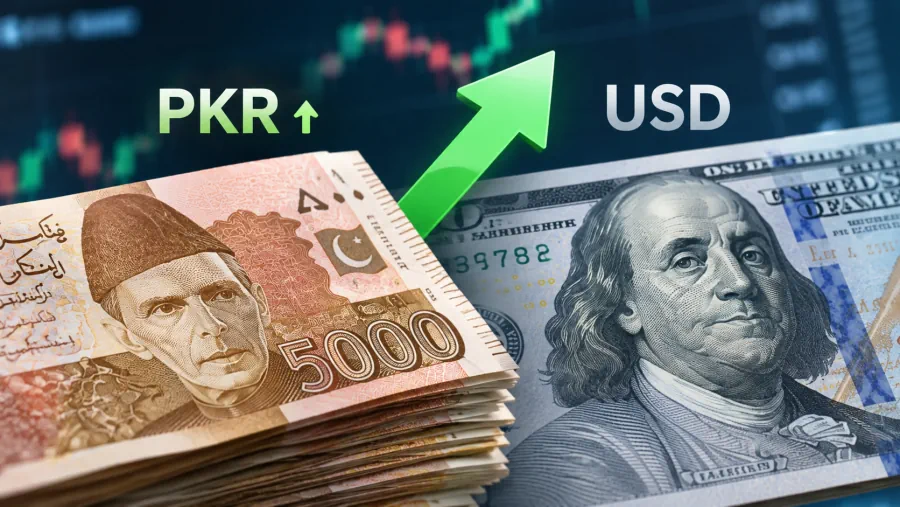
The Pakistani rupee continued its modest recovery against the US dollar on Wednesday, November 18, 2026, registering a marginal improvement in the interbank market despite continued strength in the American currency internationally.
According to the latest interbank exchange rates, the rupee closed at Rs 276.55 against the US dollar, appreciating by Re0.01 compared with the previous trading session.
Also Read:
On Tuesday, November 17, the Pakistani currency had settled at Rs 276.56 per dollar, reflecting a slight but continued improvement in its value.
The latest movement indicates relative stability in Pakistan’s interbank foreign exchange market, with the rupee recording only a minor change against the dollar during the session.
The exchange rate remains an important indicator for Pakistan’s economy, particularly because the country relies on imported petroleum products, machinery, industrial raw materials and other essential commodities that are largely purchased in US dollars.
Even small movements in the rupee-dollar exchange rate are closely monitored by importers, exporters, businesses and financial institutions because of their potential impact on import costs and international payments.
While the Pakistani rupee registered a marginal gain, the US dollar remained strong in international currency markets, trading close to its highest level in 19 months.
The dollar’s strength was supported by recent US economic data and statements from Federal Reserve officials, which reinforced expectations that the American central bank could increase interest rates again in December.
The US dollar index, which measures the currency’s performance against a basket of major international currencies, increased by 0.05% to 103.66 on Wednesday.
During overnight trading, the index touched 103.78, its highest level since April 2, 2025, highlighting the continued strength of the American currency.
The dollar’s upward movement followed economic figures released on Tuesday showing a moderate increase in US retail sales during October.
The data strengthened expectations that the Federal Reserve may introduce another interest rate increase to control inflationary pressures.
Investors are now awaiting additional economic indicators, including US housing starts data and statements from Federal Reserve officials, for further guidance on the direction of American monetary policy.
Market attention is also focused on the minutes of the Federal Reserve’s previous policy meeting, scheduled for release on Thursday. The central bank had kept interest rates unchanged at that meeting.
According to CME Group’s FedWatch tool, financial markets are expecting a 25-basis-point interest rate increase in December.
Higher US interest rates generally support the dollar by making dollar-denominated investments more attractive to international investors, potentially placing pressure on currencies in emerging economies, including Pakistan.
Other major international currencies recorded minor declines against the dollar during Wednesday’s trading.
The euro weakened by 0.12% to $1.0984, while the Japanese yen declined by 0.06% to 159.46 against the dollar.
The British pound also slipped by 0.06% to $1.32, reflecting the broader strength of the American currency.
Meanwhile, the Australian dollar remained near its lowest level in approximately 10 months.
The Japanese yen weakened despite trade figures showing that Japan’s exports reached a record monthly value in October, supported by strong international demand for semiconductor-related products.
Alongside currency market developments, international crude oil prices declined on Wednesday following reports of increased petroleum inventories in the United States.
Oil prices are particularly important for Pakistan because the country imports a substantial portion of its petroleum requirements, making international energy prices a significant factor in its import bill and foreign exchange demand.
Brent crude futures fell by 61 cents, or 0.7%, to $92.53 per barrel at 0550 GMT.
Similarly, US West Texas Intermediate (WTI) crude futures declined by $1.24, or 1.4%, to $84.77 per barrel.
The decrease followed data indicating that US crude oil and fuel inventories increased during the previous week, raising concerns about demand and supply conditions in the international energy market.
However, the decline in oil prices remained limited due to continuing tensions involving the United States and Iran, along with disruptions to shipping activities through the Strait of Hormuz.
The strategically important waterway handles a substantial share of global oil shipments, and disruptions in the region can affect international petroleum supplies and prices.
For Pakistan, movements in global oil prices and the US dollar remain closely connected to the country’s external trade position, as changes in energy import costs can influence foreign exchange requirements.
The rupee’s latest closing rate of Rs276.55 per dollar represents a one-paisa improvement from the previous session, with domestic currency market participants continuing to monitor international dollar movements, oil prices and US monetary policy developments.