Pakistan Suffers $387 Million Export Losses as US-Iran Conflict Disrupts Gulf Trade
- Pakistan recorded an estimated $387 million in export losses between March and October 2026 due to trade disruptions linked to the US-Iran conflict, according to official documents.
- Rising shipping costs, higher maritime insurance premiums, port congestion and airspace restrictions have affected trade routes connecting Pakistan with Gulf countries.
- Exports of textiles, garments, construction materials and agricultural products have faced disruptions, while higher transportation costs and container shortages have squeezed exporters’ profit margins.
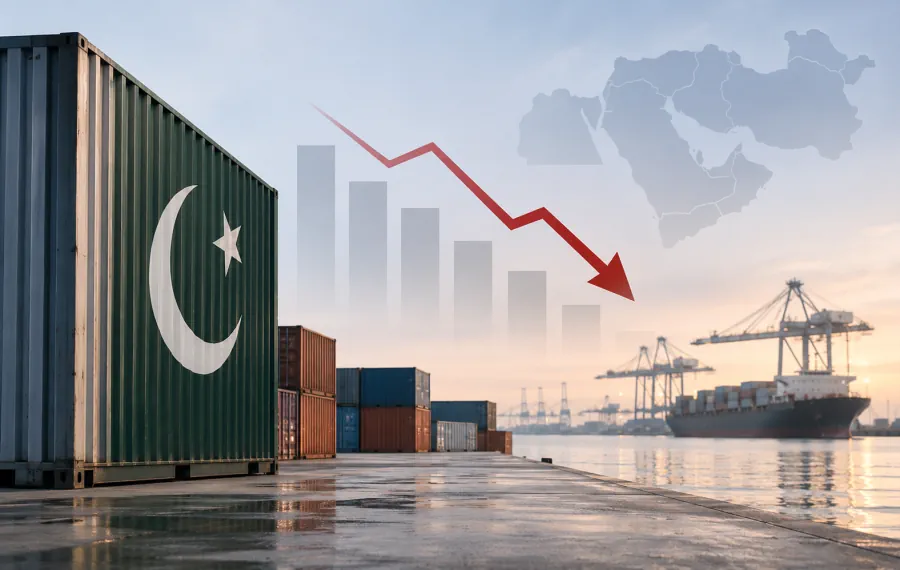
Pakistan has suffered an estimated $387 million in export losses between March and October 2026 as the ongoing US-Iran conflict disrupted regional shipping routes, increased transportation expenses and affected commercial activity with Gulf countries, according to official documents.
The documents reveal that escalating geopolitical tensions in the Middle East have created significant challenges for Pakistan’s international trade, particularly with Gulf Cooperation Council (GCC) countries, which represent an important market for Pakistani exports and a major source of imports.
Also Read:
The conflict has affected maritime transportation, air cargo operations and regional supply chains, making it increasingly difficult and expensive for Pakistani businesses to move goods to international markets.
According to the documents, heightened security risks in the Persian Gulf and Red Sea have forced shipping companies to reassess their operations, resulting in higher freight charges and increased maritime war-risk insurance premiums.
The additional insurance costs reflect growing concerns over the safety of commercial vessels operating through strategically important waterways affected by regional military activity.
Security conditions have reportedly deteriorated in the Strait of Hormuz, where cargo vessels have faced attacks, creating further uncertainty for shipping companies and international traders.
The Strait of Hormuz is a critical maritime passage connecting the Persian Gulf with international shipping routes, making disruptions in the area particularly significant for countries dependent on trade with Gulf markets.
As security concerns have intensified, some shipping operations have been forced to rely on longer alternative routes, increasing transportation times, fuel consumption and overall logistics expenses.
These developments have raised the cost of transporting Pakistani goods to overseas destinations, weakening their price competitiveness against products supplied by other exporting countries.
The documents also identify rising import costs as another consequence of the conflict, with businesses facing additional expenses associated with shipping delays, higher freight rates and disrupted supply chains.
Air cargo operations have similarly been affected by frequent airspace closures across parts of the region.
According to the documents, restrictions on air travel have made freight services more expensive and less predictable, complicating the transportation of goods that require timely delivery.
The disruption has created particular difficulties for exporters handling time-sensitive shipments, including agricultural products and other goods with limited shelf lives.
Meanwhile, logistical bottlenecks at regional ports have contributed to shipment delays, further increasing the financial pressure on Pakistani exporters.
The documents indicate that prolonged delays have raised the risk of perishable products deteriorating before reaching their destinations, while uncertainty over delivery schedules has increased the possibility of buyers cancelling orders.
Container shortages have added another layer of difficulty, restricting the availability of shipping equipment and contributing to higher transportation costs.
Combined with rising insurance premiums and freight charges, these challenges have reduced profit margins for Pakistani exporters and made it harder for businesses to maintain competitive pricing in Gulf markets.
Among the sectors affected are textiles, apparel and construction materials, which form part of Pakistan’s export trade with regional markets.
The documents also highlight the importance of agricultural exports to Gulf countries, including rice, fresh meat, fruits and vegetables.
These products are particularly vulnerable to disruptions in transportation and delivery schedules, as extended shipping times can affect product quality and increase the risk of financial losses.
Pakistan’s trade exposure to the Gulf extends beyond exports, with energy-related products accounting for a major share of imports from countries in the region.
The documents identify these energy imports as an important component of Pakistan’s commercial relationship with Gulf economies, underscoring the country’s reliance on regional trade routes for both outgoing shipments and essential imported products.
The estimated $387 million export loss over the eight-month period reflects the financial impact attributed to the conflict-related disruptions, although the documents do not provide a detailed breakdown of losses by individual export sector or destination country.