Pakistan Railways Reports Record Rs 115 Billion Revenue, Targets Rs 160 Billion
- Pakistan Railways has surpassed Rs 100 billion in revenue for the first time, reaching Rs 115 billion compared with the previous Rs 88 billion.
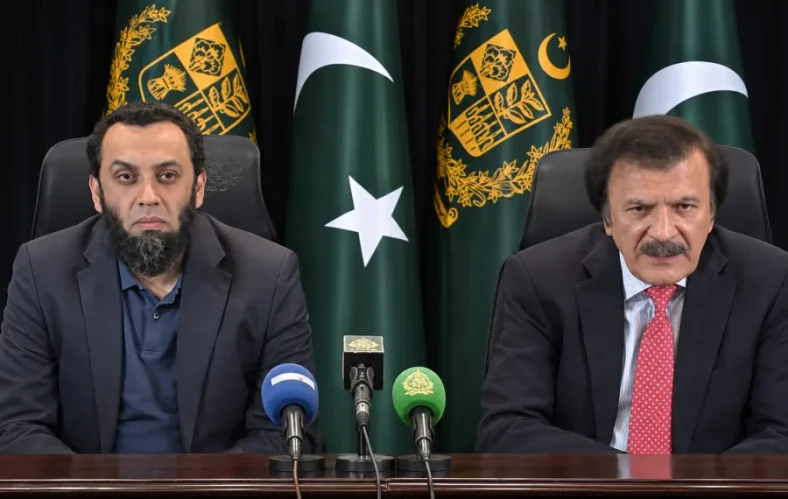
- Railways Minister Hanif Abbasi has announced a Rs160 billion revenue target and directed officials to resolve major operational issues by December 31.
- The government is upgrading passenger trains, restoring railway workshops and branch lines, and expanding private-sector involvement in railway operations.
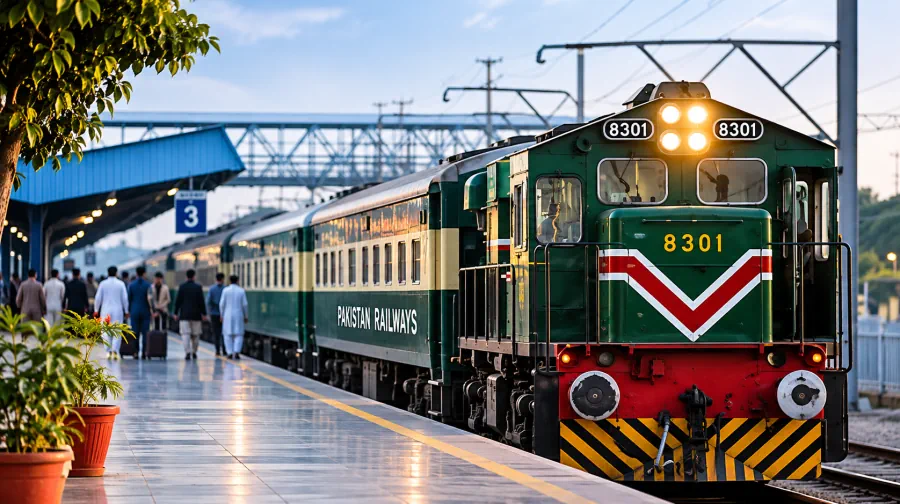
Pakistan Railways has achieved a historic financial milestone, with its revenue reaching Rs115 billion for the first time, Federal Minister for Railways Hanif Abbasi announced on Monday, November 9, 2026.
The minister disclosed the figures during a visit to Rawalpindi Railway Station, where he inaugurated 11 refurbished coaches of the Awam Express and outlined the government’s plans to modernise the national railway network.
Also Read:
According to Abbasi, the department’s revenue has increased from Rs88 billion to Rs115 billion, reflecting an improvement in its financial performance. He also announced a new revenue target of Rs160 billion as part of the government’s efforts to strengthen railway operations and expand commercial activities.
The minister said reforms were being introduced across Pakistan Railways, with particular attention to passenger facilities, maintenance infrastructure, financial management and private-sector participation.
He instructed railway officials to address outstanding administrative and operational problems by December 31, setting a deadline for improvements across the department.
To accelerate the process, Abbasi announced that leave for railway officers and employees would remain suspended until the deadline, requiring staff to remain available for field duties and operational responsibilities.
During the ceremony, the minister inspected 11 upgraded coaches of the Awam Express, which is being operated by AA Enterprises under a private-sector arrangement.
He congratulated the company on completing the refurbishment, noting that the train had previously been in poor condition and required substantial improvements.
Abbasi expressed confidence that the upgraded service would provide passengers with better facilities and operate more efficiently under the new management arrangement.
He also indicated that additional passenger trains would be refurbished as part of the department’s broader improvement programme.
The minister confirmed that operational problems affecting the Karakoram Express and Millat Express had been resolved, allowing the department to focus on other outstanding service-related issues.
Addressing employee welfare, Abbasi said railway workers were now receiving their salaries regularly, following measures taken to improve financial and administrative management.
He also highlighted improvements in passenger amenities, including sanitation facilities and the introduction of free Wi-Fi at 60 railway stations across the country.
The minister said restoring railway maintenance facilities remained an important part of the department’s modernisation strategy.
He announced that a railway workshop in Lahore, which had remained closed for approximately 15 years, had resumed operations.
In addition, five workshops responsible for repairing locomotive engines and wheels, which had been closed since 2008, had been restored and made operational.
The reopening of these facilities is expected to improve maintenance capacity and reduce delays associated with locomotive and equipment repairs.
However, Abbasi acknowledged that serious technical challenges remained within the railway network.
He revealed that 20 of the department’s 40 trains did not have fully functional braking systems, identifying the issue among the operational shortcomings requiring attention.
The minister said efforts were underway to resolve technical problems and improve railway safety before the December 31 deadline.
As part of the government’s restructuring programme, Abbasi also announced plans to outsource railway hospitals to private operators.
He assured railway employees that medical treatment would continue to be provided free of charge despite the proposed management changes.
The minister explained that the government was exploring private-sector partnerships for managing public hospitals, following an approach similar to arrangements introduced in the education sector.
Discussing the restoration of railway services, Abbasi said Pakistan Railways was working with provincial governments to revive branch lines and improve regional connectivity.
He announced plans to make four branch lines operational during the current year, followed by another four in the next financial year.
According to the minister, agreements had been reached with the governments of Punjab and Khyber Pakhtunkhwa to support railway rehabilitation and infrastructure development.
He added that Sindh could also seek federal assistance for restoring railway services on branch lines within the province.
Abbasi thanked Punjab Chief Minister Maryam Nawaz for announcing a Rs10 billion package for railway development, describing provincial cooperation as an important element of the ongoing improvement programme.
He also confirmed that an agreement had been finalised with the Khyber Pakhtunkhwa government to facilitate railway-related development projects.
The minister said the government was working to improve security and monitoring at railway facilities through the installation and use of CCTV cameras.
He warned that individuals involved in stealing railway equipment or damaging departmental property would face strict action.
Abbasi also acknowledged the role of the National Logistics Cell (NLC) in supporting railway operations, particularly through the provision of locomotives.
He cautioned that the withdrawal of NLC locomotives could significantly disrupt railway services, highlighting the department’s continued dependence on external operational support.
Regarding station upgrades, the minister said the Punjab government had provided funding for the restoration of Lahore and Rawalpindi railway stations.
The restoration work would preserve the historic Victorian architectural features of both stations while improving their facilities and overall condition.
He added that rehabilitation and improvement work had also been undertaken at Rohri Junction, an important railway interchange in Sindh.
Abbasi further outlined progress on major infrastructure projects, including the Thar Coal railway initiative and the Main Line-1 (ML-1) modernisation project.
He said Prime Minister Shehbaz Sharif was expected to inaugurate the Thar Coal project, which forms part of efforts to strengthen transportation infrastructure associated with the country’s energy sector.
The minister also confirmed that the ML-1 railway upgrade would proceed with support from the World Bank and the Asian Development Bank.
The ML-1 project is intended to modernise a major section of Pakistan’s railway network, improve operational efficiency and strengthen passenger and freight transportation capacity.
Abbasi said the government’s focus remained on improving railway finances, restoring essential infrastructure, addressing safety concerns and strengthening management through institutional reforms and private-sector cooperation.