Pakistan Eases Potato and Kinnow Export Rules to Russia Until May 2027
- Pakistan has granted a one-time exemption from financial instrument requirements for potato and kinnow exports to Russia until May 15, 2027.
- The relaxation covers shipments through both sea and land routes, allowing exporters to benefit from simplified trade procedures.
- Pakistan’s potato production has reached approximately 12 million tonnes, while kinnow exporters are seeking to expand overseas sales and foreign exchange earnings.
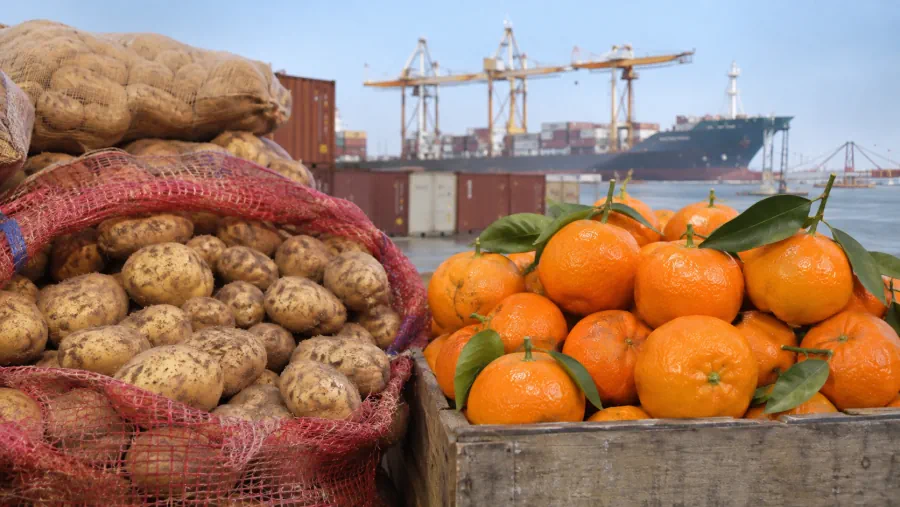
The federal government has announced a major relaxation in export regulations for Pakistani potatoes and kinnow destined for Russia, allowing exporters to ship these agricultural products without fulfilling the usual financial instrument requirement until May 15, 2027.
The decision is expected to facilitate agricultural exports, particularly for farmers, traders and exporters involved in Pakistan’s potato and citrus industries, while supporting efforts to strengthen trade relations with Russia.
Also Read:
According to an official memorandum, the government has approved a one-time exemption covering three categories of agricultural products exported to the Russian Federation through both sea and land routes.
The relaxation applies to potatoes under HS Code 0701.9000, kinnow and mandarins under HS Code 0805.2100, and other mandarins classified under HS Code 0805.2910.
Under normal export procedures, financial instruments such as letters of credit, documentary collections, export contracts or advance payment arrangements are used to secure payments and reduce financial risks between Pakistani exporters and international buyers.
The newly announced exemption removes the specified financial instrument requirement for eligible shipments to Russia during the approved period. However, the relaxation does not automatically remove other applicable customs, quality, phytosanitary or import requirements.
The exemption will remain valid until May 15, 2027, providing exporters with an opportunity to arrange shipments during the upcoming kinnow season and the current agricultural marketing period.
The latest decision follows a similar relaxation introduced in December 2025, when Pakistan permitted kinnow and potato exports to member countries of the Commonwealth of Independent States (CIS) through Iran’s land route without the usual financial instrument requirement.
The CIS is a regional organisation established in December 1991 following the dissolution of the Soviet Union. Its member countries include Russia, Kazakhstan, Uzbekistan, Tajikistan, Kyrgyzstan, Armenia, Azerbaijan, Belarus and Moldova.
Pakistan has been working to improve trade connectivity with Russia and other regional markets. In February 2026, Pakistan and Russia agreed to expand direct land and air connections to facilitate regional trade and economic cooperation.
Another important development came in April 2026, when Russia’s Federal Service for Veterinary and Phytosanitary Surveillance, known as Rosselkhoznadzor, allowed the import of potatoes from Pakistan’s Punjab province.
The approval followed phytosanitary restrictions imposed in May 2025 and reopened an important opportunity for Pakistani potato exporters seeking access to the Russian market.
Punjab plays a central role in Pakistan’s potato industry, with major cultivation taking place in agricultural districts where farmers have expanded production in response to growing domestic and international demand.
Pakistan’s potato cultivation has increased substantially over the past decade, reflecting improvements in farming practices, increased investment and greater demand for the crop.
According to agricultural figures, the area under potato cultivation increased from approximately 177,700 hectares in 2015-16 to around 462,160 hectares in 2025-26, representing growth of nearly 160 percent.
The country’s potato harvest reached approximately 12 million tonnes during the 2025-26 season, highlighting the growing importance of the crop in Pakistan’s agricultural economy.
Potatoes are among Pakistan’s major food crops after wheat, rice and maize, and the expansion in production has increased the importance of developing reliable export markets for surplus supplies.
Russia represents a potential market for Pakistani potatoes, particularly as exporters seek additional destinations beyond traditional regional buyers.
The government’s latest relaxation also comes ahead of Pakistan’s main kinnow export season, which generally begins in December and continues until April, with January and February considered the peak months for harvesting and overseas shipments.
Pakistan’s kinnow industry is concentrated largely in Punjab, particularly in Sargodha and surrounding citrus-producing districts, where the fruit is grown, processed, graded and packed for domestic consumption and export.
The citrus industry provides income and employment opportunities for farmers, orchard workers, packing facilities, transport operators and exporters.
In December 2025, the All Pakistan Fruit and Vegetable Exporters, Importers and Merchants Association announced a kinnow export target of 300,000 tonnes, with expected foreign exchange earnings of approximately $110 million.
The export target reflected efforts to maintain Pakistan’s presence in international citrus markets despite challenges involving production costs, fruit quality, transportation and access to overseas buyers.
Industry experts have also identified opportunities to increase Pakistan’s kinnow export earnings to as much as $400 million within five years through the introduction of improved citrus varieties and more efficient supply chains.
These improvements would require investment in modern agricultural practices, better storage facilities, grading, packaging and transportation systems to meet the quality requirements of international markets.
The exemption for exports to Russia covers the upcoming peak kinnow marketing period and extends until May 15, 2027, giving Pakistani exporters additional time to complete shipments under the relaxed financial documentation arrangements.