Nvidia Rules Out Jensen Huang’s Return as CEO, Begins Search for New Leader Despite Strong AI Chip Sales
- Nvidia Chairman Harvey Jones has ruled out rehiring co-founder Jensen Huang as CEO, confirming that an executive search firm will help select his permanent replacement.
- Nvidia reported third-quarter revenue of $115.84 billion, exceeding Wall Street expectations, and forecast fourth-quarter sales of approximately $130 billion.
- Huang’s departure has triggered leadership uncertainty, regulatory scrutiny and concerns about Nvidia’s future strategy, despite continued strong demand for artificial intelligence chips.
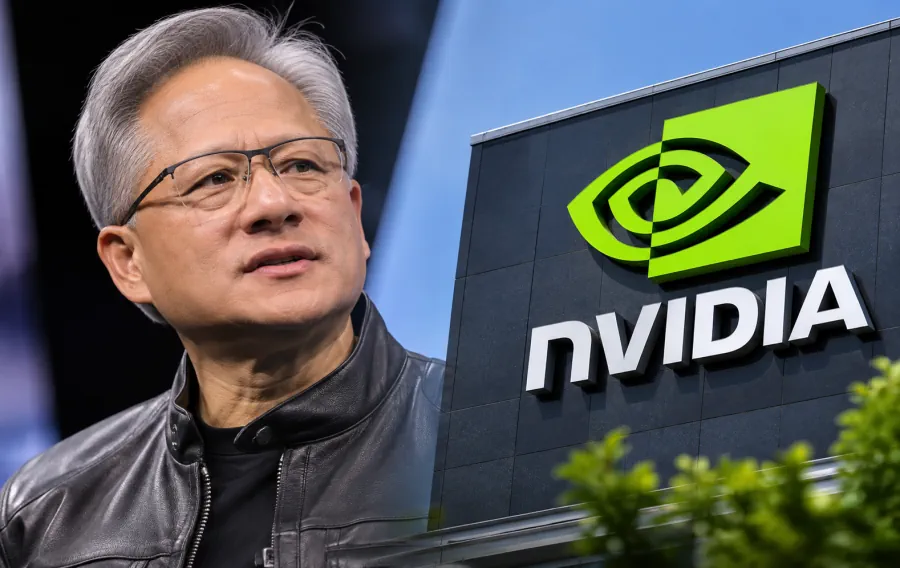
Nvidia has ruled out the possibility of bringing back its co-founder Jensen Huang as chief executive, with board Chairman Harvey Jones confirming that the company has begun searching for a permanent replacement following Huang’s unexpected resignation last week.
Speaking during an earnings conference call with investors on Tuesday, Jones made clear that the board would not reconsider Huang for the position and would not entertain questions regarding the circumstances surrounding his departure.
Also Read:
The announcement came as Nvidia reported stronger-than-expected quarterly financial results and issued an optimistic revenue forecast, providing some reassurance to investors concerned about the future of the world’s most valuable artificial intelligence chipmaker.
Jones said Nvidia had appointed executive recruitment firm Heidrick & Struggles to assist in identifying suitable candidates for the chief executive position.
He explained that the board wanted to appoint a permanent CEO as soon as possible but would not compromise the selection process simply to accelerate the transition.
The company is considering both internal and external candidates, with interim chief executive and Chief Financial Officer Colette Kress overseeing operations during the leadership transition.
Kress was joined on the earnings call by Jones and Ian Buck, Nvidia’s vice president of hyperscale and high-performance computing, providing investors with an opportunity to hear directly from the company’s financial, technical and strategic leadership.
Bob O’Donnell, chief analyst at TECHnalysis Research, described the decision to include all three executives as an effective approach to addressing investor concerns.
He said their combined participation allowed Nvidia to respond to questions covering financial performance, engineering developments and long-term strategy while demonstrating that the company had experienced leadership beyond Huang.
The leadership transition has become a major concern for shareholders because Huang had played a central role in Nvidia’s development for more than three decades.
As co-founder and chief executive, he oversaw the company’s transformation from a graphics processor manufacturer into a dominant supplier of advanced chips used in artificial intelligence systems.
His departure has raised questions about Nvidia’s future technology roadmap, relationships with major customers, investment commitments and regulatory engagement with Washington.
Huang resigned on Thursday following reports concerning extramarital relationships, including allegations involving Chinese businesswoman Alice Huang and two Nvidia employees.
According to people familiar with the matter, US intelligence agencies are examining the extent of Alice Huang’s alleged connections with China’s Ministry of State Security and whether sensitive information may have been transferred to Beijing.
China has rejected allegations that an espionage operation targeted Jensen Huang.
Separately, the Wall Street Journal reported on Tuesday that the US Securities and Exchange Commission was investigating Nvidia following Huang’s resignation.
The SEC declined to comment on the reported investigation.
The controversy has added another layer of uncertainty for Nvidia at a time when the company faces growing political scrutiny over its role in supplying advanced artificial intelligence technology.
Despite the leadership disruption, Nvidia’s latest financial performance demonstrated continued strong demand for its AI processors.
The company reported third-quarter revenue of $115.84 billion, more than double the amount recorded during the corresponding period last year.
The result comfortably exceeded analysts’ average forecast of $109.11 billion, according to financial data compiled by LSEG.
Nvidia has now surpassed Wall Street’s quarterly revenue expectations for 17 consecutive quarters, maintaining a record of stronger-than-anticipated financial performance.
The company also reported an improvement in profitability, with adjusted gross margin rising to 74.9% from 73.5% a year earlier.
The figure exceeded analysts’ estimate of 74.1%, despite higher memory costs and expenses associated with expanding production of advanced AI chips.
Nvidia’s fourth-quarter revenue forecast provided another positive signal for investors.
The company expects revenue of approximately $130 billion, with a possible variation of 3% in either direction.
That projection exceeds the average Wall Street estimate of $125.25 billion and indicates that demand for Nvidia’s computing technology remains strong despite broader concerns about spending in the artificial intelligence industry.
Nvidia said its forecast assumes no sales of data-centre chips to China, reflecting the impact of US export restrictions on the company’s ability to serve the Chinese market.
Adjusted gross margin for the fourth quarter is expected to range between 71% and 72%, broadly in line with analysts’ forecast of 71.7%.
Anshel Sag, principal analyst at Moor Insights & Strategy, described the outlook as positive, although less ambitious than some of Nvidia’s previous quarterly forecasts.
He suggested that the company’s established executive team was capable of maintaining operations and executing its existing strategy despite Huang’s departure.
Sag said Nvidia’s senior leadership had worked closely with Huang for years and had demonstrated its ability to manage the company’s rapid growth.
The financial results helped Nvidia shares rise approximately 4% in extended trading on Tuesday.
However, the company’s market valuation remained under pressure following recent volatility in technology stocks.
Nvidia’s market capitalisation stood at approximately $3.8 trillion, representing a decline of around $2 trillion from its early October peak.
Investors have become increasingly cautious about the sustainability of massive investments in artificial intelligence infrastructure, particularly as technology companies continue committing billions of dollars to new data centres and computing capacity.
Concerns have also emerged over Nvidia’s financial relationships with cloud computing providers, suppliers and AI startups.
Some investors have questioned whether the company will continue providing financial support to customers purchasing its chips, an arrangement critics describe as circular financing.
Kress addressed those concerns during the earnings call, confirming that Nvidia had not changed its approach to investments supporting specialised AI cloud infrastructure providers.
She said the company continued to maintain conditions on its investments but remained committed to its existing arrangements with so-called neocloud businesses.
Following her comments, shares of AI cloud companies CoreWeave, Nebius, IREN and Applied Digital extended their gains.
Kress also defended Nvidia’s leadership team, saying senior executives had responded strongly to the challenges created by Huang’s departure.
She expressed confidence in the company’s ability to maintain operations and continue delivering on its business commitments.
The interim chief executive revealed that senior representatives from Taiwan Semiconductor Manufacturing Company (TSMC), Nvidia’s principal chip manufacturing partner, had been working closely with the company and remained actively involved in supporting its operations.
Kress also highlighted progress involving Nvidia’s next-generation artificial intelligence processor platform, Vera Rubin.
She described the initial response to the company’s latest flagship AI chip as exceptionally strong, indicating encouraging early demand for the technology.
Vera Rubin represents the next major generation of Nvidia’s AI computing architecture, succeeding its Grace Blackwell platform.
The company previously indicated in August that Vera Rubin would contribute approximately one-fifth of its data-centre revenue during the October quarter.
Nvidia also forecast revenue growth of around 70% in its next fiscal year, reflecting expectations of continued expansion in global AI infrastructure spending.
The company’s ability to maintain its technological leadership without Huang has nevertheless become a central issue for investors.
His resignation ended more than three decades of founder-led management, during which he personally influenced product development, major customer relationships and Nvidia’s dealings with US policymakers.
Analysts believe the immediate demand for AI chips is unlikely to be significantly affected by the leadership change, but longer-term execution risks have increased.
Rick Meckler, a partner at Cherry Lane Investments, said Nvidia’s strong financial performance would reassure some investors, although the wider situation surrounding its leadership remained complicated.
He suggested that shareholders would need to consider the additional uncertainty created by the controversy when evaluating the company’s shares.
The leadership search has also been complicated by a growing campaign calling for Huang’s reinstatement.
Supporters of the former CEO have launched a movement known as “Stand With Jensen”, arguing that his leadership remains important to Nvidia’s future.
Huang said on Tuesday that he would be honoured to return as chief executive if the board considered it the best decision for the company.
However, Jones’ comments indicated that Nvidia’s directors were determined to move forward with the search for a replacement.
Prediction market Kalshi reflected the uncertainty surrounding the appointment, with several prominent technology executives emerging as potential candidates.
Rene Haas, chief executive of chip designer Arm and a former Nvidia executive, was assigned a 25% probability of becoming Nvidia’s next CEO.
Ian Buck, Nvidia’s vice president of hyperscale and high-performance computing, had a 17% probability, while Huang himself was given a 9% chance of returning.
Amazon Executive Chairman Jeff Bezos also commented on Nvidia’s leadership situation during the Semafor conference in Silicon Valley on Tuesday.
Bezos suggested that Nvidia’s board should prioritise internal candidates if it decided against bringing Huang back.
He argued that the company’s operations were highly complex and that appointing an outsider could create additional challenges.
Meanwhile, Nvidia’s board has taken steps to strengthen oversight of national security and export compliance issues.
Earlier on Tuesday, directors established a dedicated committee responsible for national security and export controls, marking the board’s first major governance decision since Huang’s resignation.
The move comes amid increased scrutiny of Nvidia’s role in supplying advanced computing technology that has both commercial and national security applications.
US authorities have tightened licensing requirements for advanced chip shipments to Southeast Asia and overseas data centres serving Chinese companies.
Lawmakers are also preparing to question Huang over matters relating to Nvidia’s international operations and his previous support for expanding chip exports to China.
The company’s relationships with Chinese customers have attracted particular attention as Washington continues restricting access to advanced semiconductors that could potentially support military or intelligence applications.
The latest political developments have added to uncertainty surrounding the wider artificial intelligence industry.
Investors were already concerned about the scale of AI infrastructure spending following the Democratic Party’s success in the US midterm elections, which raised expectations of stronger regulatory oversight and possible restrictions affecting data-centre expansion.
Nvidia’s financial results have provided some relief to markets by demonstrating continued growth in AI chip demand, although questions remain about the company’s leadership transition, export policies and future investment strategy.
The earnings conference call itself reflected the changes taking place within Nvidia.
Without Huang, whose energetic presentations and detailed responses had become a familiar feature of the company’s investor communications, the session lasted less than an hour.
The shorter call marked a noticeable departure from Nvidia’s previous earnings discussions, as its interim leadership sought to reassure investors while preparing for the appointment of a new permanent chief executive.