Macron Calls for AI Ban Where Technology Threatens Children’s Mental Health
- French President Emmanuel Macron has called for banning AI applications that pose risks to children’s mental health and cognitive development.
- France is preparing new safeguards, including independent safety assessments and certification of AI systems before children can access them.
- Major technology companies, including OpenAI, Anthropic, Microsoft and Mistral, are participating in international discussions on AI safety regulations.
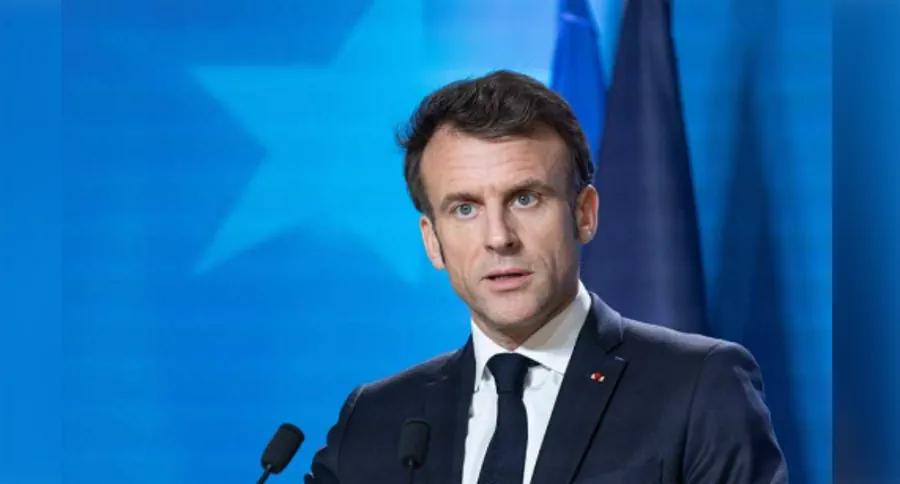
French President Emmanuel Macron has called for strict restrictions on artificial intelligence applications that could harm children’s mental health, warning that emerging technologies must not be allowed to develop without adequate safety measures.
Speaking in an interview with French business newspaper Les Echos on Monday, Macron said governments should be prepared to prohibit certain uses of AI when evidence indicates they could negatively affect children’s psychological well-being or cognitive development.
Also Read:
His remarks came ahead of the Paris Peace Forum, where technology companies and research organisations are expected to adopt a new charter aimed at improving safeguards for children using artificial intelligence.
Macron stressed that the rapid development of AI should not exempt technology companies from regulatory oversight, particularly when vulnerable users are involved.
“Just because it’s AI doesn’t mean it should be the Wild West,” the French president said, arguing that applications threatening children’s mental health or brain development should face outright restrictions.
The proposal forms part of Macron’s broader efforts to strengthen online protections for young people. He has also been advocating restrictions on access to certain social media platforms for children under the age of 15.
While the psychological effects of social media have received considerable attention from researchers and policymakers, the potential risks associated with generative artificial intelligence remain a relatively new area of investigation.
To address these concerns, a committee of specialists is scheduled to present recommendations to the French president on Tuesday, outlining possible measures to protect children from harmful AI applications.
The recommendations are expected to contribute to a proposed safety charter involving leading artificial intelligence developers and research laboratories.
Under the initiative, participating organisations would commit to independent evaluations of generative AI systems before their release, alongside providing access to relevant model data for safety assessments.
According to Macron’s office, major American AI developers OpenAI and Anthropic are among the companies expected to participate in the agreement.
The proposed framework would also introduce the principle of preliminary auditing and certification, requiring AI models intended for children to undergo safety reviews before becoming available to younger users.
Macron said participating companies would recognise the importance of examining potential risks in advance rather than waiting for harmful consequences to emerge after deployment.
The French government intends to use the charter to support discussions on future national and European legislation governing advanced artificial intelligence.
Macron also expressed his ambition to encourage countries outside Europe, including the United States and Canada, to adopt similar regulatory approaches.
He said France would continue advancing European AI regulations while working with international partners to establish common standards for powerful AI systems.
The French president described the initiative as an early step toward a broader international regulatory framework for frontier AI, referring to the most advanced artificial intelligence models.
According to Macron, the proposed safeguards are intended to address three major areas of concern: children’s safety, democratic security and critical national security risks.
His comments reflect growing international concern about the potential misuse of advanced AI technologies, including their influence on young users, democratic institutions and national security.
As part of these efforts, Macron convened a videoconference involving approximately 50 heads of state and government, representatives of international organisations, technology executives, researchers and scientific laboratories.
The discussions focused on the challenges artificial intelligence presents to collective security and the need for coordinated international action.
Prime ministers from the United Kingdom, Canada, Norway, the Netherlands and Japan participated in the meeting, alongside senior executives from major technology companies.
Among the participants were the chief executives of OpenAI, Anthropic, French AI company Mistral and Microsoft.
The discussions highlighted the growing involvement of governments and private technology developers in shaping international standards for the development and deployment of advanced AI systems.
Following the meeting, Macron said participants broadly agreed on the nature of the challenges and the importance of responding collectively.
“The diagnosis is shared. We must act together,” he wrote in a post on X.