KP Government to Launch Green Rickshaw Scheme With 50% Subsidy and Four-Year Instalments
- Khyber Pakhtunkhwa plans to introduce a Green Rickshaw Scheme offering eligible applicants a 50% government subsidy and easy instalments spread over four years.
- The initiative aims to create employment opportunities, promote environmentally friendly transport and improve mobility across the province.
- Transport authorities have also been directed to increase Peshawar Mass Transit Bus Service revenue to Rs2 billion annually, reduce operating costs and improve traffic management.
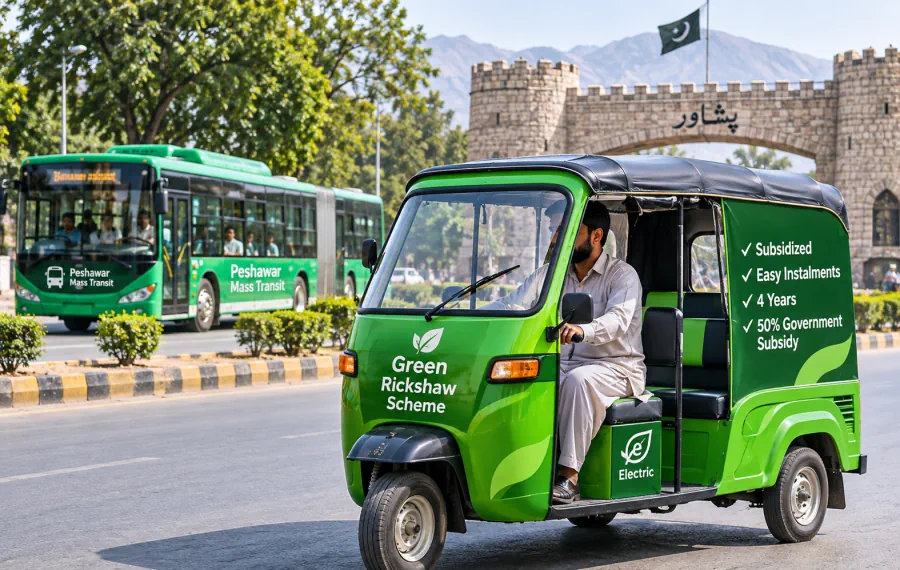
The Khyber Pakhtunkhwa government is preparing to introduce a subsidised Green Rickshaw Scheme aimed at creating employment opportunities and expanding access to modern, environmentally friendly transportation across the province.
Asif Rafiq, Adviser to the Governor of Khyber Pakhtunkhwa for Transport, Local Government, Communications and Works, Housing, Agriculture and Livestock, announced the initiative while chairing a meeting of the Transport Department in Peshawar on Wednesday.
Also Read:
Under the proposed scheme, eligible individuals will be able to obtain green rickshaws through an affordable financing arrangement, with payments spread over four years. The provincial government will provide a 50% subsidy to reduce the financial burden on beneficiaries.
The initiative is intended to make commercial transport vehicles more accessible to ordinary citizens, particularly those seeking self-employment opportunities in the transportation sector.
By offering subsidised rickshaws on long-term instalments, the government aims to help eligible residents establish independent sources of income while encouraging the use of environmentally friendly vehicles.
The scheme is also part of broader efforts to modernise public transportation in Khyber Pakhtunkhwa and reduce the environmental impact of conventional transport services.
However, the government has not yet announced the application schedule, eligibility requirements, total number of rickshaws to be distributed or the detailed registration procedure.
During the meeting, Asif Rafiq also reviewed the financial and operational performance of the Peshawar Mass Transit Bus Service and directed its management to introduce a comprehensive strategy for improving revenue and reducing unnecessary expenditure.
He instructed the relevant authorities to identify areas where administrative and operational costs could be reduced without compromising the quality of services provided to passengers.
The adviser emphasised that the mass transit system must adopt practical measures to increase its income and improve long-term financial sustainability.
He directed the management to establish an annual revenue target of Rs2 billion and prepare a detailed implementation plan outlining the measures required to achieve it.
According to Asif Rafiq, improving the financial independence and operational efficiency of public sector institutions remains a major government priority.
He said transport authorities should focus on the effective utilisation of available resources, better financial management, expenditure control and the identification of additional revenue-generating opportunities.
The adviser also called for stronger institutional accountability and directed Transport Department officials to take concrete steps to eliminate corruption and promote transparency in departmental operations.
He stressed that administrative reforms should translate into improved public services, ensuring that citizens receive reliable, accessible and efficient transportation facilities.
Traffic congestion in Peshawar was another major issue discussed during the meeting.
Asif Rafiq directed officials to develop an effective traffic management plan to address increasing congestion, particularly during morning and evening rush hours.
He said the plan should focus on reducing delays, improving traffic movement and minimising the difficulties faced by commuters travelling to workplaces, educational institutions and other destinations.
The adviser emphasised that improving urban mobility requires coordinated planning between transport authorities and other departments responsible for traffic management and infrastructure development.
He said the province’s transportation system must be modernised to meet changing public needs while maintaining environmental sustainability, operational transparency and efficient service delivery.
According to Asif Rafiq, public transport institutions should work together under a comprehensive strategy rather than implementing isolated measures that fail to address broader transportation challenges.
He directed all relevant departments and organisations to fulfil their responsibilities through improved coordination, effective planning and timely implementation of approved initiatives.
The meeting was attended by Secretary Transport Muhammad Zubair Khan, Managing Director Khyber Pakhtunkhwa Urban Mobility Authority Muhammad Iftikhar, Director Transport Muhammad Umar, the Chief Executive Officer of the Mass Transit Bus Service and other senior officials concerned with transportation planning and administration in the province.