Global Oil Prices Fall as US-Iran Diplomacy and Ukraine Peace Talks Raise Ceasefire Hopes
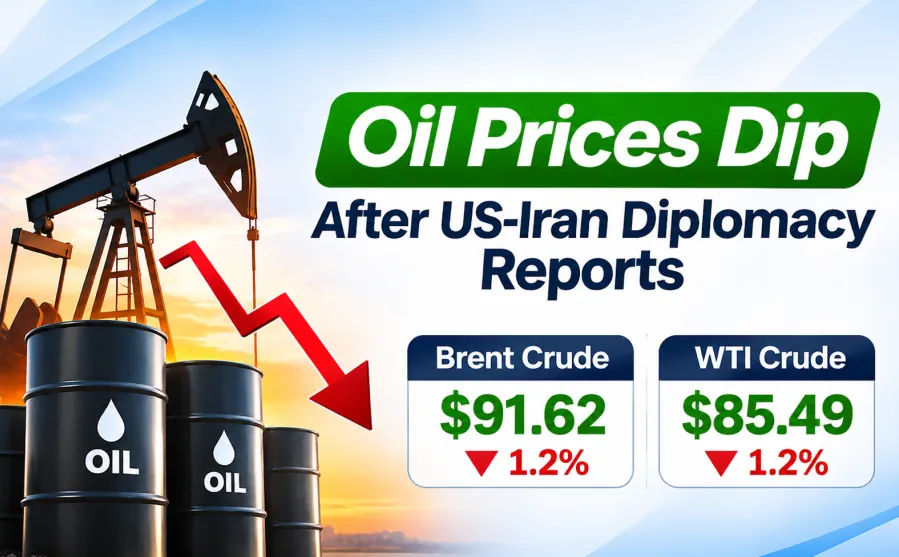
- Brent crude fell $1.14 to $91.62 per barrel, while US WTI crude declined $1.04 to $85.49 amid expectations of diplomatic progress.
- Peace negotiations between Russia and Ukraine, alongside possible US-Iran talks, have eased concerns about further disruptions to global oil supplies.
- Rising OPEC+ production and a reported 9 million-barrel increase in US crude inventories added pressure on oil prices.
Global crude oil prices fell by more than $1 per barrel on Thursday as growing expectations of diplomatic progress in the Middle East and the Russia-Ukraine conflict reduced concerns about prolonged disruptions to international energy supplies.
Brent crude futures declined by $1.14, or approximately 1.2%, to $91.62 per barrel by 0141 GMT, while US West Texas Intermediate (WTI) crude futures dropped $1.04, also around 1.2%, to $85.49 per barrel.
Also Read:
The decline followed a recovery in the previous trading session, when Brent gained approximately 1.4% and WTI advanced 0.6% after both benchmarks had fallen to their lowest levels in two months on Tuesday.
Market analysts attributed the latest decline to expectations that diplomatic efforts could help reduce geopolitical tensions, particularly as Washington explores possible negotiations with Tehran and international mediators continue efforts to end the Russia-Ukraine conflict.
Hiroyuki Kikukawa, chief strategist at Nissan Securities Investment, said oil markets were responding to indications that negotiations aimed at securing a ceasefire between Russia and Ukraine were progressing behind the scenes.
He also suggested that a further escalation of the conflict involving Iran appeared less likely ahead of the US-China summit scheduled for next week.
However, Kikukawa cautioned that uncertainty surrounding the Strait of Hormuz, one of the world’s most important oil transportation routes, would likely prevent a substantial collapse in crude prices.
Diplomatic developments in Abu Dhabi have also contributed to changing market sentiment. Russian and Ukrainian negotiators concluded two days of peace discussions on Wednesday, reaching an agreement on a major prisoner exchange.
Despite the agreement, US mediators acknowledged that significant differences remained between the two sides, particularly over territorial disputes and other issues central to a potential peace settlement.
Meanwhile, tensions between Washington and Tehran remain a major concern for global energy markets despite indications that further negotiations could take place.
Iranian security official Mohsen Rezaei warned in televised remarks that Iran would not permit any enriched nuclear material to be transferred outside the country.
He also cautioned that additional US military strikes against Iran would have consequences, highlighting the continuing risks surrounding efforts to end the conflict.
Washington has maintained that nuclear-related issues must form part of any initial negotiations with Tehran aimed at resolving the eight-month conflict. At the same time, US officials have played down the immediate need for additional military operations.
The uncertainty surrounding the Strait of Hormuz continues to influence oil market expectations because disruptions to shipping through the strategic waterway can affect crude exports from major Middle Eastern producers.
On the supply side, production by the Organization of the Petroleum Exporting Countries and its allies, collectively known as OPEC+, increased sharply in October.
The rise was driven largely by higher Saudi Arabian output, despite continued difficulties affecting oil shipments through the Strait of Hormuz.
Additional downward pressure on crude prices came from the United States, where industry data indicated a substantial increase in commercial oil inventories.
According to market sources citing figures from the American Petroleum Institute (API), US crude oil stocks increased by approximately 9 million barrels during the latest reporting week.
The larger-than-expected inventory build added to concerns about the balance between global oil supply and demand, reinforcing downward pressure on international crude prices.