Bilawal Warns Against Sindh Division, Says Violence Could Spiral Out of Control
- PPP Chairman Bilawal Bhutto Zardari has warned that any attempt to divide Sindh could lead to unrest and violence beyond his control.
- Bilawal rejected the idea of holding a referendum on new provinces, questioning its constitutional validity and demanding electoral reforms.
- He criticised the federal government for confronting political parties while Pakistan faces economic difficulties, security threats and regional tensions.
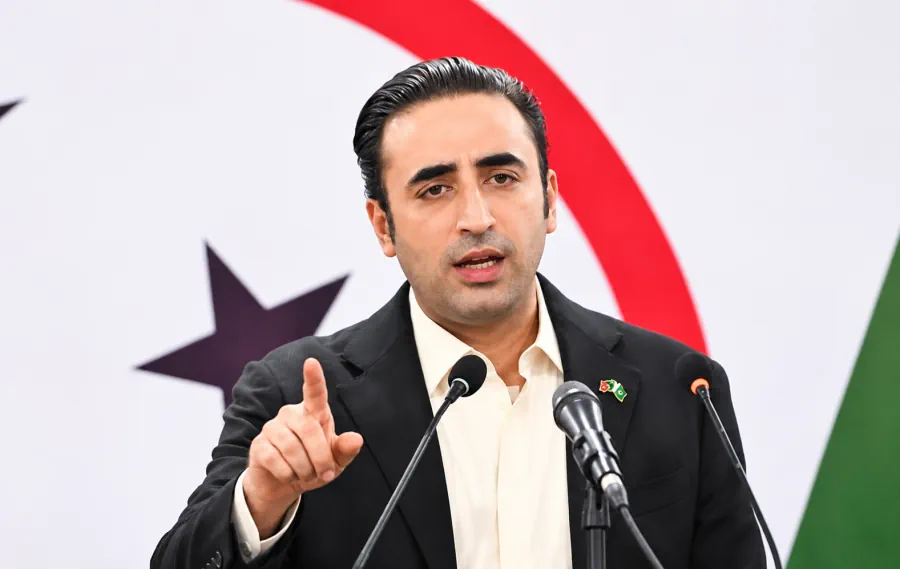
Pakistan Peoples Party (PPP) Chairman Bilawal Bhutto Zardari has strongly opposed proposals to divide Sindh, warning the federal government that such a move could provoke widespread unrest and potentially lead to violence that even he would be unable to control.
Speaking amid growing political debate over the creation of new provinces and changes to Pakistan’s governance system, Bilawal cautioned the government against pursuing controversial constitutional and administrative measures without political consensus.
Also Read:
The PPP chairman made it clear that his party would not encourage armed resistance, saying no PPP worker would take up weapons over the issue. However, he warned that public anger could escalate if attempts were made to divide Sindh, creating a situation that political leaders might struggle to contain.
He said the government’s responsibility was to maintain political stability and resolve existing disputes rather than introduce new controversies that could deepen divisions within the country.
Bilawal also rejected the proposed referendum on the creation of new provinces, questioning how such an exercise could be conducted without following the constitutional framework.
He argued that the Constitution could not simply be set aside to organise a referendum and said any changes to Pakistan’s provincial structure must be pursued through established constitutional procedures.
The PPP chairman further questioned the government’s ability to hold a referendum or conduct fresh elections without first implementing electoral reforms.
According to Bilawal, restoring public confidence in the electoral system should be a priority before the government considers any major political exercise. He maintained that constitutional reforms and electoral credibility were essential for ensuring public acceptance of future decisions.
His remarks came as discussions over new administrative units and a possible restructuring of Pakistan’s governance system intensified political disagreements between the federal government and its coalition partners.
Bilawal also responded to criticism from federal ministers following his earlier statements about governance and political reforms.
He challenged government representatives to demonstrate the willingness to hear opposing views, saying political disagreements should not prevent leaders from listening to constructive criticism.
“You may disagree with my suggestions, but at least listen. You should have the courage to listen to the truth,” Bilawal said.
The PPP chairman emphasised that his party’s participation in the ruling coalition made him an important stakeholder in the country’s political system. He said this position gave him both the responsibility and the right to raise concerns and recommend changes to government policies.
He pointed out that the federal government itself had initiated discussions about resetting the country’s governance system and should therefore be prepared to consider alternative proposals.
Bilawal criticised the manner in which the debate had been introduced, saying the issue had not been formally presented before parliament despite its far-reaching constitutional and political implications.
He maintained that decisions involving the country’s administrative boundaries, governance arrangements and constitutional structure required meaningful parliamentary debate and agreement among political stakeholders.
The PPP chairman said Pakistan’s political system should be strong enough to accommodate differing opinions rather than allowing discussions to be dominated by one side.
He also expressed concern over what he described as the federal government’s increasingly confrontational approach towards political parties, warning that continued political disputes could distract the country from more pressing national challenges.
Referring to the security situation, Bilawal said Pakistan was already dealing with tensions involving India, a near-war situation with Afghanistan and the persistent threat of terrorism.
He questioned why the government was opening additional political fronts when the country was facing serious external and internal challenges.
According to Bilawal, the government had already been involved in confrontations with Pakistan Tehreek-e-Insaf (PTI) and Jamiat Ulema-e-Islam (JUI), and now appeared ready to engage in another dispute with him over his criticism.
“If you are going to fight everyone, and fight everyone internally as well, then who will lead Pakistan and its people out of this economic crisis?” he asked.
Bilawal said political leaders should concentrate on strengthening national unity and improving governance instead of becoming involved in continuous disagreements with opposition parties and coalition partners.
He also highlighted the economic consequences of the ongoing conflict between the United States and Iran, saying rising global energy costs had placed additional pressure on economies around the world, including Pakistan.
The PPP chairman said higher energy prices and broader economic uncertainty were worsening the financial difficulties already being experienced by Pakistani households.
He criticised the country’s political leadership for failing to fully recognise the struggles of ordinary citizens, particularly families dealing with inflation, increasing household expenses and the rising cost of essential goods.
Bilawal maintained that political representatives needed to understand the daily difficulties faced by the public and give greater attention to policies that could provide economic relief.
He said the reactions of federal ministers to his criticism demonstrated a lack of patience among political leaders when confronted with uncomfortable questions.
The PPP chairman questioned how the government could effectively address public grievances if its representatives were unwilling to listen to concerns raised by a party supporting the ruling coalition.
He pointed out that millions of Pakistanis did not have direct access to the prime minister, federal ministers or parliament, making it particularly important for elected representatives to communicate their concerns to those in power.
Bilawal said his criticism reflected broader public concerns and should be treated as an opportunity for the government to reconsider its priorities rather than as a reason for political confrontation.
He reiterated that any proposed reset of Pakistan’s governance system must remain within constitutional limits and emerge through political consultation, parliamentary discussion and consensus among stakeholders.
The PPP chairman warned that attempts to impose controversial changes without securing political agreement could further increase instability at a time when Pakistan was already facing serious economic and security challenges.