Bilawal Bhutto Demands Political Reset, Warns Pakistan’s Economic Problems Could Deepen
- PPP Chairman Bilawal Bhutto Zardari has called for parliamentary dialogue and electoral reforms to restore public confidence in Pakistan’s political system.
- He defended Maulana Fazlur Rehman’s right to criticise the government and demanded an end to political victimisation and the misuse of accountability institutions.
- Bilawal questioned proposals for restructuring the governance system without consulting parliament and warned that rising poverty, inflation and unemployment could further worsen economic conditions.
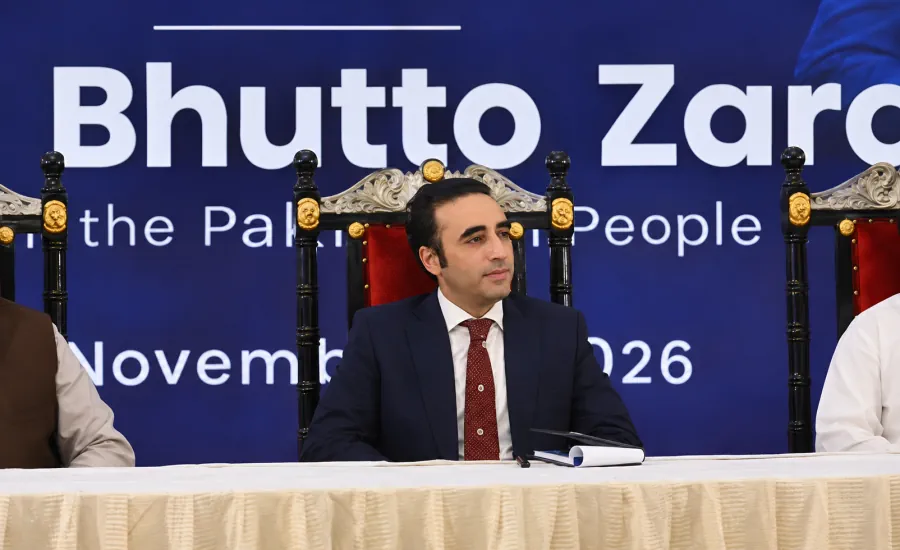
Pakistan Peoples Party (PPP) Chairman Bilawal Bhutto Zardari has called for a comprehensive political reset in Pakistan, warning that the country’s economic and governance challenges could become more severe unless political parties address the underlying causes of institutional weaknesses and restore public confidence in the democratic system.
Speaking at a Meet-the-Press programme at the Karachi Press Club on Tuesday, Bilawal said Pakistan needed meaningful political and electoral reforms rather than temporary measures that failed to address the problems facing the country.
Also Read:
لائیو: چیئرمین پاکستان پیپلز پارٹی بلاول بھٹو زرداری کراچی پریس کلب آباد میں میٹ دی پریس سے خطاب کررہے ہیں۔ https://t.co/odYx92OC6h
— PPP (@MediaCellPPP) November 17, 2026
He argued that the existing governance system had not simply collapsed because of its own shortcomings but had been weakened by political decisions and practices over time.
“I believe the system has not collapsed, but it has been made to collapse,” Bilawal said, acknowledging that political leaders, including himself, shared responsibility for the present situation.
The PPP chairman said there was widespread agreement that Pakistan’s governance system was facing serious difficulties, but insufficient attention was being paid to the reasons behind its deterioration.
He questioned why discussions about resetting the system were taking place without first examining the political and institutional failures that had contributed to the crisis.
According to Bilawal, any meaningful political reset must begin with strengthening parliament, introducing electoral reforms and restoring the credibility of state institutions.
He said elected representatives were responsible for addressing the problems of the people and that major decisions concerning the country’s political and administrative structure should be taken through democratic institutions.
Bilawal expressed concern over declining public confidence in state institutions, saying the restoration of institutional legitimacy was essential for improving governance.
He identified electoral transparency as one of the most important areas requiring immediate attention, arguing that allegations of election rigging must be addressed to rebuild public trust.
Reflecting on his nearly two decades in politics, Bilawal said allegations of electoral manipulation had traditionally been raised by opposition parties, while governments generally rejected such accusations.
However, he noted that the political situation had reached an unusual stage where individuals associated with the government were also making allegations about electoral irregularities.
The PPP chairman said this development highlighted the seriousness of the crisis of confidence surrounding the electoral process and reinforced the need for reforms acceptable to political stakeholders.
Bilawal also addressed the growing political tensions involving Jamiat Ulema-i-Islam-Fazl (JUI-F) chief Maulana Fazlur Rehman, defending his right to question and criticise the federal government.
He said criticism of government policies was a fundamental democratic right and should not become grounds for questioning an opposition politician’s loyalty or patriotism.
“It is the opposition’s right to criticise you, and however he does it, it is their right,” he said.
Bilawal maintained that disagreements between political parties were a natural part of parliamentary democracy and should not be portrayed as opposition to the state.
He said the government could not reasonably expect opposition parties to endorse every policy or decision without raising objections.
The PPP chairman acknowledged that opposition parties had reasons to lose confidence in the parliamentary system, adding that restoring their trust required constructive engagement rather than confrontation.
He strongly criticised the use of accountability mechanisms and administrative action against political opponents, describing such practices as damaging to democratic institutions.
Referring to the National Accountability Bureau (NAB), Bilawal alleged that the institution had been used as an instrument of political revenge rather than impartial accountability.
He questioned why investigations, arrests and other actions against opposition politicians or their relatives appeared to follow criticism of government policies.
“When someone from the opposition makes a speech, then all of a sudden, you set the National Accountability Bureau on them, arrest their sons,” he said.
In an apparent reference to recent action involving Maulana Fazlur Rehman’s residence, Bilawal also criticised the use of alleged encroachment violations against political opponents.
He said political differences should be resolved through dialogue and democratic processes instead of actions that could be perceived as attempts to silence criticism.
The PPP chairman demanded an end to political victimisation, warning that continued confrontation would further weaken the country’s already troubled political system.
Turning to proposals for restructuring Pakistan’s administrative system, Bilawal questioned why federal ministers were publicly advocating major governance changes without formal discussions in the federal cabinet or parliament.
His remarks came amid a growing debate over the creation of new administrative units following Interior Minister Mohsin Naqvi’s comments that the existing governance structure had collapsed and required restructuring.
Bilawal said he did not oppose discussions on improving governance but insisted that proposals involving constitutional and administrative changes must be considered through the appropriate parliamentary and constitutional forums.
He questioned the decision-making process within the federal government, asking whether Prime Minister Shehbaz Sharif exercised sufficient authority over ministers publicly discussing major policy changes.
“You are sabotaging your own prime minister, and then you complain that the system has collapsed,” he remarked.
The PPP chairman said proposals affecting the country’s governance structure should not emerge through individual public statements without consultation with elected representatives and provincial stakeholders.
He disclosed that neither the prime minister nor representatives of the provinces had discussed the proposed changes with President Asif Ali Zardari or with him.
Bilawal expressed concern that discussions about restructuring the system were taking place outside parliament, potentially creating the impression that the views of elected institutions, the federal cabinet and the public were being overlooked.
He said the PPP was willing to participate in serious discussions about governance reforms but would first seek to develop an internal party consensus before engaging other political stakeholders.
The PPP chairman stressed that any reform process must involve parliament, political parties and the provinces to ensure that decisions reflected democratic consultation.
He also questioned the effectiveness of proposals that focused on changing administrative arrangements without addressing the political problems responsible for weakening governance.
Drawing a comparison with medical treatment, Bilawal said prescribing medicine for a headache to someone suffering from a heart condition would not resolve the actual illness.
He argued that Pakistan’s governance problems similarly required a proper diagnosis rather than superficial changes that might leave the underlying causes untouched.
Bilawal devoted a significant part of his address to the financial difficulties facing ordinary Pakistanis, warning that worsening economic pressures were affecting families across the country.
He said rising electricity costs had reached a point where many households were afraid to open their monthly utility bills.
The PPP chairman highlighted the difficult choices confronting low-income families, saying some parents were struggling to decide whether to spend their limited income on their children’s education or provide two meals a day.
He also referred to families facing difficulties paying for the medical treatment of elderly relatives while attempting to meet essential household expenses.
Bilawal warned that poverty, unemployment and inflation were placing increasing pressure on citizens and that the situation could deteriorate further if the government failed to introduce effective reforms.
He said Pakistan’s challenges had become more complicated than those faced in previous years, with international developments adding further pressure to the country’s economic and political environment.
The PPP chairman maintained that economic difficulties could not be addressed in isolation from the political and institutional weaknesses affecting governance.
He called on political leaders to identify the real causes of the country’s problems and work collectively on solutions capable of restoring public confidence.
Bilawal also praised the role of journalists and independent media in strengthening democracy and holding public institutions accountable.
Addressing members of the Karachi Press Club, he described journalists as a source of strength for Pakistan and emphasised the importance of protecting their ability to report and question those in power.
He said the power of the pen was greater than that of guns and weapons, highlighting the influence of journalism in shaping public debate and promoting democratic accountability.