Apple Intelligence Receives Regulatory Clearance for iPads and MacBooks in China
- Apple Intelligence has been registered with Chinese regulators for use on tablets and laptops, expanding its planned availability beyond iPhones.
- Apple has developed a China-specific AI model with support from Alibaba, integrating capabilities from its Qwen technology.
- The AI features are scheduled to reach Chinese users in December through iOS 27.3, following a test release on November 4.
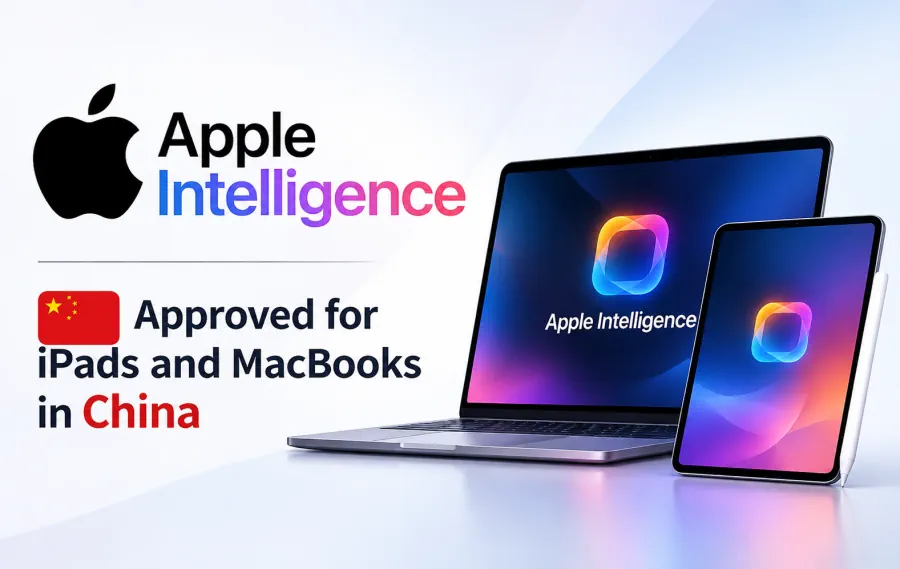
Apple has taken another major step toward expanding its artificial intelligence services in China after its generative AI platform, Apple Intelligence, was registered for use on tablets and laptops, according to an announcement by Shanghai’s cyberspace regulator on Monday.
The registration marks an important development in Apple’s efforts to introduce advanced AI capabilities across its product ecosystem in one of the world’s largest technology markets.
Also Read:
China maintains strict regulatory requirements for generative artificial intelligence services, requiring companies to register large language models and related AI applications with government authorities before making them publicly available.
The latest registration follows regulatory approval granted to Apple in July 2026 to introduce Apple Intelligence on iPhones in China. The addition of tablets and laptops expands the range of devices expected to support the company’s AI-powered services.
Apple has been working to adapt its artificial intelligence technology to meet China’s regulatory requirements, which differ significantly from those in several other major markets.
As part of these efforts, the American technology company has collaborated with Chinese e-commerce and cloud computing giant Alibaba to develop AI capabilities specifically for users in mainland China.
In August, Reuters reported that Apple had trained a large language model tailored to the Chinese market with support from Alibaba. The arrangement represents a shift in Apple’s regional AI strategy, allowing the company to develop a more localized system rather than relying entirely on external models to deliver its artificial intelligence features.
Alibaba’s Qwen AI technology is expected to play an important role in supporting Apple Intelligence services for Chinese consumers.
According to Alibaba, users in China will be able to access Qwen-powered text processing, image understanding and content generation capabilities through several familiar Apple features, including Siri, Writing Tools and Visual Intelligence.
These capabilities are intended to make Apple’s devices more useful for everyday activities, allowing users to generate and refine written content, analyze visual information and interact with AI-powered assistants more effectively.
Siri is expected to benefit from the integration by gaining access to more advanced language understanding and content generation functions, while Writing Tools will provide AI-assisted features for creating, editing and improving text.
Visual Intelligence will allow supported devices to interpret images and provide relevant information based on visual content, extending the practical applications of artificial intelligence across Apple’s ecosystem.
The partnership with Alibaba also reflects the importance of working with domestic technology providers in China’s closely regulated AI industry.
Chinese authorities require generative AI services to comply with local regulations governing data security, content management and the deployment of artificial intelligence technologies.
For Apple, meeting these requirements is essential to making its AI features available to Chinese customers while maintaining its competitive position against domestic smartphone and technology manufacturers.
Several Chinese companies have already integrated advanced generative AI capabilities into their smartphones and other consumer devices, increasing pressure on international manufacturers to offer comparable services.
In an October statement, Alibaba said Apple Intelligence features powered by Qwen were scheduled to become available to Chinese users in December 2026 through the iOS 27.3 software update.
The company also confirmed that a test version was scheduled for release on November 4, ahead of the broader rollout.
Although the latest regulatory registration covers tablets and laptops, the reported December software release specifically concerns iOS 27.3. Separate availability details for compatible iPads and Mac computers were not provided in the announcement.