US Pushes for Largest Russia-Ukraine Prisoner Exchange as European Nations Join Peace Talks
- US envoy Jared Kushner says Washington is working on what could become the largest prisoner exchange of the Russia-Ukraine war, potentially bringing thousands of detainees home.
- Russia and Ukraine have agreed to include European representatives in the next round of US-mediated peace negotiations.
- Despite diplomatic progress, major disagreements remain over Ukrainian territory, security guarantees and conditions for a lasting ceasefire.
The United States is working toward what could be the largest prisoner exchange since the beginning of the Russia-Ukraine war, as Washington intensifies diplomatic efforts to bring both countries closer to a negotiated settlement.
Jared Kushner, US President Donald Trump’s son-in-law and special envoy, announced on Thursday that Russia and Ukraine had agreed to broaden the next round of peace negotiations to include European countries, marking a significant development in the ongoing diplomatic process.
Also Read:
In a statement posted on social media platform X, Kushner said American officials were pursuing an extensive prisoner exchange that could allow thousands of people separated by the conflict to return to their families.
Although he did not disclose the proposed terms, the number of prisoners involved or a possible timeline, Kushner described the initiative as potentially the largest exchange of the war.
The announcement followed renewed diplomatic engagement between Washington, Moscow and Kyiv, including discussions involving Kushner and fellow US envoy Steve Witkoff.
Ukrainian President Volodymyr Zelenskyy welcomed the decision to involve European representatives in future negotiations, expressing hope that the expanded discussions would address ceasefire arrangements and practical measures to reduce hostilities.
Speaking after his discussions with Kushner and Witkoff, Zelenskyy stressed the importance of restoring diplomatic dialogue after a prolonged interruption.
The latest round of US-brokered negotiations took place earlier this week in Abu Dhabi, representing the first such discussions between the parties in approximately nine months.
Kushner said the inclusion of European countries would provide an opportunity to discuss wider security arrangements for Europe following the war, alongside the territorial disagreements that continue to divide Russia and Ukraine.
According to the US envoy, Washington remains encouraged by the progress achieved through recent diplomatic contacts. However, he acknowledged that substantial differences between Moscow and Kyiv have yet to be resolved.
Earlier, Witkoff said Russian President Vladimir Putin had agreed to allow European representatives to participate in the next round of negotiations.
Putin also called on Washington to engage with its European allies to determine their position on ending the conflict, questioning whether European governments were committed to achieving peace or continuing the war.
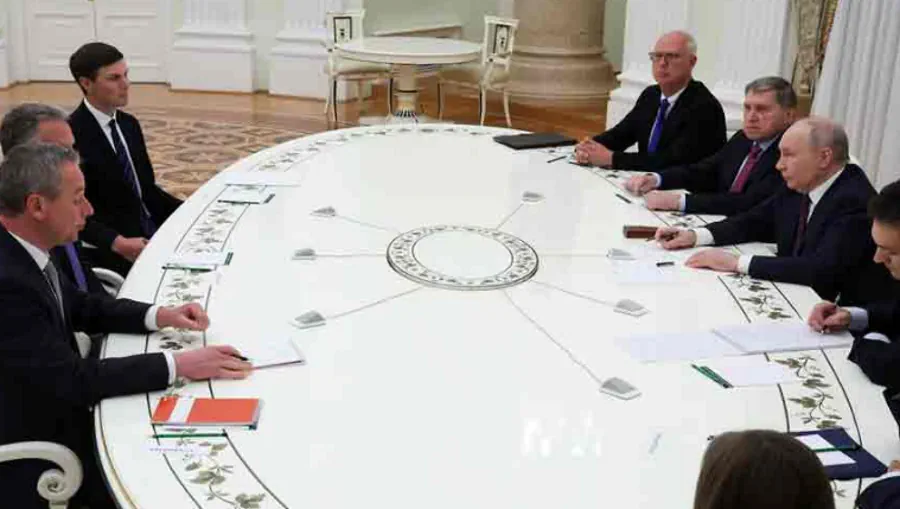
As part of the diplomatic initiative, Kushner and Witkoff travelled to Moscow for discussions with Putin before visiting Dublin for meetings with Zelenskyy.
The meetings formed part of the Trump administration’s renewed efforts to secure an agreement that could end the fighting and establish a framework for long-term stability in the region.
Kushner emphasised that any sustainable peace settlement would require reliable security guarantees and commitments from both sides to reduce military tensions.
He said reciprocal measures aimed at preventing further escalation would be necessary to lower the risk of another conflict after a potential agreement.
Territorial control remains one of the most difficult issues in the negotiations. Russia currently occupies approximately one-fifth of Ukrainian territory, while Kyiv continues to reject demands to surrender additional areas of the eastern Donbas region.
Both governments have acknowledged some movement in diplomatic discussions but maintain that significant differences remain, particularly regarding territorial sovereignty and the conditions necessary for ending hostilities.
Russia launched its full-scale invasion of Ukraine in February 2022, triggering a prolonged conflict that has resulted in widespread destruction, military and civilian casualties, and the displacement of millions of people.
Trump, who repeatedly pledged to end the Russia-Ukraine war upon returning to the White House, has made negotiations between Moscow and Kyiv a central foreign policy priority. However, despite renewed American mediation and several rounds of diplomatic engagement, a comprehensive peace agreement has not yet been reached.