UK, France and Canada Ban Israeli Settlement Goods to Support Two-State Solution
- Britain has announced a ban on goods produced in Israeli settlements in the occupied West Bank in coordination with France and Canada.
- The move aims to oppose settlement expansion and protect prospects for a future independent Palestinian state.
- Israeli ministers strongly condemned the decision, while the US ambassador to Israel described the sanctions as discriminatory.
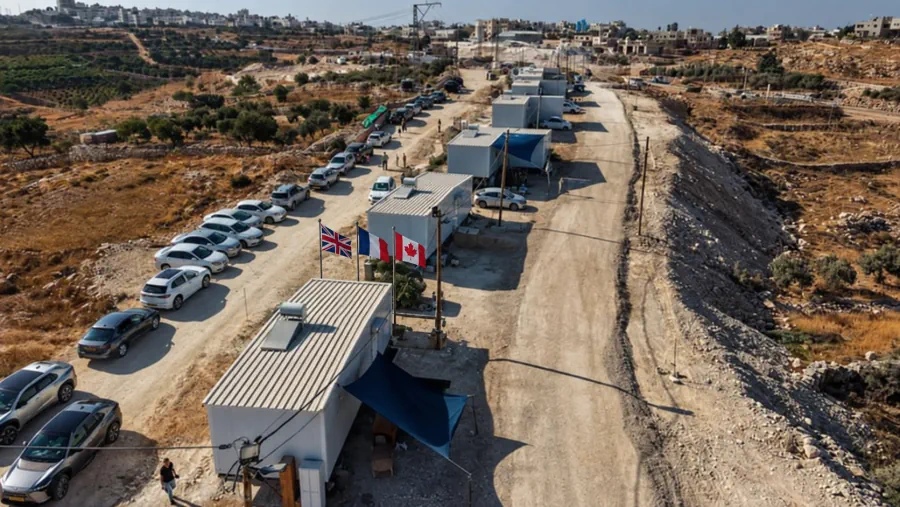
Britain announced on Tuesday that it would ban trade in goods produced in Israeli settlements in the occupied West Bank, coordinating the move with France and Canada as diplomatic pressure on Israel continues to grow.
British Foreign Minister Ed Miliband told the House of Commons that the UK could no longer limit itself to condemning injustice and suffering and must take practical action against the continued expansion of Israeli settlements.
Also Read:
“Today we refuse to be bystanders to further suffering and to the destruction of the two-state solution,” Miliband said, reaffirming Britain’s longstanding support for the establishment of an independent Palestinian state alongside Israel. The Israeli government opposes the two-state framework.
Miliband, who became foreign minister in July, said Britain considers Israel’s occupation of the West Bank unlawful. He also stated that London believes Palestinians are being subjected to ethnic cleansing in parts of the occupied territory.
The new restrictions are expected to have only a limited effect on the approximately £6 billion, or $8.12 billion, in annual trade between Britain and Israel. Details have yet to be provided on how British authorities will distinguish products originating in West Bank settlements from goods manufactured within Israel.
Settlement exports largely consist of agricultural products, including fresh produce and wine, and represent only a small proportion of Israel’s overall international trade.
The announcement drew an angry response from senior Israeli officials. Finance Minister Bezalel Smotrich called for the expulsion of the British ambassador from Tel Aviv, while National Security Minister Itamar Ben-Gvir urged Prime Minister Benjamin Netanyahu to close the British Consulate in East Jerusalem, which is accredited to the Palestinian Authority in the West Bank.
Israeli President Isaac Herzog accused Britain of attempting to interfere in Israel’s elections, which are scheduled for late October. The Israeli prime minister’s office and foreign ministry did not immediately respond to requests for comment.
International concern has recently focused on Israel’s E1 settlement project near Jerusalem. The proposed development would cut across territory sought by Palestinians for a future independent state. Miliband warned that the project posed a serious threat to the viability of the two-state solution.
Smotrich separately announced on Tuesday that plans for another 1,000 homes in two other West Bank settlements were being advanced.
The United Nations, Palestinians and most countries consider Israeli settlements in the occupied West Bank illegal under international law, although Israel rejects that position.
Britain formally recognised a Palestinian state in 2025 as part of its efforts to promote a two-state solution. In June, the UK also imposed sanctions on Israeli networks accused of financing, facilitating and carrying out violence in the occupied West Bank.
Relations between Britain and Israel have become increasingly strained in recent years amid London’s criticism of Israel’s military conduct in Gaza, settlement expansion and growing attacks by Israeli settlers against Palestinians.
US Ambassador to Israel Mike Huckabee criticised the latest measures, describing them as discrimination against Jewish people. He told the BBC that the restrictions could affect British companies operating in certain US states where businesses participating in boycotts of Israel may be barred from government contracts, public procurement or state-backed investments.
Miliband said Britain, France and Canada were joining the Netherlands, Ireland, Belgium, Spain and Norway in either banning settlement goods or preparing to introduce similar restrictions.