Tesla to Discontinue Cybertruck in 2027 as Electric Pickup Demand Weakens
- Tesla plans to end Cybertruck production by mid-2027 and redirect manufacturing capacity toward its Cybercab robotaxi.
- Cybertruck sales fell 28% to approximately 11,600 units in the first nine months of 2026, far below Elon Musk’s earlier expectations.
- Ford, General Motors and other automakers are reassessing electric pickup strategies as high prices, costly batteries and towing limitations affect demand.
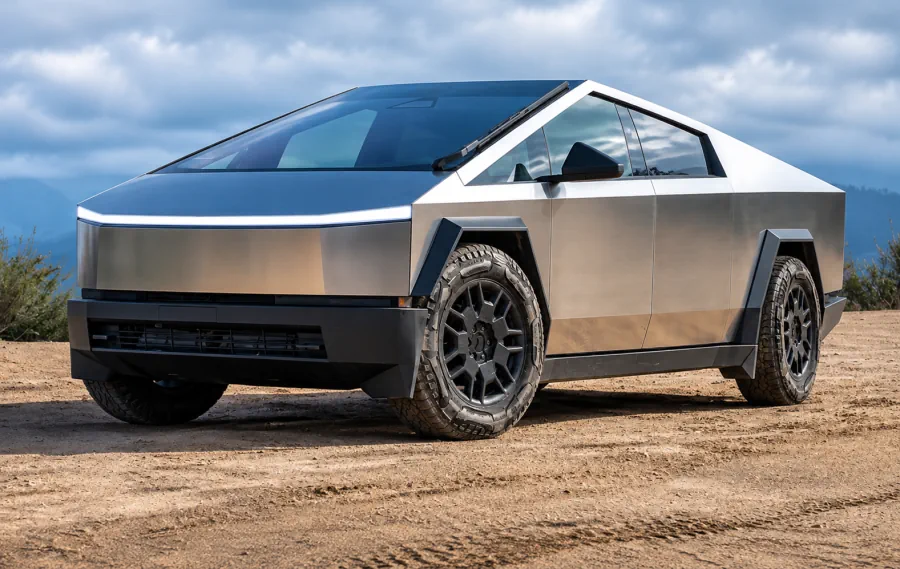
Tesla is preparing to discontinue its Cybertruck in 2027, marking a major setback for the electric pickup market as automakers struggle to attract buyers to large, battery-powered trucks.
The decision represents a significant change in direction for the American electric vehicle manufacturer, whose futuristic stainless-steel pickup was once expected to become a major product in its lineup. Instead, weaker-than-anticipated demand and changing industry priorities have placed its future in doubt.
Also Read:
Tesla CEO Elon Musk announced on Saturday through a social media post that the company would increase Cybertruck production at its Austin, Texas, manufacturing facility to fulfil outstanding customer orders before shutting down the assembly line around June or July 2027.
The move would free up manufacturing capacity for Tesla’s Cybercab, a purpose-built autonomous robotaxi that the company is developing as part of its broader push into self-driving transportation. The Cybercab has not yet entered commercial sales.
The Cybertruck, known for its sharp angles, unconventional appearance and stainless-steel exterior, attracted considerable attention when it was introduced. However, its distinctive design and technological features have not translated into the sales volumes Musk originally anticipated.
According to estimates from automotive research firm Motor Intelligence, Tesla sold approximately 11,600 Cybertrucks during the first nine months of 2026, representing a 28% decline compared with the corresponding period a year earlier.
These figures are considerably below Musk’s earlier projection that Cybertruck production could eventually reach 250,000 vehicles annually.
The company’s difficulties have also raised questions about the level of demand beyond ordinary retail customers. A federal regulatory filing revealed that SpaceX, another company led by Musk, purchased approximately $131 million worth of Cybertrucks from Tesla at listed prices during the previous year.
Tesla’s challenges reflect a wider slowdown in the American electric pickup market, where several major manufacturers have struggled to turn ambitious production plans into sustainable commercial success.
General Motors and Ford, two of America’s largest traditional automakers, invested heavily in electric versions of their popular full-size pickup trucks earlier this decade. The investments were partly intended to protect their established positions in the pickup market as Tesla and Rivian introduced competing electric vehicles.
For decades, manufacturers such as Ford, General Motors and Stellantis, the parent company of Ram, have attracted pickup buyers by offering increasingly powerful engines, improved towing capabilities and greater hauling capacity.
However, reproducing those advantages in fully electric trucks has proved considerably more difficult than expected.
Industry analysts identify high purchase prices as one of the biggest obstacles. Large electric pickups require substantial battery packs to deliver acceptable driving ranges, increasing manufacturing costs and making the vehicles more expensive than many conventional alternatives.
General Motors’ Chevrolet Silverado EV, for example, carries a starting price of approximately $62,000, placing it beyond the budgets of many potential buyers.
Another major concern involves performance during demanding activities. Electric pickups can experience significant reductions in driving range when towing heavy trailers, transporting equipment or carrying substantial loads.
These limitations are particularly important for customers who depend on pickup trucks for agricultural operations, construction work and commercial transportation.
Karl Brauer, executive analyst at automotive research platform iSeeCars.com, said manufacturers have struggled to convince buyers to spend more on electric trucks that may offer less practical utility for certain traditional pickup tasks.
The economic challenges have also forced Ford to reconsider its electric truck ambitions.
Ford CEO Jim Farley previously acknowledged that larger electric vehicles create significant financial pressure because they require more expensive batteries, while customers are often unwilling to pay the additional price necessary to protect manufacturers’ profit margins.
During an earnings discussion last year, Farley explained the financial difficulties surrounding large electric pickups as Ford prepared to discontinue its F-150 Lightning, the battery-powered version of its popular F-150 truck.
The Lightning initially attracted strong interest and was regarded as one of the more successful electric pickups on the American market. However, demand subsequently weakened, prompting Ford to revise its electric vehicle strategy.
The company is now directing greater attention toward smaller, more affordable electric vehicles, including a planned pickup called the Fathom.
Ford expects to introduce the smaller electric truck toward the end of 2027, with an anticipated starting price of approximately $28,000. The lower price would represent a substantial departure from the expensive full-size electric pickups that previously dominated manufacturers’ development plans.
Other automakers are increasingly exploring hybrid and extended-range electric technologies as alternatives to conventional battery-only trucks.
Stellantis, for example, plans to introduce an extended-range electric pickup in 2027. Unlike a fully battery-powered vehicle, the proposed truck will incorporate a gasoline-powered generator capable of producing electricity to recharge its battery while travelling.
The technology is intended to address some of the range and towing concerns associated with large electric pickups while retaining the benefits of electric propulsion.
The changing strategies across the industry indicate that manufacturers are placing greater emphasis on affordability, operating costs and everyday practicality as they reconsider how electric technology can meet the needs of traditional pickup customers.