PTA Plans to Reduce Voice SIM Limit to Three Per CNIC, Increase Data SIM Allowance
- The Pakistan Telecommunication Authority (PTA) is considering reducing the maximum number of voice SIMs allowed per CNIC from five to three.
- The regulator is also reviewing plans to increase the existing limit of three data SIMs to support expanding 5G and Internet of Things (IoT) services.
- The proposed changes aim to prevent the misuse of mobile connections in cybercrime, with a final decision expected after consultations with telecom operators.
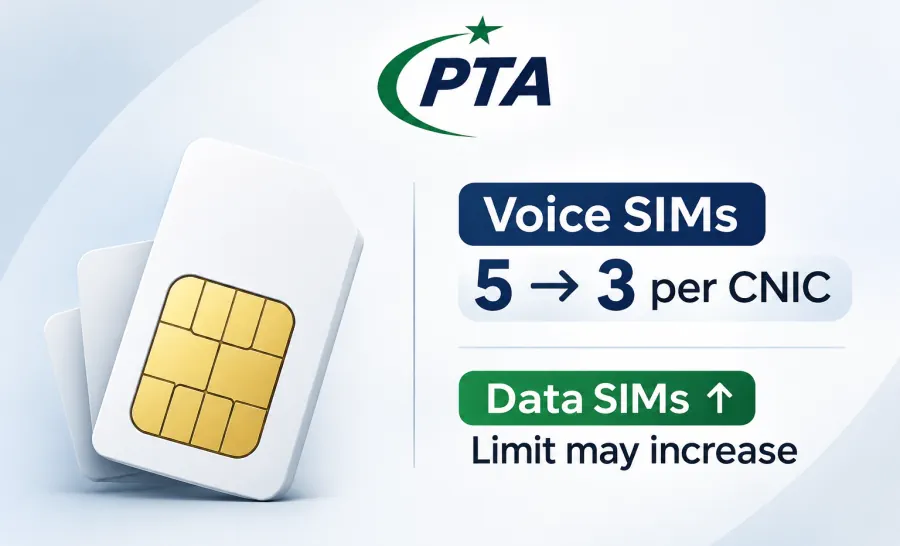
The Pakistan Telecommunication Authority (PTA) is reviewing the existing rules for mobile SIM ownership in Pakistan, with a proposal to reduce the number of voice SIMs registered against a single Computerised National Identity Card (CNIC) from five to three.
The proposed revision is part of a broader regulatory review aimed at strengthening mobile network security, preventing the misuse of SIM cards and accommodating the country’s growing demand for internet connectivity.
Also Read:
According to PTA officials, a decision has been taken in principle to reassess the current SIM registration limits, particularly the number of voice connections an individual can obtain using one CNIC.
Under the existing regulations, a Pakistani citizen can register up to eight SIM cards against a single CNIC, including five voice SIMs and three data SIMs. The authority is now considering changing this distribution by reducing the voice SIM allowance while expanding the number of permitted data connections.
Officials explained that most mobile subscribers generally use two or three voice SIMs at a time, making the current allowance of five connections higher than the typical requirements of an individual user.
The regulator believes that allowing multiple voice connections under one identity card can increase the risk of their misuse in cybercrime, fraudulent activities and other unlawful operations.
Reducing the number of voice SIMs is therefore being considered as a preventive measure to strengthen oversight of mobile connections and limit opportunities for illegal activities involving registered telephone numbers.
At the same time, PTA is examining the possibility of increasing the maximum number of data SIMs that can be issued against one CNIC. Currently, individuals are permitted to register three data SIMs, but officials believe this allowance may become insufficient as Pakistan’s telecommunications infrastructure continues to develop.
The expected expansion of fifth-generation mobile services, commonly known as 5G, is among the major factors behind the proposed increase.
With 5G technology expected to support faster internet speeds, improved network capacity and a wider range of connected devices, the demand for data-based mobile connections is likely to grow significantly.
Officials also highlighted the increasing importance of Internet of Things (IoT) technology, which allows electronic devices, equipment and automated systems to communicate through internet-enabled networks.
Such applications can require dedicated data connections for devices operating independently of conventional mobile phones, creating a need for more flexible SIM registration rules.
The proposed increase in data SIM allowances is intended to accommodate these changing requirements while supporting the development of advanced digital services across Pakistan.
PTA officials said the review would take into account technological developments, security concerns and the evolving requirements of mobile subscribers and telecom operators.
However, the proposed reduction in voice SIMs and increase in data SIMs have not yet been formally implemented.
The authority will consult mobile network operators before finalising any changes to the existing framework. These discussions are expected to help determine appropriate limits that balance consumer requirements, network development and security considerations.
Until revised regulations are officially announced, the existing allowance of five voice SIMs and three data SIMs per CNIC will remain applicable.