Pakistan Seeks UNESCO Support to Add Rani Ghat, Banbhore to World Heritage List
- Pakistan has sought UNESCO’s assistance to advance Rani Ghat in Khyber Pakhtunkhwa and the Port of Banbhore in Sindh for inclusion in the World Heritage List.
- The government also wants UNESCO support for four Pakistani foods and culinary traditions under the Intangible Cultural Heritage framework.
- Pakistan and UNESCO discussed heritage conservation, ancient cultural routes, international nominations, technical training and upcoming cultural activities.
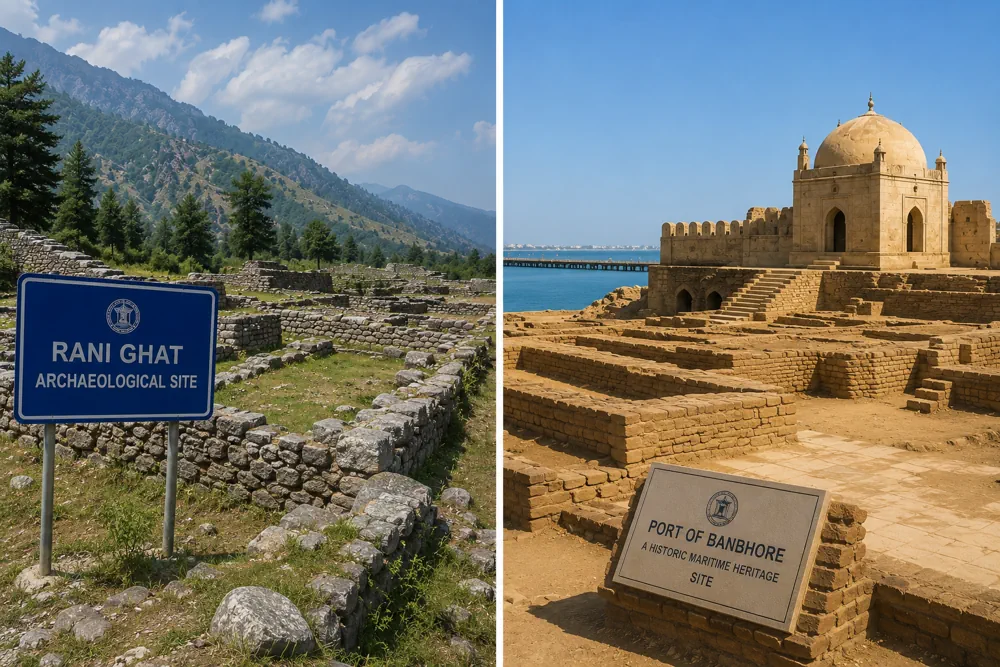
ISLAMABAD: Pakistan has sought UNESCO’s support to advance two major archaeological sites — Rani Ghat in Khyber Pakhtunkhwa and the Port of Banbhore in Sindh — for inclusion in the UNESCO World Heritage List.
The request was made during a meeting between Federal Minister for National Heritage and Culture Aurangzeb Khan Khichi and UNESCO Representative in Pakistan Fuad Pashayev in Islamabad on Wednesday.
Also Read:
Both the Archaeological Site of Ranighat and the Port of Banbhore are already among the 37 Pakistani properties included on UNESCO’s Tentative List.
During the meeting, officials were informed that a World Heritage Committee-related visit to Banbhore was expected from September 6 to 11, 2026. Secretary National Heritage and Culture Asad Rehman Gilani was also invited to join the delegation.
Khichi requested special assistance from UNESCO in moving Pakistan’s heritage nominations forward and supporting conservation efforts. He said several important archaeological and cultural sites required greater attention as well as international technical assistance.
Pashayev assured the minister of UNESCO’s possible assistance and said its Pakistan office would continue to treat heritage preservation as a key priority. He reaffirmed UNESCO’s commitment to supporting the preservation of Pakistan’s cultural heritage.
The discussions extended beyond physical heritage sites, with the minister also seeking UNESCO’s assistance for the inclusion of four selected Pakistani foods and culinary traditions in the UNESCO Intangible Cultural Heritage framework.
Pashayev asked the ministry to provide a list of the proposed culinary traditions so they could be examined further.
Another proposal discussed during the meeting concerned research into an ancient trade and cultural route connecting the Indus Valley Civilization with regions extending through present-day Iran and Syria towards Mesopotamia.
Pashayev pointed to similarities between archaeological materials and artefacts discovered across these ancient civilizations and suggested that their historical connections deserved further scholarly investigation.
Khichi said Pakistan could consider organising a conference bringing together historians and archaeologists to study the proposed ancient route and assess its historical importance.
The UNESCO representative also appreciated Pakistan’s efforts to pursue joint and multinational nominations for UNESCO heritage recognition, including cultural elements such as the Rubab and Sitar.
The two sides discussed UNESCO workshops and capacity-building programmes as well. Khichi proposed that technical workshops currently held at individual archaeological sites should also be organised in Islamabad, allowing federal and provincial officials and technical experts to participate.
The minister further said Pakistan would formally invite UNESCO Director-General Audrey Azoulay to attend Lok Mela and other cultural activities in the country.
Secretary Asad Rehman Gilani said Pakistan was preparing to host several major cultural activities during the coming year under its leadership of the Shanghai Cooperation Organization and the Economic Cooperation Organization.
He said Lahore had been designated as a centre for SCO cultural activities, with Pakistan planning multiple events domestically and in cooperation with member countries.
Khichi also invited Pashayev to visit the Shah Allah Ditta Caves and Mai Qamro Mosque. He said the Shah Allah Ditta Caves were being developed for cultural tourism and were expected to open to visitors in the second week of October. Pashayev said he would make efforts to attend the event.
Pashayev appreciated Pakistan’s work to preserve both tangible and intangible heritage, saying each of the country’s 37 properties on UNESCO’s Tentative List carried its own heritage value and significance.
He stressed the need to identify practical ways to support the preparation and advancement of these sites. UNESCO, he said, would continue working with Pakistan in areas including advocacy, technical engagement, communication and capacity building.