Nvidia Board Reportedly Considering Removing CEO Jensen Huang Amid Affair and Espionage Allegations
- Nvidia’s board is reportedly considering the future of CEO Jensen Huang following allegations involving two extramarital relationships and potential foreign intelligence concerns.
- The company has launched an independent investigation into reports that Huang was targeted by a suspected Chinese intelligence operative, while US lawmakers are seeking further information.
- Nvidia shares have reportedly fallen sharply amid the controversy, with shareholders filing a lawsuit alleging that important information was withheld from investors.
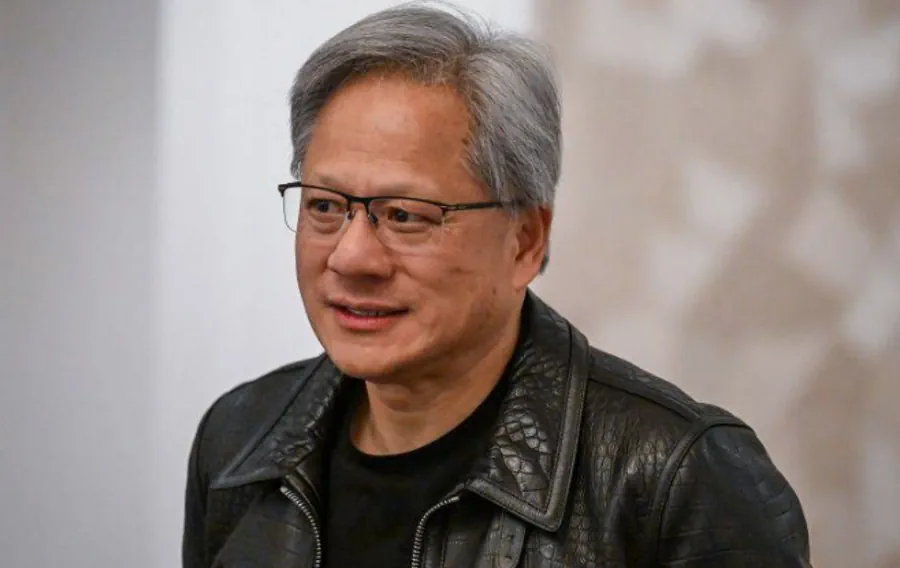
Nvidia co-founder and Chief Executive Officer Jensen Huang is facing mounting pressure over his leadership after reports emerged that the semiconductor giant’s board is considering his removal following allegations of extramarital relationships and possible exposure to Chinese intelligence operations.
According to reports published Wednesday by the Wall Street Journal, Nvidia’s board of directors was preparing to meet as early as the same day to discuss Huang’s future at the company. The discussions follow a series of revelations that have raised questions about corporate governance, executive conduct and potential national security risks.
Also Read:
The controversy intensified after the New York Times reported allegations of a second extramarital relationship involving the 63-year-old executive and Kimberly Powell, Nvidia’s 48-year-old vice president of health care.
According to the report, Huang and Powell were seen displaying affection at a hotel during a conference in San Jose, California. The newspaper also reported the existence of video evidence showing the two executives together.
Powell has played a prominent role in Nvidia’s efforts to expand the application of its advanced computing technology into health care and higher education, two sectors the company has increasingly targeted as part of its artificial intelligence business.
The latest allegations emerged shortly after Huang acknowledged having an extramarital relationship with Alice Huang, a senior executive at Singapore-based data centre company Megaspeed.
The Wall Street Journal reported that Jensen Huang and Alice Huang, who are not related, had been photographed together in Taipei during 2024 and 2025.
The relationship attracted additional scrutiny following reports that US intelligence officials had circulated a memorandum earlier this year alleging that Alice Huang was associated with China’s Ministry of State Security.
The intelligence allegation has not been established as fact, but the reports have raised concerns about whether the Nvidia chief executive could have been exposed to foreign intelligence efforts.
In a message sent to Nvidia employees on Sunday, Huang acknowledged his relationship with Alice Huang and admitted to being unfaithful to his wife.
“I was unfaithful to my wife,” Huang wrote in the communication, according to the report.
On the same day, Nvidia’s board announced that it had initiated an independent investigation following reports that its founder and chief executive may have been targeted by a foreign intelligence operation.
The board said the investigation would examine the circumstances surrounding the allegations and the potential implications for the company.
Huang publicly expressed support for the inquiry and pledged to cooperate with investigators.
“I support the investigation and will cooperate fully. I love our country and our company,” he said in his statement.
The controversy has also reportedly drawn attention from US lawmakers, with members of Congress seeking a closed-door briefing from Huang regarding his interactions with Alice Huang and any potential national security implications.
The allegations come at a particularly sensitive time for Nvidia, which has become one of the world’s most influential technology companies as demand for artificial intelligence infrastructure continues to accelerate.
Under Huang’s leadership, Nvidia has emerged as a dominant supplier of advanced processors used to train and operate artificial intelligence systems, making the company a central player in the global AI industry.
The company’s rapid growth has elevated Huang’s standing in both the technology sector and Washington, where he has maintained a visible presence in discussions surrounding artificial intelligence, semiconductor manufacturing and US technological competitiveness.
Huang has appeared alongside US President Donald Trump at several White House events, including a ceremony last month during which he received the National Medal of Science.
He has also been associated with leading technology executives, including Elon Musk, Jeff Bezos and Mark Zuckerberg, in discussions about industry-led approaches to managing potential risks associated with artificial intelligence.
Those discussions have taken place against the backdrop of the Trump administration’s preference for limited government intervention in AI development, despite concerns raised by researchers and policymakers about the technology’s potential consequences.
Meanwhile, the controversy has reportedly triggered legal action from Nvidia shareholders, who have filed a class-action lawsuit against Huang and the company.
The lawsuit alleges that Nvidia failed to disclose information concerning the executive’s relationship that investors considered relevant to evaluating the company’s leadership and potential risks.
Nvidia’s stock has also reportedly experienced significant declines in recent trading sessions following Huang’s acknowledgment of the affair, adding financial pressure to an already sensitive situation for the company’s leadership.
Nvidia is best known for designing graphics processing units, or GPUs, originally developed to handle complex visual rendering in video games. These processors have since become essential components in artificial intelligence, high-performance computing and large-scale data centre operations.
Although Nvidia designs its advanced chips, much of its semiconductor manufacturing is carried out by Taiwan Semiconductor Manufacturing Company (TSMC), the world’s largest contract chipmaker.
The company’s dependence on sophisticated semiconductor manufacturing and its central position in the AI supply chain have made its leadership particularly important to investors, governments and technology companies worldwide.
As of the reported developments, Nvidia’s board had not publicly announced a decision to remove Huang, and the allegations concerning foreign intelligence involvement remained subject to investigation.