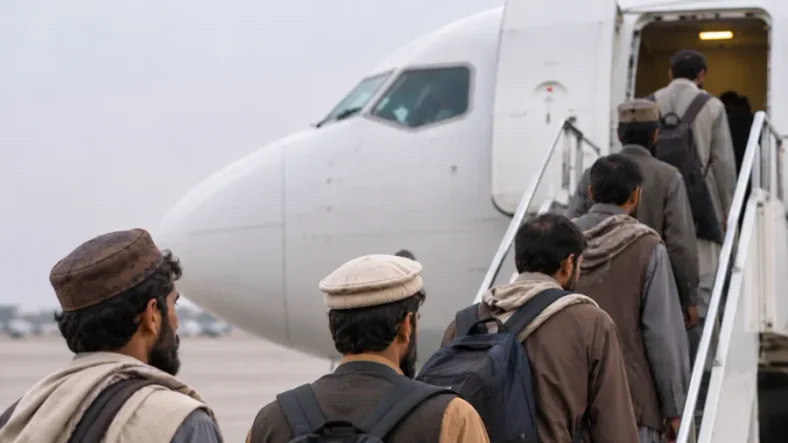
US Plans to Deport Over 150 Afghan Immigrants to Afghanistan Through Pakistan
- The Trump administration is reportedly preparing to deport more than 150 Afghan immigrants to Afghanistan through Pakistan, with the first flight potentially departing Monday.
- Those facing deportation reportedly include relatives of Afghans who assisted US military forces before the Taliban takeover in August 2021.
- Advocacy groups warn that returning vulnerable Afghans could expose them to serious security threats amid ongoing tensions between Pakistan and Afghanistan.
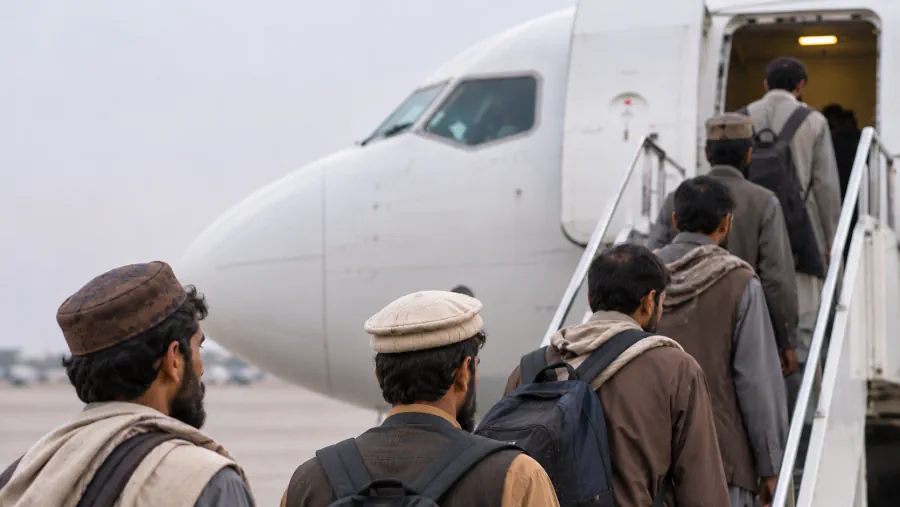
The administration of US President Donald Trump is preparing to deport more than 150 Afghan immigrants to Afghanistan through Pakistan, according to American media reports, raising concerns among human rights organisations about the safety of those being returned to Taliban-controlled territory.
The New York Times reported on Friday, citing three unnamed US officials, that the deportations could begin as early as Monday, with more than 150 Afghan nationals expected to be affected by the latest immigration enforcement operation.
Also Read:
Under the reported arrangement, the United States would transport the Afghan immigrants to Pakistan, from where Pakistani authorities would oversee their removal to Afghanistan.
The plan comes amid the Trump administration’s broader immigration crackdown, which has included travel restrictions on several countries, including Afghanistan, and efforts to end temporary deportation protections previously available to certain Afghan nationals.
The proposed removals have drawn particular concern because some of those facing deportation reportedly have family connections to Afghans who worked alongside American military personnel during the United States’ two-decade involvement in Afghanistan.
According to AfghanEvac, an organisation supporting Afghans who assisted the United States and their families, relatives of former Afghan allies are among those expected to be returned.
Advocacy groups have warned that individuals associated with the former US-backed Afghan government or American military operations could face serious threats if forced to return to Afghanistan under Taliban rule.
Following the Taliban’s return to power in August 2021, the United States provided immigration pathways for certain eligible Afghan nationals, including Special Immigrant Visas for individuals who had supported American operations and met the programme’s requirements.
However, the Trump administration has pursued tighter immigration controls, including restrictions affecting Afghan nationals and efforts to terminate protections against deportation.
The latest reported operation represents another development in Washington’s changing immigration policy towards Afghans who left their country following the collapse of the former Afghan government.
According to the US officials cited by The New York Times, direct deportation arrangements between Washington and Afghanistan are not available, making Pakistan a transit country for the proposed removals.
Under the reported plan, Pakistani authorities would be responsible for transferring the deportees into Afghanistan after their arrival from the United States.
The development comes as Pakistan continues its own campaign to repatriate Afghan nationals living in the country without valid immigration documentation.
Earlier this year, Pakistani authorities directed law enforcement agencies across the country to arrest Afghan citizens without valid visas as part of an ongoing repatriation programme.
Pakistan’s policy has resulted in the return of millions of Afghan nationals over several years, including people who had sought refuge in the country during decades of conflict and instability in Afghanistan.
The repatriation campaign has intensified since the Taliban returned to power in Kabul in August 2021, with Pakistani authorities maintaining that foreign nationals must comply with the country’s immigration laws.
The reported US deportation plan also comes at a time of serious diplomatic and security tensions between Pakistan and Afghanistan.
Relations between Islamabad and Kabul have remained strained since the Taliban takeover, with disagreements over cross-border militancy, border security and the presence of armed groups contributing to repeated confrontations.
Tensions escalated significantly following deadly border clashes in October last year, which resulted in the near-total closure of crossings between the two countries.
Although mediation efforts subsequently helped reduce hostilities, the security situation deteriorated again in February, when Pakistan declared what it described as an “open war” against its neighbour.
Islamabad has repeatedly accused Afghan territory of being used by militant organisations responsible for deadly attacks inside Pakistan.
Pakistani authorities maintain that armed groups operating from Afghanistan pose a serious threat to national security and have called on the Taliban administration to take effective action against them.
The Taliban government has rejected Pakistan’s allegations, denying that it allows Afghan territory to be used for attacks against neighbouring countries.
The continuing dispute has complicated bilateral relations and cross-border movement, creating additional uncertainty for Afghan nationals facing repatriation.
Against this backdrop, the reported US decision to deport Afghan immigrants through Pakistan has raised questions about the arrangements for their transfer and the potential risks awaiting them upon their return.
Afghan advocacy organisations remain concerned that some deportees, particularly those with connections to former American military operations, could face persecution or retaliation after arriving in Afghanistan.