Punjab Assembly Calls for Forensic Audit of LESCO Electricity Bills Over Alleged Overbilling
- Punjab Assembly committees recommend a forensic audit of LESCO billing to investigate excessive charges and suspected manipulation of consumer records.
- LESCO acknowledges past billing irregularities and confirms disciplinary action against several officials involved in billing fraud.
- Lawmakers demand advance notice of load-shedding, improved consumer complaint procedures and protection for customers who regularly pay their bills.
The Punjab Assembly has called for a comprehensive forensic audit of electricity bills issued by the Lahore Electric Supply Company (LESCO) following serious complaints of overbilling, irregular charges and alleged manipulation of consumer records.
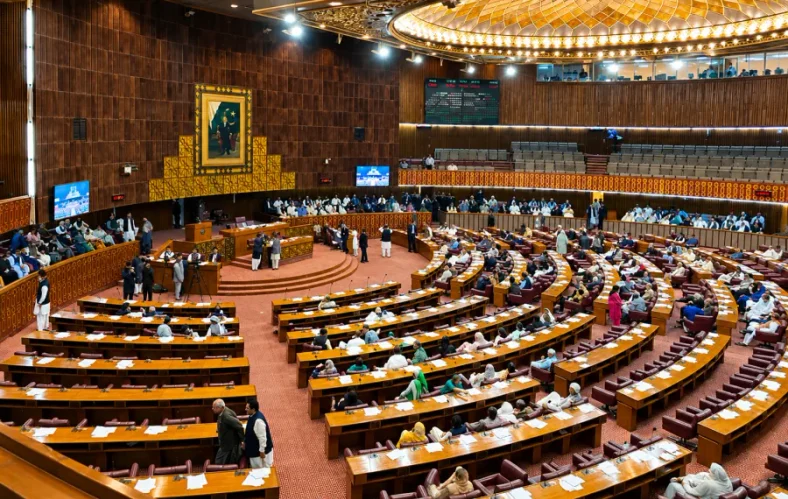
The recommendation was made during a joint meeting of the Assembly’s Committee on Law Reforms and Delegated Legislation and Special Committee No. 16, chaired by Speaker Malik Muhammad Ahmad Khan at the New Assembly Building in Lahore on October 6, 2026.
Also Read:
According to details of the meeting, lawmakers demanded an independent investigation into disputed electricity bills, identification of officials responsible for irregularities and stronger measures to protect consumers from unfair financial burdens.
The committees also recommended establishing an impartial complaint-handling system, preventing collective electricity disconnections and ensuring that losses caused by power theft are not passed on to customers who regularly pay their bills.
During the meeting, LESCO Chief Executive Officer Muhammad Ramzan Butt acknowledged that irregularities had previously occurred in the company’s billing operations. He confirmed that several Executive Engineers (XENs) and Sub-Divisional Officers (SDOs) had been dismissed in connection with billing fraud.
The LESCO chief informed lawmakers that, following the Prime Minister’s intervention, the company had engaged an independent technology firm to examine billing discrepancies. The initial audit would focus on disputed commercial electricity bills highlighted by members of the Assembly.
He accepted that the complaints raised by lawmakers were genuine and assured the committees that corrective measures would be taken. He also promised to personally visit affected areas and meet elected representatives to address consumer concerns.
Assembly members highlighted cases in which electricity bills had allegedly been calculated using arbitrary assessments rather than actual consumption. Some officials were accused of adjusting billing parameters to achieve targets associated with property values.
Particular concern was expressed over electricity charges imposed on closed properties and residents of flood-affected areas. Lawmakers noted that some communities had received average electricity bills despite experiencing a complete suspension of power supply for four months.
The committees maintained that such practices placed an unjustified financial burden on consumers and called for a detailed examination of disputed bills to establish the reasons behind excessive charges.
The shortage of electricity meters was another major issue raised during the proceedings. MPA Malik Ahmad Saeed Khan said consumers were experiencing considerable difficulties obtaining new meters while facing unusually high electricity charges.
He also referred to an incident in which a child reportedly died because of dangerous electricity wires and questioned LESCO’s handling of the matter.
MPA Ahsan Raza Khan raised concerns about fixed-rate electricity billing, difficulties in contacting senior LESCO officials and continued unscheduled power outages despite an earlier Punjab Assembly resolution addressing the issue.
The committees expressed dissatisfaction over prolonged and unannounced load-shedding, particularly when electricity generation capacity was reportedly sufficient to meet demand.
Members questioned why consumers continued to experience lengthy interruptions and demanded strict implementation of National Electric Power Regulatory Authority (NEPRA) requirements concerning advance notification of scheduled outages.
Under the recommendations, electricity distribution companies should provide consumers with at least 48 hours’ notice before planned load-shedding, in accordance with applicable NEPRA instructions.
Punjab Law Minister Rana Muhammad Iqbal Khan suggested that uninterrupted two-hour outages should be avoided. Instead, he proposed dividing the total daily load-shedding duration into shorter 30-minute periods to reduce inconvenience.
Responding to the concerns, LESCO’s chief executive explained that a uniform load-shedding policy was being implemented nationwide.
However, lawmakers insisted that consumers who consistently paid their electricity bills should not suffer because of electricity theft or distribution losses caused by others.
They recommended developing a mechanism to prevent companies from recovering such losses through additional charges imposed on compliant consumers. The practice of disconnecting electricity to entire localities or groups of grid consumers was also recommended for review.
The condition of electricity distribution infrastructure was discussed extensively, with particular attention given to dangerous electrical wires and installations that could threaten public safety.
Speaker Malik Muhammad Ahmad Khan questioned the existing procedures for preventing electricity-related accidents, identifying responsible officials and compensating victims.
He observed that electricity consumers regularly paid charges intended for the maintenance and improvement of distribution infrastructure, yet hazardous installations continued to endanger lives and property.
Photographs showing dangerous electrical wiring were presented during the meeting, prompting the committees to demand stronger oversight and accountability.
Lawmakers recommended that whenever an electricity-related accident caused injury or death, the responsible provincial authorities should coordinate with LESCO and the Punjab Energy Department to establish responsibility.
Punjab Energy Department Chief Engineer Muhammad Yaseen briefed the meeting on the legal provisions governing electrical accidents.
He explained that Section 33 of the Electricity Act, 1910, provides for government intervention in incidents involving injuries or fatalities.
Under earlier procedures, the relevant distribution company’s Sub-Divisional Officer was required to report such incidents to the Electrical Inspector and the company’s head office. The government could subsequently order an investigation by an Electrical Inspector.
Muhammad Yaseen further explained that the Consumer Service Manual 2010, issued under the Regulation of Generation, Transmission and Distribution of Electric Power Act, 1997, provides the prevailing regulatory framework because the 1997 legislation has overriding legal effect.
Under the existing procedures, electrical accidents must be reported immediately to the nearest police station and the relevant distribution company’s complaint office. Police are responsible for investigating such incidents in coordination with the Electrical Inspector.
He also referred to Chapters 12 and 13 of the Consumer Service Manual, which address matters relating to hazardous electrical installations.
Punjab Energy Secretary Muhammad Ajmal Bhatti supported the explanation and stated that there was no contradiction between the Electricity Act of 1910 and the legislation enacted in 1997.
The committees nevertheless called for stricter implementation of existing legal obligations, particularly regarding accident reporting, safety inspections, investigations and the timely identification of responsible parties.
Another major concern was the absence of an effective independent platform where consumers could challenge alleged misconduct or irregularities by electricity distribution companies.
Lawmakers recommended reviewing the existing complaint investigation system and establishing arrangements that would allow grievances to be examined fairly and independently.
They called for timely resolution of complaints involving excessive billing, electricity disconnections, delayed restoration of supply, compensation claims and accidents involving electrical infrastructure.
The committees also proposed including elected representatives in complaint-handling arrangements to ensure that problems affecting local communities received appropriate attention.
Representing the federal government, Power Division Joint Secretary Muhammad Khalid Khan acknowledged weaknesses in customer service across electricity distribution companies.
He informed the meeting that the Ministry of Energy was working to establish Customer Service Committees at divisional and Executive Engineer levels.
These committees would include public and legislative representatives to help resolve electricity-related complaints within their respective areas.
He further disclosed that a high-level supervisory body would be established under the Prime Minister’s directions to monitor unresolved complaints and improve accountability.
The proposed system is intended to strengthen coordination among electricity companies, consumers and elected representatives while ensuring that complaints are properly recorded, monitored and addressed.
The committees also discussed illegal electricity connections and widespread power theft, recommending that the federal Power Division and Punjab Energy Department jointly prepare a comprehensive policy to tackle these problems.
The proposed policy would include enforcement measures against illegal connections and electricity theft, along with the possible regularisation of existing connections where permitted under the law.
Lawmakers emphasized that action against electricity theft should focus on those responsible rather than imposing collective penalties or additional financial charges on consumers who comply with payment requirements.
The Power Division was also asked to develop a comprehensive consumer complaint policy covering registration, investigation, resolution, compensation, restoration of electricity supply, monitoring and accountability.
The meeting was attended by Punjab Energy Secretary Muhammad Ajmal Bhatti, Director Law and Parliamentary Affairs Muhammad Naeem Khan, Chief Engineer Muhammad Yaseen and other relevant officials.