PTI Accuses Shehbaz Sharif of Democratic Hypocrisy, Demands Restoration of KP Government
- PTI strongly rejects Prime Minister Shehbaz Sharif’s criticism of its 13-year governance in Khyber Pakhtunkhwa, accusing him of benefiting from electoral manipulation.
- The party blames the federal government for worsening security conditions, withholding provincial funds and targeting political opponents.
- PTI demands the withdrawal of governor’s rule, release of Imran Khan and Bushra Bibi, restoration of the elected KP government and fresh general elections.
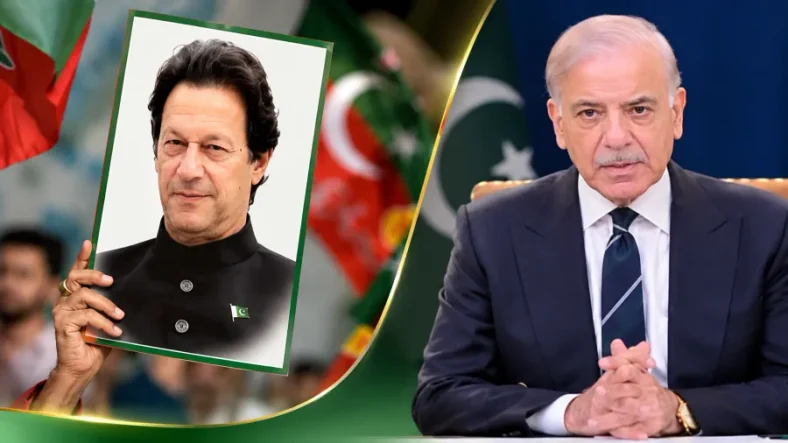
Pakistan Tehreek-e-Insaf (PTI) on Saturday strongly criticised Prime Minister Shehbaz Sharif over his remarks about the party’s nearly 13-year rule in Khyber Pakhtunkhwa (KP), accusing the federal government of undermining democratic institutions, interfering in provincial affairs and failing to address the country’s growing economic and security challenges.
Responding to the prime minister’s speech at a Pakistan Muslim League-Nawaz (PML-N) parliamentary party meeting, PTI questioned his democratic credentials and alleged that his government had come to power through electoral irregularities and political arrangements rather than a genuine public mandate.
Also Read:
The party maintained that a prime minister whose legitimacy it disputes had no moral standing to criticise others over democracy, governance or public service.
PTI challenged Shehbaz Sharif to explain the circumstances surrounding his rise to the country’s highest executive office, reiterating its allegations of systematic manipulation of the electoral process.
The opposition party also rejected the prime minister’s criticism of its performance in Khyber Pakhtunkhwa, arguing that voters had repeatedly expressed confidence in PTI by electing it to govern the province for three consecutive terms.
According to PTI, electoral support demonstrated that the people of KP were capable of evaluating the performance of their elected representatives without interference from unelected authorities.
The party insisted that the public, rather than political opponents or an administration imposed through governor’s rule, should determine whether a provincial government had fulfilled its responsibilities.
Addressing the deteriorating security situation in Khyber Pakhtunkhwa, PTI dismissed allegations that its policies were responsible for the resurgence of terrorism.
It claimed that the province had experienced comparatively peaceful conditions during former Prime Minister Imran Khan’s tenure and accused the current federal administration of failing to prevent increasing militant violence.
PTI argued that responsibility for national security could not be placed solely on the provincial government while federal institutions controlled important resources and security arrangements.
The party stated that the provincial administration led by Sohail Afridi had allocated considerable funding for police vehicles and operational requirements to strengthen law enforcement capabilities.
However, it alleged that federal authorities had failed to provide the modern equipment and resources necessary for provincial security personnel to effectively confront militant threats.
PTI also questioned the federal government’s handling of financial transfers to Khyber Pakhtunkhwa, claiming that billions of rupees belonging to the province remained unpaid despite its significant security responsibilities.
The party demanded an explanation for the alleged withholding of funds and maintained that KP should receive its full constitutional and financial entitlements, including its rightful share under the National Finance Commission (NFC) Award.
It argued that the province had made substantial sacrifices in the fight against terrorism and should not be deprived of resources required to maintain security and provide essential public services.
PTI further accused the PML-N administration of concentrating on political opponents instead of addressing terrorism, economic difficulties and other pressing public concerns.
The party alleged that authorities were conducting raids on the homes of opposition workers, removing PTI flags and using intimidation to discourage political activities.
It maintained that such actions reflected political victimisation and raised serious questions about the government’s commitment to democratic freedoms.
The opposition party also renewed its demand for the immediate release of PTI founder Imran Khan and his wife, Bushra Bibi, along with other individuals it described as political prisoners.
PTI condemned restrictions allegedly imposed on political meetings and access to legal counsel, claiming that these measures were intended to weaken the party and suppress its public support.
It accused the government of using administrative and legal measures against political opponents rather than allowing them to participate freely in the democratic process.
Turning to the country’s economic situation, PTI challenged Prime Minister Shehbaz Sharif to explain the government’s performance in controlling inflation, poverty and unemployment.
The party highlighted rising fuel and gas prices, financial difficulties facing farmers, allegations of corruption and the increasing number of skilled professionals leaving Pakistan in search of better opportunities abroad.
It argued that ordinary citizens continued to face serious financial pressure while the ruling elite remained largely insulated from the consequences of economic hardship.
PTI maintained that the federal government should prioritise improving living standards, creating employment opportunities and providing relief to struggling households instead of engaging in political confrontation.
The party also accused the ruling coalition of weakening parliamentary supremacy, undermining judicial independence and restricting constitutional rights.
It alleged that controversial political and constitutional measures had reduced democratic accountability and strengthened the influence of unelected institutions in national decision-making.
PTI called for the reversal of constitutional amendments it considered controversial, arguing that democratic institutions must function independently and in accordance with the Constitution.
Regarding Khyber Pakhtunkhwa, the party demanded the immediate withdrawal of governor’s rule and emergency measures, along with the restoration of the elected provincial government.
It insisted that the federal government should release all outstanding provincial funds and ensure that KP receives its complete financial share under the NFC arrangement.
The party also demanded fresh, free and fair general elections, maintaining that a new public mandate was necessary to restore political legitimacy and public confidence in democratic institutions.
PTI urged the prime minister to respect the electorate’s decisions rather than criticising the democratic credentials of political opponents.
The party maintained that Pakistan’s political leadership must be determined through transparent elections and the will of voters, not through political engineering or the involvement of unelected forces.