PM Shehbaz Sharif Criticizes PTI’s 13-Year Rule in KP, Questions Rs 800 Billion Spending
- Prime Minister Shehbaz Sharif criticizes PTI’s nearly 13-year governance in Khyber Pakhtunkhwa, questioning its performance in education, healthcare and public safety.
- PM raises concerns over the utilisation of approximately Rs800 billion in additional NFC funds allocated to KP for counterterrorism.
- Shehbaz Sharif defends governor’s rule in KP and directs the administration to focus on immediate public relief, security and essential services.
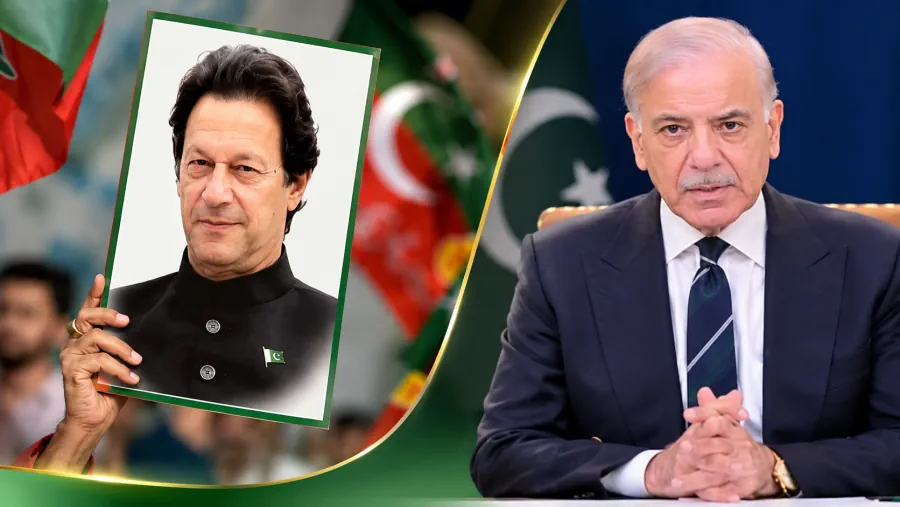
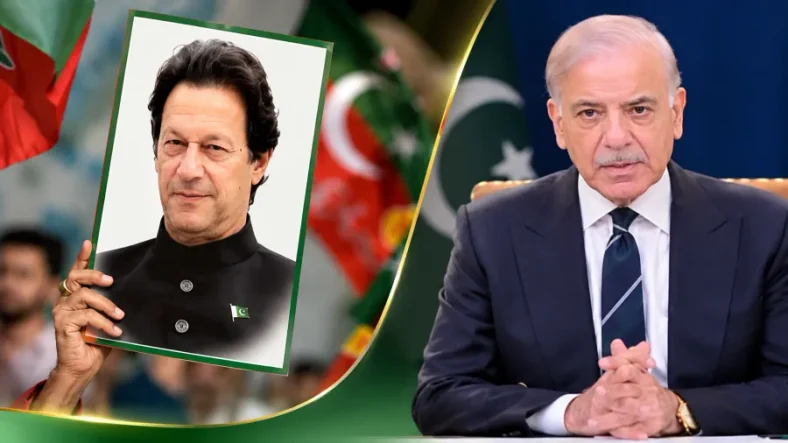
Prime Minister Shehbaz Sharif on Saturday strongly criticised Pakistan Tehreek-e-Insaf’s (PTI) nearly 13-year rule in Khyber Pakhtunkhwa (KP), questioning the provincial government’s performance in providing basic public services and strengthening security despite receiving substantial financial resources.
Addressing a meeting of the Pakistan Muslim League-Nawaz (PML-N) parliamentary party and office-bearers from KP, the prime minister directed the administration operating under governor’s rule to prioritise measures that could bring immediate improvements to people’s lives rather than concentrating on lengthy development projects.
Also Read:
He said residents of Khyber Pakhtunkhwa had endured years of inadequate public facilities and deserved practical improvements in education, healthcare, security and other essential services.
The prime minister emphasised that even relatively small initiatives, such as establishing schools, ensuring medicines were available in hospitals and improving law and order, could provide meaningful relief to communities.
He maintained that the administration should focus on delivering visible results, particularly for people who had been deprived of essential services for the past 13 years.
Questioning PTI’s record in the province, Shehbaz Sharif asked how many new universities and hospitals had been established during its tenure and whether public funds had been spent effectively.
He accused the party of prioritising political confrontation, demonstrations and slogans over governance and public welfare.
The prime minister also defended the federal government’s decision to impose governor’s rule in Khyber Pakhtunkhwa, saying the Centre had initially attempted to resolve political differences through negotiations.
According to him, the government was eventually left with no other option, as intervention had become necessary to protect citizens, safeguard economic stability and prevent further damage to the country.
A significant portion of his address focused on terrorism and the additional financial resources provided to KP under the National Finance Commission (NFC) Award.
Referring to the 2010 NFC Award, Shehbaz Sharif said the province had been granted an additional one per cent allocation in recognition of the challenges it faced because of the war against terrorism.
He stated that KP had received approximately Rs800 billion through this arrangement and questioned how effectively the money had been used to strengthen provincial security institutions.
The prime minister asked why the province had failed to establish an adequate number of Safe City projects despite receiving such substantial funding.
He also questioned why approximately 5,000 positions in the provincial police force remained vacant while the province continued to face serious security threats.
Shehbaz Sharif said the additional resources should have been directed towards modernising the police, purchasing advanced equipment, improving professional training and strengthening the Counter Terrorism Department (CTD).
He argued that allocating even Rs80 billion over the years towards police development could have significantly improved the force’s ability to respond to terrorism and other security challenges.
Discussing Pakistan’s fight against militancy, the prime minister paid tribute to the people of Khyber Pakhtunkhwa, police officers, armed forces personnel and political leaders who had lost their lives in terrorist attacks.
He said Pakistan had suffered approximately 80,000 deaths due to terrorism, while the economic damage was estimated at between $150 billion and $200 billion.
Recalling the country’s counterterrorism operations, Shehbaz Sharif said militant violence had been largely brought under control by 2017-18 through coordinated national efforts during former Prime Minister Nawaz Sharif’s government.
He referred to the 2014 Army Public School attack in Peshawar, describing the killing of innocent schoolchildren as a tragedy that would remain permanently embedded in the nation’s memory.
The prime minister also recalled the assassination of political leaders, including Bashir Bilour, and noted that PML-N leader Engineer Amir Muqam had survived terrorist attacks.
He alleged that militants had been brought back from Afghanistan and resettled in parts of Khyber Pakhtunkhwa, particularly Swat, during 2019 and 2020.
According to the prime minister, these developments contributed to the resurgence of terrorism, resulting in further casualties among civilians and security personnel.
He stressed that confronting militancy required a united national response rather than political divisions.
Shehbaz Sharif said the federal government had invited political opponents to cooperate in the fight against terrorism, similar to the collective approach adopted in previous years, but its appeals had not received a positive response.
Turning to political developments, the prime minister criticised PTI’s history of long marches and sit-ins, particularly the party’s 2014 protest in Islamabad.
He claimed the demonstration had caused the postponement of Chinese President Xi Jinping’s planned visit to Pakistan.
Shehbaz Sharif contrasted that period with the Chinese president’s eventual visit in 2015, during which several important agreements were concluded between the two countries.
He also credited Nawaz Sharif’s previous government with addressing Pakistan’s prolonged electricity shortages, recalling that power outages had once lasted as long as 20 hours daily in some areas.
Speaking about the country’s economic situation, the prime minister said the political and military leadership had worked together over the previous two and a half years to restore stability and improve economic conditions.
He acknowledged that international developments, including tensions and conflict in the Gulf region, continued to place pressure on Pakistan’s economy.
To provide relief from rising fuel costs, he said the government had introduced a subsidy programme expected to benefit approximately 13 million people through a voucher-based system.
The prime minister stated that Rs75 billion had been allocated for the initiative to help reduce the financial burden on eligible citizens.
Referring to the 2013 general elections, Shehbaz Sharif recalled that Nawaz Sharif had allowed the party securing a majority in Khyber Pakhtunkhwa to establish its provincial government.
He described the decision as an example of respect for democratic principles and political continuity despite differences between competing parties.
The prime minister praised the people of Khyber Pakhtunkhwa for their courage, resilience and sacrifices, saying they deserved effective governance, improved public facilities and lasting peace.
Earlier, PML-N Khyber Pakhtunkhwa President and Federal Minister for Kashmir Affairs and Gilgit-Baltistan Engineer Amir Muqam addressed the gathering.
He said residents of the province wanted security, political stability and economic development instead of continued confrontation and divisive politics.
Amir Muqam maintained that the PML-N enjoyed considerable public support across Khyber Pakhtunkhwa and would continue working for the province’s development under the leadership of Nawaz Sharif and Prime Minister Shehbaz Sharif.