US imposes new tariffs on 60 trading partners over forced labour concerns
- New US tariffs ranging from 10% to 12.5% take effect on Friday.
- Measures target 60 trading partners, including China, India and the European Union.
- Washington says the tariffs are aimed at encouraging stronger action against forced labour.
- Several countries have criticised the move, calling the duties unjustified and inconsistent with trade agreements.
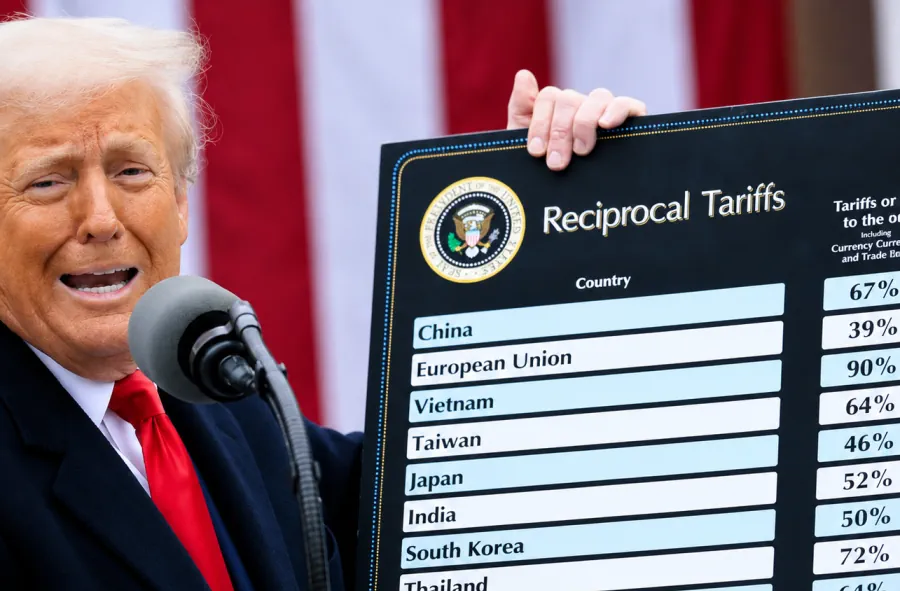
The United States has announced a new round of tariffs on imports from 60 trading partners over concerns related to forced labour, replacing a temporary global tariff introduced earlier this year by President Donald Trump.
The new duties, which come into force on Friday, range between 10 percent and 12.5 percent and affect major economies including China, India, Japan, South Korea and the European Union.
Also Read:
US Trade Representative Jamieson Greer said the measures were intended to encourage trading partners to strengthen restrictions on products linked to forced labour.
“The United States has had a forced labor import ban for nearly a century and rigorously enforces it. It’s well past time for our trading partners to do the same,” Greer said, noting that the affected economies account for the majority of US trade.
The latest measures follow the expiration of a temporary 10 percent tariff imposed after the US Supreme Court struck down several of President Trump’s earlier tariffs in February, limiting his ability to introduce sweeping duties under previous legal authorities.
To restore its tariff policy, the Trump administration launched a months-long investigation before proposing the new measures in June. Officials believe the revised tariffs are better protected against potential legal challenges.
Under the new framework, countries that have already banned imports produced through forced labour, or have pledged to introduce such restrictions, will face the lower 10 percent tariff. These include Canada, the European Union, India and the United Kingdom.
Meanwhile, countries including China, Japan and South Korea, along with dozens of others, will be subject to the higher 12.5 percent rate.
However, some economies, including the European Union, Taiwan, Japan, South Korea and Switzerland, will receive limited relief under existing trade agreements negotiated with Washington.
The announcement drew immediate criticism from several governments.
Japanese government spokesman Minoru Kihara expressed regret over the decision, saying the higher tariff had been imposed solely because Japan does not currently prohibit imports made with forced labour.
Australian Trade Minister Don Farrell also criticised the move, describing the tariffs as unjustified and arguing they violated the Australia-US Free Trade Agreement.
Products already covered by sector-specific tariffs, including steel and aluminium, will not be affected by the new measures. Certain energy products, fertilisers and goods traded under the US-Mexico-Canada Agreement (USMCA) have also been exempted.
At the same time, Washington is conducting separate investigations into 16 economies over concerns about excess industrial capacity, which could result in additional country-specific tariffs in the future.
Trade experts say the strategy allows the United States to maintain pressure on its trading partners while encouraging compliance with existing trade agreements.
Greta Peisch, a former general counsel at the Office of the US Trade Representative and now a partner at Wiley Rein, said the administration had taken extra time to strengthen the legal foundation of the tariffs, making them more likely to withstand court challenges.
Josh Lipsky of the Atlantic Council said the measures signal a more protectionist approach by the world’s largest economy and are likely to remain in place throughout President Trump’s term. He also noted that the tariffs would generate additional revenue for the US government.
The latest tariff announcement follows several recent trade actions by Washington, including a new 25 percent tariff on selected Brazilian goods over alleged unfair trade practices and fresh 50 percent tariffs on a range of Canadian products, citing what the United States described as discriminatory treatment of American alcohol, automobiles and dairy exports.
Despite the latest escalation, the European Union said it expects the United States to honour the commitments outlined in the recently agreed EU-US joint trade statement.