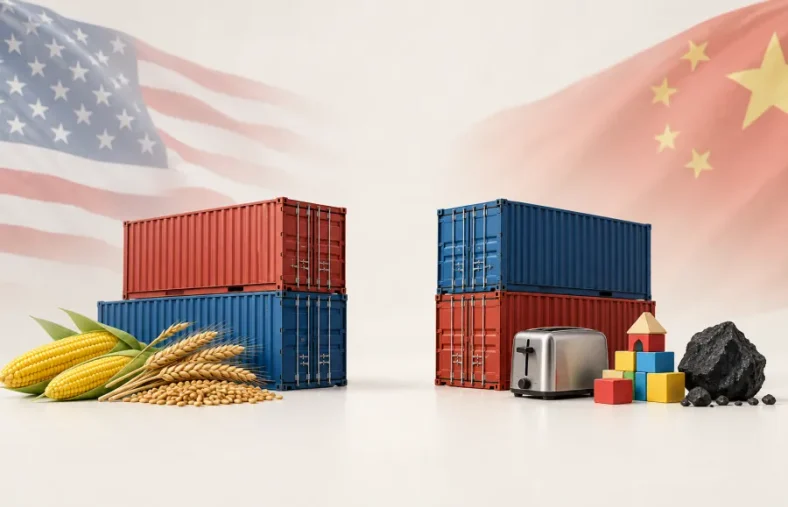
Trump Announces US-Canada Trade Deal, Pauses New 50% Tariffs for Three Days
- Donald Trump says the US and Canada have reached a trade deal, subject to final documents.
- New 50% tariffs on Canadian goods have been paused for three days.
- Canadian Prime Minister Mark Carney says substantial progress has been made, but more work remains.
- Details of the agreement, including possible changes to auto tariffs, have not yet been confirmed.
US President Donald Trump announced late Tuesday that the United States and Canada had reached a trade agreement, prompting Washington to temporarily pause new 50% tariffs on Canadian goods that were due to take effect on Wednesday.
Trump said the tariffs would be delayed for three days while both countries work to finalise the necessary documents. In a post on Truth Social, he said the decision was based on the fact that Canada and the United States have a deal, subject to completion of the paperwork.
Also Read:
Canadian Prime Minister Mark Carney responded about an hour later, saying the two countries had made substantial progress in their negotiations. However, he stressed that important issues still needed to be resolved.
Trump also raised the possibility of reviving the Keystone XL Pipeline, a major energy project cancelled by former President Joe Biden in 2021 following years of environmental and Indigenous opposition. Trump said the pipeline “may be awoken from the grave,” but provided no further details.
The announcement followed a phone conversation between Trump and Carney on Tuesday afternoon. It was their second discussion this week and came after several weeks of intensive negotiations between officials from both countries.
One of the main disagreements during the talks involved existing US tariffs on Canadian vehicles. According to sources familiar with the negotiations, the two sides discussed reducing US Section 232 tariffs on Canadian vehicles from 25% to 15%. Further reductions could depend on how much US-made content is used in each vehicle.
The proposed new 50% tariffs would have affected around $20 billion worth of Canadian imports. They were also expected to apply even to products that normally receive preferential treatment under the United States-Mexico-Canada Agreement (USMCA), which has protected a large part of Canadian industry from earlier US tariffs.
Canadian businesses had warned that another round of tariffs could cause serious economic damage. Industries considered particularly vulnerable include lumber, wine and dairy, while experts warned that the dispute could also make wider USMCA negotiations more difficult.
Canadian Chamber of Commerce CEO Candace Laing said billions of dollars in annual trade that had previously avoided tariffs were now at risk. She said businesses had already spent more than a year delaying hiring, investment and expansion because of trade uncertainty.
Canada’s minister responsible for US trade, Dominic LeBlanc, and chief trade negotiator Janice Charette have been in Washington since last week for negotiations. On Monday, they held nearly two hours of talks with US Trade Representative Jamieson Greer and Commerce Secretary Howard Lutnick.
The US has raised several complaints against Canada during the dispute. Greer has pointed to Canadian retaliatory tariffs, decisions by some provinces not to stock US liquor and Canada’s dairy supply management system.
Another major disagreement involved how tariff reductions for vehicles should be calculated. Washington wanted deductions to be based only on US-produced content, while Canada argued that all North American content, including Canadian and Mexican parts, should be included.
On Tuesday, the US Commerce Department also introduced new rules allowing automakers exporting vehicles from Canada and Mexico to certify their US content levels once a year instead of twice. Automakers will have to re-certify the American content in their vehicles by September 30 to qualify for deductions during the new annual cycle beginning December 1.
Before Trump announced the temporary pause, a Canadian government source had said Canada was considering several options if the tariffs took effect. These included financial support for affected Canadian industries and possibly suspending bilateral trade negotiations.
Despite Trump’s announcement, the full terms of the US-Canada agreement remain unclear, with both governments expected to continue negotiations as they work to finalise the deal.