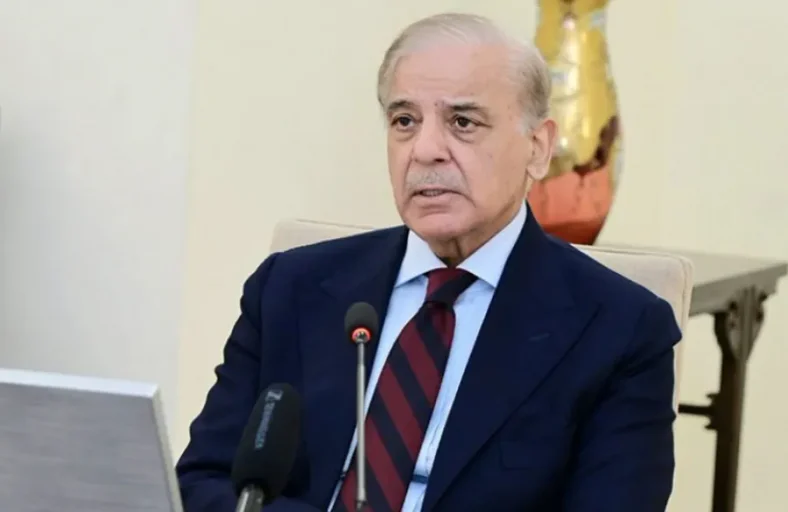
National Assembly Passes Four Bills, Discusses Fertilizer Shortage, PIA Expansion and Key Projects
- The National Assembly approved four government amendment bills by majority vote following clause-by-clause consideration.
- The government announced plans to introduce a medicine verification system, expand PIA’s fleet and improve railway and wheat distribution services.
- Lawmakers were informed about fertilizer shortages, major dam projects and plans to install water monitoring systems at 27 locations.
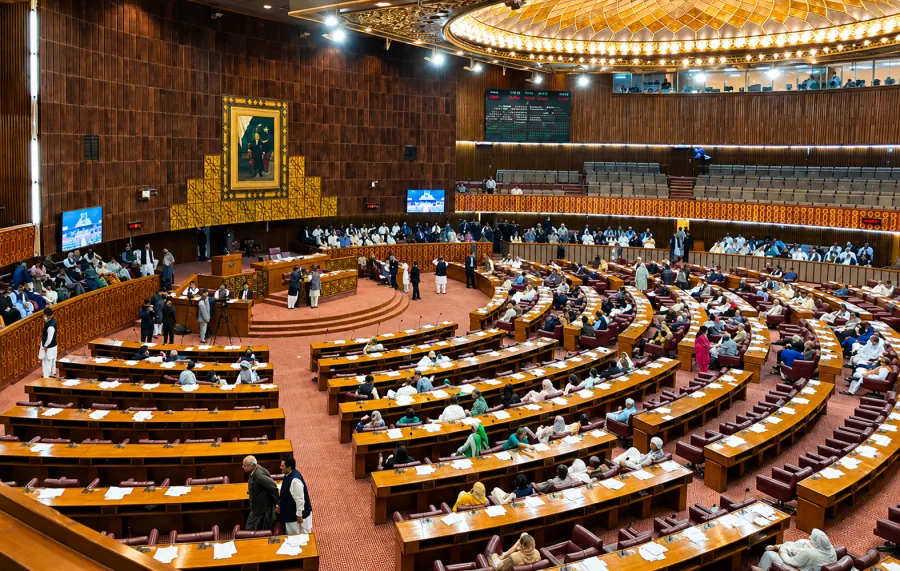
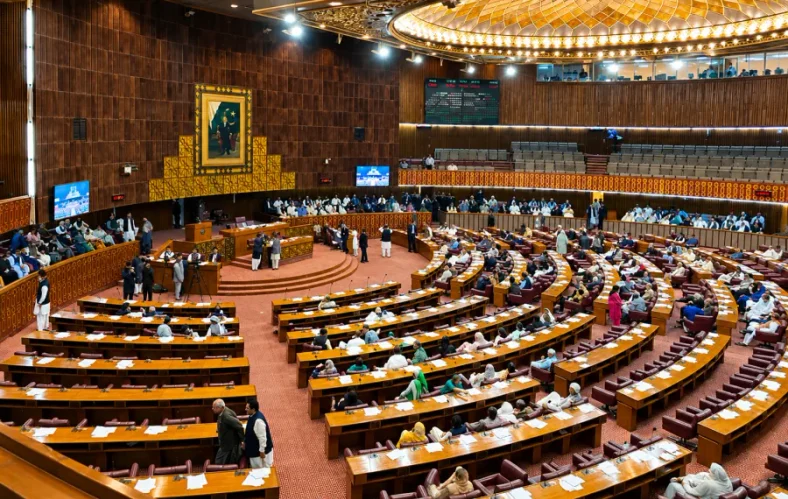
The National Assembly on Friday passed four government bills by majority vote while discussing several important national issues, including fertilizer shortages, counterfeit medicines, Pakistan International Airlines (PIA) operations, railway digitization, wheat distribution and water infrastructure development.
According to 24NewsHD TV, the lower house approved the legislation after conducting a clause-by-clause review of the proposed amendments.
Also Read:
The approved legislation includes the Higher Education Commission (Amendment) Bill, 2026; NFC Institute of Engineering and Technology Multan (Amendment) Bill, 2026; National Textile University (Amendment) Bill, 2026; and National Rahmatul-Lil-Aalameen Wa Khatamun Nabiyyin Authority (Amendment) Bill, 2026.
During the parliamentary proceedings, ministers and parliamentary secretaries also briefed lawmakers on developments concerning agriculture, healthcare, transportation, aviation and water management.
The House was informed that disruptions in gas supplies linked to the ongoing Middle East situation had forced two urea manufacturing plants in Pakistan to temporarily suspend operations.
The closures have resulted in a fertilizer supply shortfall exceeding 200,000 tonnes, creating availability concerns in the domestic market.
Responding to questions, Parliamentary Secretary for National Food Security and Research Shaista Khan said fertilizer availability and pricing directly influence agricultural production and remain important concerns for the government.
She explained that Pakistan relies on international markets to meet approximately 50 percent of its fertilizer requirements. However, the Middle East crisis has also pushed up global fertilizer prices, adding pressure to domestic supplies.
Shaista Khan said the government was taking steps to address farmers’ difficulties, including introducing agricultural support initiatives and facilitating access to loans on easier terms.
The parliamentary secretary also addressed allegations concerning the mixing of sand and soil with wheat in Khyber Pakhtunkhwa.
She informed lawmakers that the relevant minister had taken notice of the matter and that action was being planned against individuals involved in supplying substandard wheat.
Discussing agricultural research, she said the National Agricultural Research Centre (NARC) was working on developing improved seed varieties to strengthen agricultural productivity.
Research is also underway to develop wheat varieties capable of performing under changing climatic conditions and limited water availability, helping farmers respond to the growing challenges of climate change.
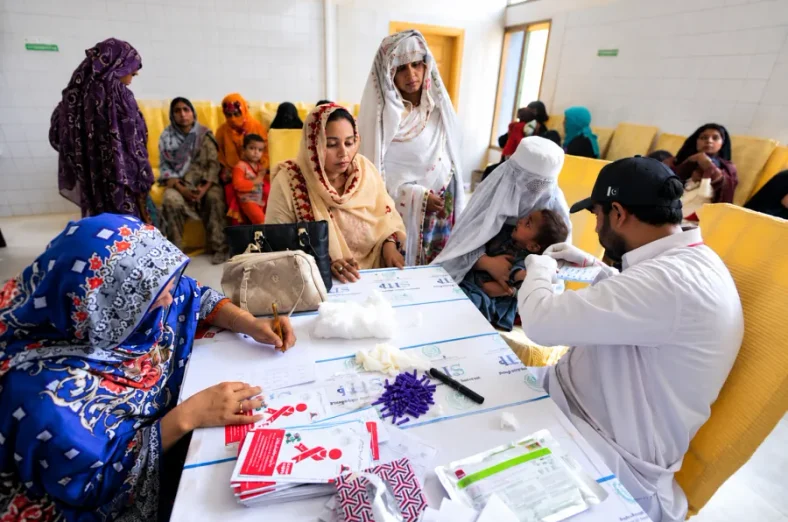
During Question Hour, Minister for National Health Services Mustafa Kamal announced that the government had developed a project aimed at tackling the production and sale of counterfeit medicines across Pakistan.
The initiative is expected to be formally launched by Prime Minister Shehbaz Sharif by the end of November.
Under the proposed system, pharmaceutical products will carry two-dimensional barcodes that consumers can scan using their mobile phones at pharmacies.
The digital verification facility will allow buyers to confirm whether a medicine is genuine, check its officially approved price and verify its expiry date before purchasing it.
Mustafa Kamal explained that the system would also assist the Drug Regulatory Authority of Pakistan (DRAP) in identifying counterfeit pharmaceutical products and taking action against those responsible for their manufacturing and distribution.
The health minister further informed the National Assembly that efforts were underway to strengthen domestic vaccine manufacturing capabilities and reduce Pakistan’s dependence on imported vaccines.
Meanwhile, Minister for Railways Hanif Abbasi briefed lawmakers on the ongoing modernization and digitization of Pakistan Railways.
He said the department had upgraded its reservation services by introducing online ticketing and electronic booking facilities through the Railways Automated Booking and Travel Assistance (RABTA) mobile application.
Through the application, passengers can access train schedules, check available seats and purchase tickets electronically without visiting railway reservation offices.
The National Assembly also received an update on wheat distribution following the dissolution of the Pakistan Agricultural Storage and Services Corporation (PASSCO).
Parliamentary Secretary Shaista Khan, responding to questions raised by Shahida Rehmani and Aliya Kamran, said letters had been sent to relevant government institutions and provincial authorities regarding the distribution of available wheat stocks.
She confirmed that wheat supplies were being dispatched to Balochistan, Azad Jammu and Kashmir and other areas requiring assistance.
The government has also imported wheat to meet domestic requirements, with imported stocks already delivered to warehouses.
To improve transparency in wheat transportation and distribution, a digital monitoring system has been introduced.
The system includes a dashboard designed to track wheat movement, identify receiving provinces and maintain detailed records of deliveries.
Explaining the circumstances behind PASSCO’s dissolution, Shaista Khan said the organization had experienced serious financial and administrative difficulties.
She noted that delayed payments of outstanding dues and bills by certain provinces had contributed to the corporation’s financial problems.
The government now intends to increase private-sector participation in wheat procurement and distribution by linking relevant companies with the Ministry of National Food Security and Research.
A monitoring and accountability mechanism is also being developed to oversee private companies and improve the effectiveness of the wheat supply system.
In another development, the National Assembly was informed that Pakistan International Airlines plans to add four aircraft to its fleet as part of efforts to expand international operations.
Parliamentary Secretary for Defence Osama Sarwar shared the details while responding to a Calling Attention Notice concerning Karachi’s exclusion from the operating routes of a recently leased PIA Boeing 787-9 Dreamliner serving Pakistan-United Kingdom flights.
He explained that PIA had been privatised and was operating under an independent board of directors, meaning the government could not directly instruct the airline to operate on particular routes.
However, he assured lawmakers that PIA would begin operating flights between Karachi and the United Kingdom in January 2027.
Osama Sarwar also welcomed the resumption of PIA flights to the United Kingdom and credited Prime Minister Shehbaz Sharif for the development.
Providing details of the fleet expansion, he said the first aircraft would resume operations on November 1, while the second aircraft would be received on November 15, after which its operating route would be determined.
Two additional aircraft are expected to join the fleet in January 2027 and support the resumption of international services from Karachi.
The parliamentary proceedings also included discussions on water storage, dam construction and the monitoring of river water distribution among provinces.
Parliamentary Secretary for Water Resources Rana Ansar informed the House that federal and provincial governments were jointly working on several dam projects to increase Pakistan’s water storage capacity.
She identified the Diamer Bhasha Dam as one of the country’s major water infrastructure projects, describing it as particularly important for increasing storage capacity after Tarbela Dam.
According to Rana Ansar, the federal government is taking measures to advance the project’s construction, with work progressing through its approved phases and PC-I arrangements.
She also provided details of a proposed telemetry system that will be installed at 27 locations to monitor river flows and water distribution among provinces.
The project forms part of the National Water Policy approved by the Council of Common Interests in 2018.
Under the policy, the Indus River System Authority (IRSA) and the federal government were assigned responsibility for establishing a monitoring system capable of recording river flows and measuring water supplied to Punjab, Sindh and other provinces.
Rana Ansar said the proposed monitoring locations had already been identified, while the Water and Power Development Authority (WAPDA) and IRSA were jointly working on implementation.
She confirmed that the project’s PC-I had been prepared and that arrangements for installing telemetry equipment at the designated locations were underway.
Responding to a supplementary question from MNA Khurshid Junejo, she said the system was being developed in consultation with provincial governments and their respective irrigation departments.
She also assured the House that a complete list of the 27 monitoring locations would be provided to the lawmaker, including information concerning Taunsa, Sindh Barrage, Chashma Link and other designated sites.