Pakistan Unveils Digital Roadmap to Support $1 Trillion Economy Goal by 2035
- Pakistan’s IT and ICT exports reached a record $4.6 billion during the last fiscal year.
- The country now has more than 150 million digital users, while data consumption has increased by 25 percent in two years.
- Ahsan Iqbal called for SCO-wide technology corridors, connected payment systems and joint artificial intelligence research.
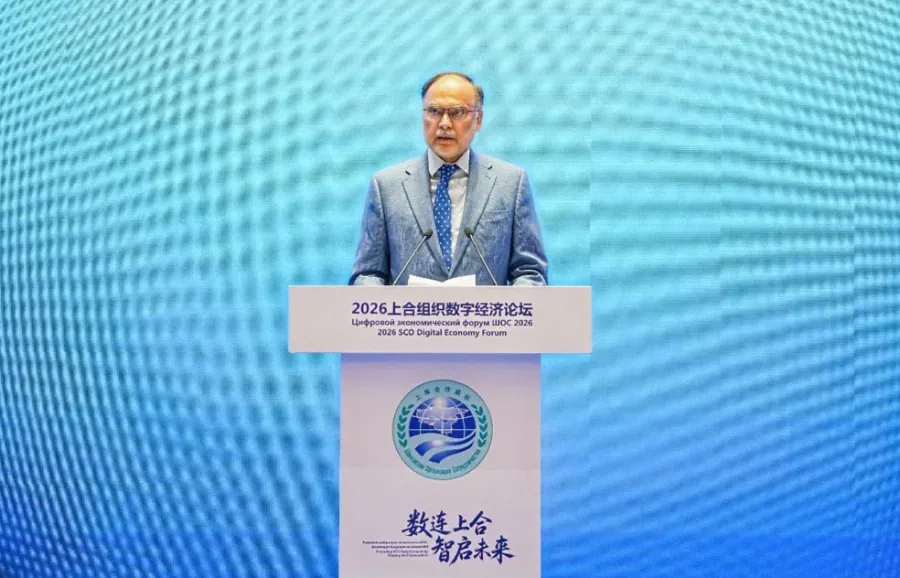
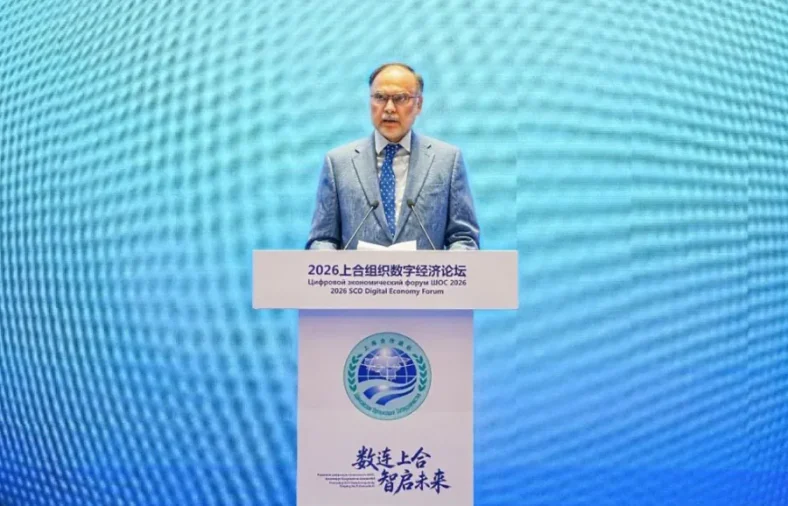
Federal Minister for Planning, Development and Special Initiatives Ahsan Iqbal has presented Pakistan’s digital transformation roadmap at the 2026 Shanghai Cooperation Organization Digital Economy Forum in China, placing technology at the centre of the country’s ambition to build a $1 trillion economy by 2035.
Addressing senior delegates from SCO member states in Urumqi on September 15, the minister said the national Uraan Pakistan vision seeks to use digital innovation as a major driver of economic growth, industrial development, investment and regional competitiveness.
Also Read:
Iqbal highlighted the rapid expansion of Pakistan’s connected population, saying the country now has more than 150 million digital users. Data consumption has also risen by 25 percent during the past two years, reflecting growing demand for online services and digital platforms.
To meet that demand, Pakistan is expanding its broadband infrastructure by increasing fibre-optic connections from three million to more than five million. The immediate goal is to provide high-speed wired broadband access to 10 million households.
The minister said Pakistan’s technology sector had achieved its strongest export performance to date, with IT and ICT exports reaching a record $4.6 billion in the previous fiscal year.
He said Pakistan was reshaping its technology strategy by moving beyond conventional IT service exports and focusing more heavily on proprietary technology products, advanced digital platforms and technology-enabled manufacturing.
According to Iqbal, the digital economy is no longer being treated as an isolated industry but as a foundation for wider economic transformation under the Uraan Pakistan framework.
The minister also emphasized the importance of ensuring women’s participation in the country’s digital transition. He said mobile internet usage among women had increased from 33 percent to 45 percent, while the overall digital gender gap had fallen sharply from 35 percent to 8 percent.
Iqbal said excluding women from digital development would make the transformation neither economically sustainable nor socially equitable. He reaffirmed the government’s commitment to policies designed to provide broader and fairer access to technology.
Turning to regional cooperation, the minister urged SCO member states to develop interconnected technology corridors capable of supporting trade, cross-border commerce and sovereign artificial intelligence capabilities.
He proposed seamless regional e-commerce systems, integrated digital payment networks and joint AI research programmes. He also called for collaboration on locally developed multilingual language models and greater investment in regional skills and human resource development.