Pakistan Makes Gastech Debut, Seeks Foreign Investment in Gas Storage and Pipeline Networks
- Pakistan made its first appearance at Gastech as a private gas company presented investment opportunities at the global energy exhibition in Bangkok.
- UGDC proposed urban gas-storage facilities and targeted private pipelines to reduce distribution losses and provide cheaper gas to consumers.
- The company is seeking international partnerships for LNG imports, stranded gas reserves, purification infrastructure and new distribution networks.
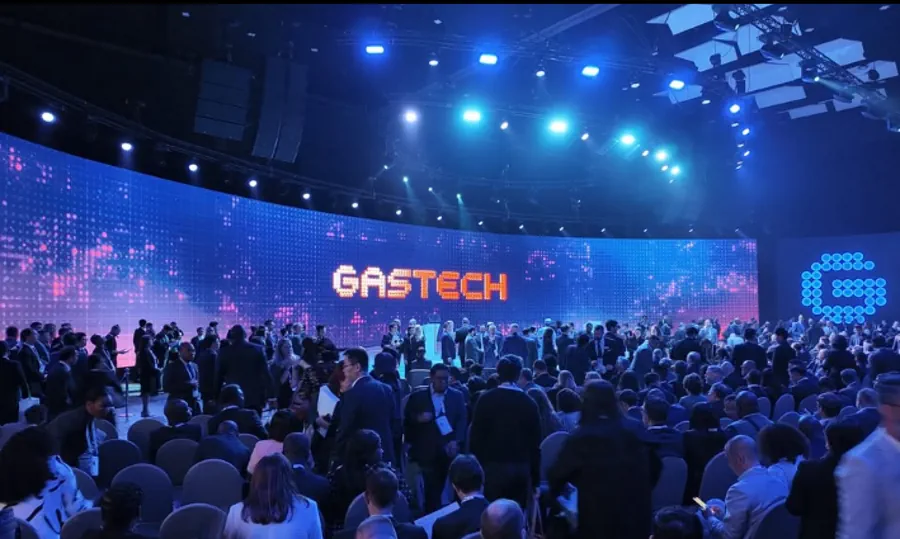
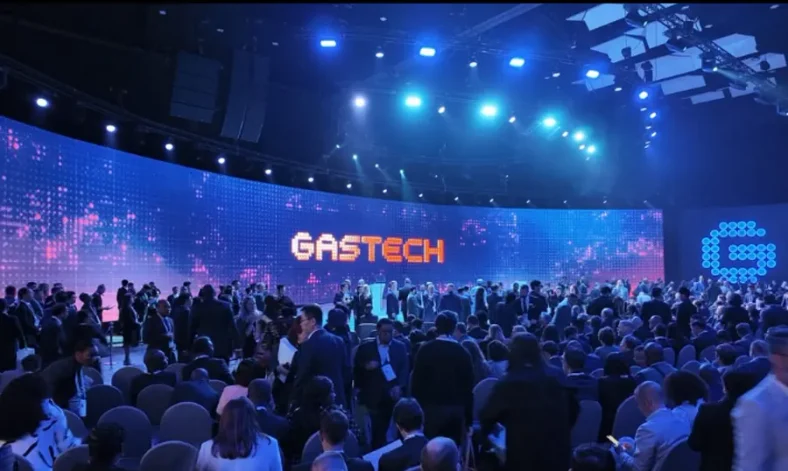
Pakistan has made its debut at Gastech 2026 in Bangkok, where a private-sector company presented opportunities for foreign investment in gas storage, pipeline infrastructure and independent distribution networks.
Universal Gas Distribution Company represented Pakistan at the international conference and exhibition, which focuses on natural gas, liquefied natural gas, low-carbon solutions and artificial intelligence in the energy sector.
Also Read:
Pakistan was among three countries participating in the event for the first time. The 54th annual Gastech conference brought together representatives from 150 countries, around 8,000 delegates and nearly 1,000 exhibiting companies.
UGDC established its exhibition stall alongside major international energy companies, including ExxonMobil, Shell, ConocoPhillips, Petronas and Sinopec, as well as several multinational gas companies from the United States and other countries.
The Pakistani company used the platform to invite investors to establish urban gas-storage facilities and targeted pipeline networks in major load centres. It presented these projects as potential alternatives to conventional gas-distribution networks affected by substantial system losses.
Pakistan’s gas-distribution infrastructure is currently dominated by two state-owned utilities, Sui Northern Gas Pipelines Limited and Sui Southern Gas Company. The private sector is now seeking joint ventures with international companies to establish separate distribution systems capable of supplying gas at more competitive rates.
UGDC Chief Executive Officer Ghiyas Abdullah Paracha said the government’s decision to allow private parties access to 35 percent of the gas produced by exploration and production companies represented a significant step towards deregulating the market.
He said the policy had created opportunities for private companies to attract foreign direct investment, establish business-to-business partnerships and introduce greater competition into Pakistan’s gas sector.
Paracha appreciated Prime Minister Shehbaz Sharif and Petroleum Minister Ali Pervaiz Malik for opening the industry to increased private participation. He said the reforms had enabled UGDC to approach international companies interested in investing in Pakistan’s gas-distribution infrastructure.
According to the chief executive, private distribution networks could reduce gas losses and operating inefficiencies, ultimately lowering costs for households and industries. He called for more domestic and international private companies to enter the sector.
UGDC has already restored production from three dormant gas fields by processing raw gas into pipeline-quality fuel. The company is also working with international partners, including leading American firms, to expand purification infrastructure and bring stranded gas reserves into the national grid.
Paracha said the company was seeking additional foreign investment to develop these resources and increase the country’s usable domestic gas supply.
UGDC has also participated in short- and long-term LNG import arrangements to help manage seasonal shortages and fluctuations in pipeline pressure. The company is now advocating the development of commercial underground gas-storage facilities that would allow Pakistan to purchase and store supplies when international prices are favourable.
High unaccounted-for-gas losses have contributed significantly to rising energy costs in Pakistan. To address the problem, UGDC plans to develop targeted private pipelines serving high-consumption industrial units and major residential developments, bypassing inefficient sections of the existing distribution system.
The company is seeking to build on its previous agreements with global energy groups, including ExxonMobil, QatarEnergy, ConocoPhillips and Trafigura, by inviting international firms to co-invest under Pakistan’s emerging deregulated gas-market framework.
Paracha said private-sector projects would be financed through private capital without government subsidies. He added that such investment could generate revenue for the state through pipeline transit charges and taxes while creating employment and introducing improved technology and management practices.
He said greater market liberalisation could reduce energy costs for consumers, strengthen Pakistan’s industrial competitiveness and help build a more resilient, market-driven energy system.
Pakistan’s Ambassador to Thailand, Sadia Qazi, visited the UGDC stall and described the company’s participation as a watershed moment for Pakistani businesses seeking a stronger global presence.
She said that although gas remained a conventional fossil fuel, the use of modern technology, artificial intelligence-based optimisation and low-carbon solutions would be essential to strengthening Pakistan’s long-term energy security.