Pakistan Launches Mental Health Policy to Reach 32.4 Million People Needing Care
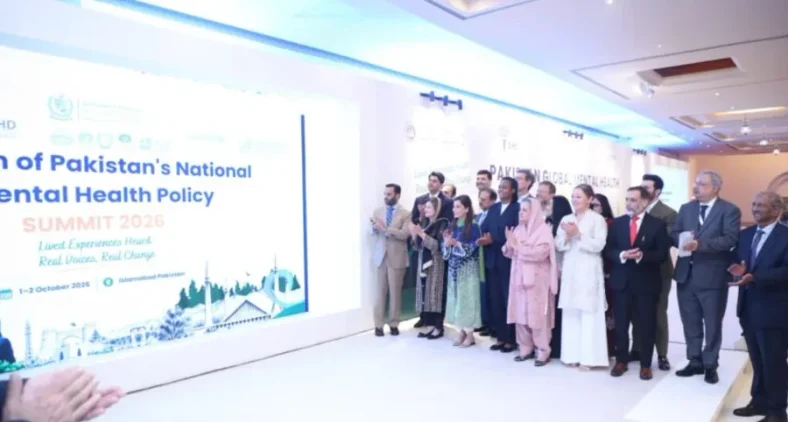
- The National Mental Health Policy 2026–2035 was launched at the Global Mental Health Summit in Islamabad.
- WHO estimates that 32.4 million people in Pakistan need mental health care, with a treatment gap of approximately 95%.
- The policy aims to expand support through primary healthcare, schools and communities in collaboration with provincial governments and development partners.
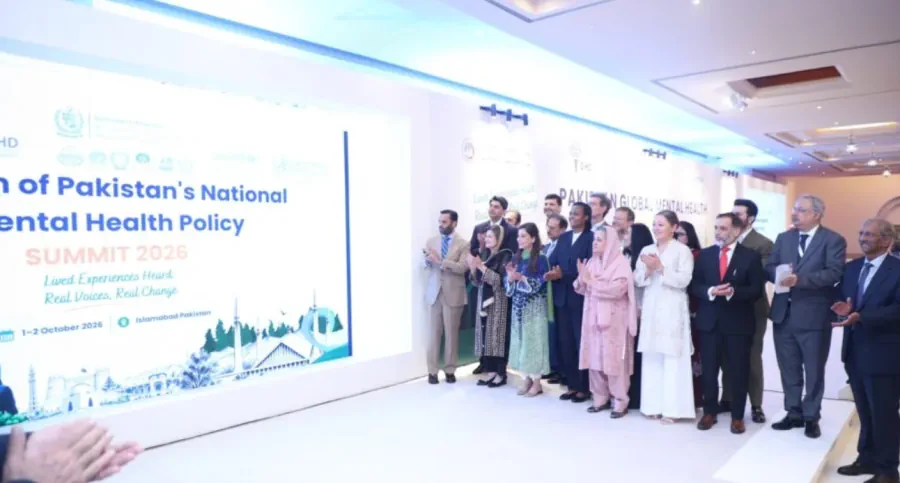
Pakistan launched its National Mental Health Policy 2026–2035 at the Global Mental Health Summit in Islamabad, aiming to expand access to care for more than 32.4 million people who need mental health support.
Federal Health Minister Syed Mustafa Kamal unveiled the policy alongside national and provincial authorities, academics and representatives of the World Health Organization (WHO), UNICEF and the Global Institute of Human Development (GIHD) at Shifa Tameer-e-Millat University (STMU). The initiative brings together the government and these partners to address the country’s substantial unmet need for care.
Also Read:
WHO estimates cited at the summit put the number of people needing mental health care in Pakistan at approximately 32.4 million. Access to services remains around 5%, leaving an estimated treatment gap of 95%.
A shortage of qualified professionals adds to the challenge. Pakistan has approximately 0.19 psychiatrists per 100,000 people, compared with an average of seven per 100,000 in high-income countries.
Kamal described mental health as a national emergency with implications for both security and the economy. He called for a coordinated response involving every ministry, institution and individual to help create a safer and healthier environment for the population.
The federal minister stressed that the conference must produce practical action. He also thanked national and provincial institutions, authorities and local and international partners for joining efforts to address the crisis.
Minister of State for Health Dr Malik Mukhtar Ahmad Bharath said the policy represented a shared commitment to make care accessible to every family. Working with provincial governments, he said, the government would turn that commitment into measures across schools, primary healthcare facilities and communities, allowing people to receive support early and with dignity and respect.
Led by the Ministry of National Health Services, Regulations and Coordination, the summit is being held on October 1–2 and brings together around 800 participants attending in person and online. Participants include mental health specialists, academics, international development partners and policymakers.
Discussions focus on evidence-based measures that can help Pakistan and other countries advance the Comprehensive Mental Health Action Plan 2030, an international framework approved by all member states of the World Health Assembly.
WHO Director-General Dr Tedros Adhanom Ghebreyesus highlighted the health and economic benefits of investing in mental health. He said every dollar invested in addressing conditions such as depression and anxiety could generate four dollars in returns through improved health and productivity.
He also urged people to seek support without shame, noting that anyone could experience mental health difficulties during their lifetime. Tedros reaffirmed WHO’s commitment to helping Pakistan and other countries ensure access to support regardless of a person’s identity or where they live, emphasising that mental health is essential to overall health.
UNICEF Representative in Pakistan Pernille Ironside called for children and adolescents to be placed at the centre of mental health initiatives. She said their well-being was fundamental to learning, development and their ability to thrive, making prevention, early identification and care essential priorities.
Ironside also highlighted the growing influence of climate change and digital environments on young people’s lives. Strengthening mental health resilience, she said, must form part of efforts to build a healthier and more resilient generation.
GIHD Director Dr Syed Usman Hamdani said Pakistan’s mental health agenda was undergoing a significant transformation. Sustained investment in research, implementation science, policy development and community-based innovation had demonstrated that effective care could be delivered through primary healthcare, schools and communities using approaches supported by evidence and capable of being expanded.
Pakistan plans to establish the Global Mental Health Summit as its flagship international platform for advancing policy, implementation science, innovation and partnerships, while supporting equitable mental health systems that can respond to climate pressures and future needs.