JI Rejects Fuel Relief Scheme, Confirms September 20 Islamabad March
- Jamaat-e-Islami demanded the complete abolition of the petroleum levy, saying the government’s targeted subsidy offered no lasting solution.
- JI claimed that removing the levy could lower the petrol price by Rs103 per litre and reaffirmed its Islamabad march.
- The government defended the scheme as targeted support for vulnerable consumers and pledged to convey JI’s recommendations to the prime minister.
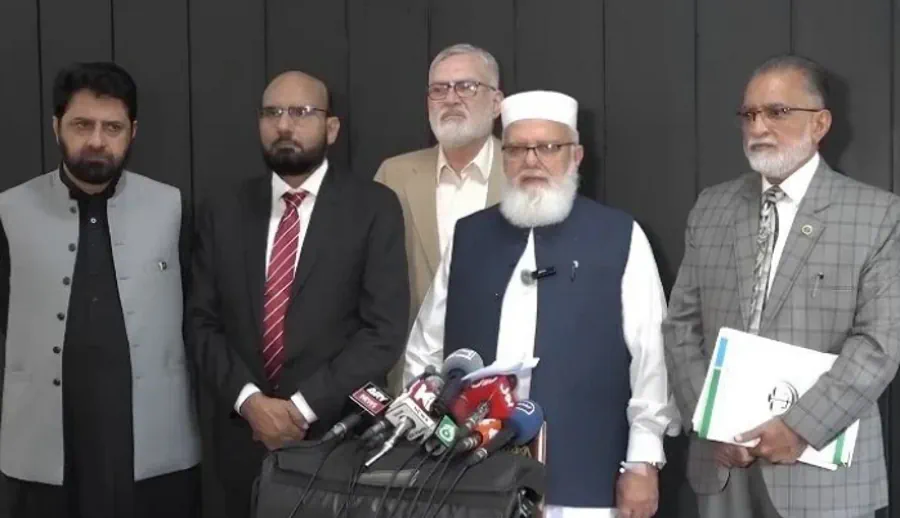
Jamaat-e-Islami (JI) on Tuesday rejected the federal government’s special fuel relief scheme, declaring that a limited subsidy could not substitute for the complete abolition of the petroleum levy.
The party announced its position following delegation-level negotiations with a government team in Islamabad. The talks focused on independent power producers (IPPs), the petroleum levy, fuel supplies and the country’s petroleum pricing mechanism.
Also Read:
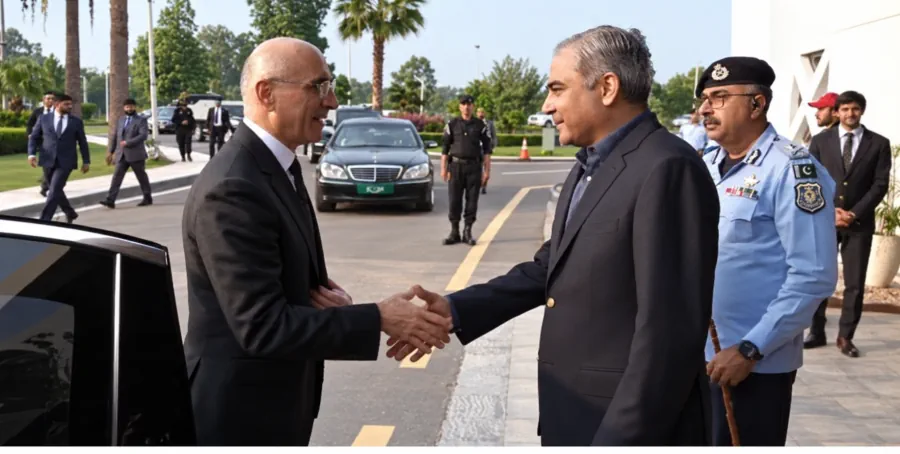
The government delegation included Petroleum Minister Ali Pervaiz Malik, Law Minister Azam Nazeer Tarar and Minister of State for Finance Bilal Azhar Kayani. Energy Minister Awais Leghari and other officials also briefed JI representatives on the petroleum sector and the calculation of fuel prices through a seven-day rolling average.
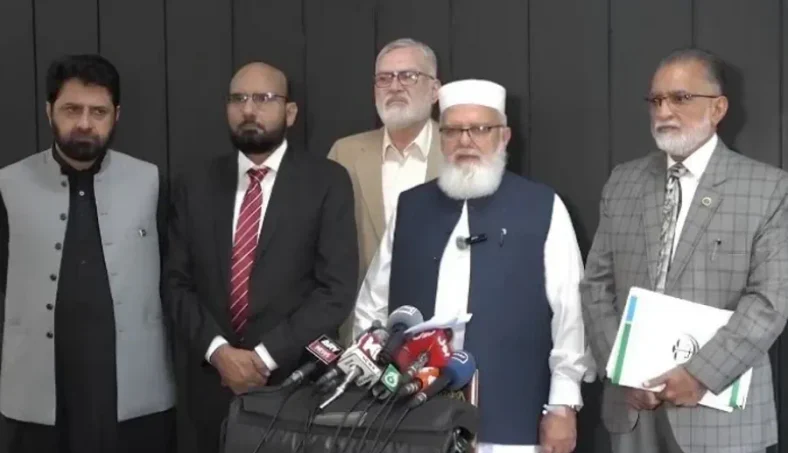
Speaking after the meeting, JI Deputy Emir Liaqat Baloch said the party had unequivocally demanded the withdrawal of the petroleum levy. He claimed that eliminating the levy could provide consumers with relief of as much as Rs103 per litre on petrol.
Baloch said the government delegation had been instructed to convey JI’s position directly to Prime Minister Shehbaz Sharif. He also reaffirmed that the party would proceed with its planned march towards Islamabad on September 20 to protest against the levy.
Describing the prime minister’s relief initiative as deceptive, the JI leader argued that targeted assistance for selected vehicle owners would not resolve the wider issue of high fuel prices affecting the public.
The government, however, issued a different account of the meeting, stating that JI had welcomed the relief measures while emphasising the need for permanent solutions to the country’s fundamental economic challenges.
Malik told the delegation that the government was pursuing comprehensive measures to protect consumers and maintain reliable fuel supplies. He said targeted subsidies for motorcycles, Qingqi rickshaws and small cars were intended to deliver relief directly to financially vulnerable groups.
The petroleum minister maintained that targeted support was an effective way to assist deserving consumers, adding that the government had ensured uninterrupted fuel availability during the recent crisis.
Kayani said efforts were also underway to expand the tax base and increase the share of direct taxation. The ministers assured the JI delegation that its proposals and concerns would be presented to the prime minister for consideration.
Prime Minister Shehbaz launched the special fuel relief scheme on Sunday, offering a discount of Rs100 per litre on petrol to motorcyclists, rickshaw and Qingqi owners, and users of vehicles with engines of up to 800cc.
Under the programme, motorcycle, rickshaw and other two- and three-wheeler users are eligible for the subsidy on a maximum of 20 litres of petrol each month. Owners and users of cars with engine capacities of up to 800cc can receive the same discount on up to 30 litres per month.