Irshad Bhatti Lashes Out at Punjab Govt Over Spending, Imran Khan’s Treatment
- Irshad Bhatti questioned the Punjab government over its aircraft purchase, public spending and projects named after members of the Sharif family.
- He compared Imran Khan’s treatment in prison with the medical facilities previously provided to Nawaz Sharif.
- Bhatti raised concerns over farmers, sugar policies, electricity costs and payments to independent power producers.
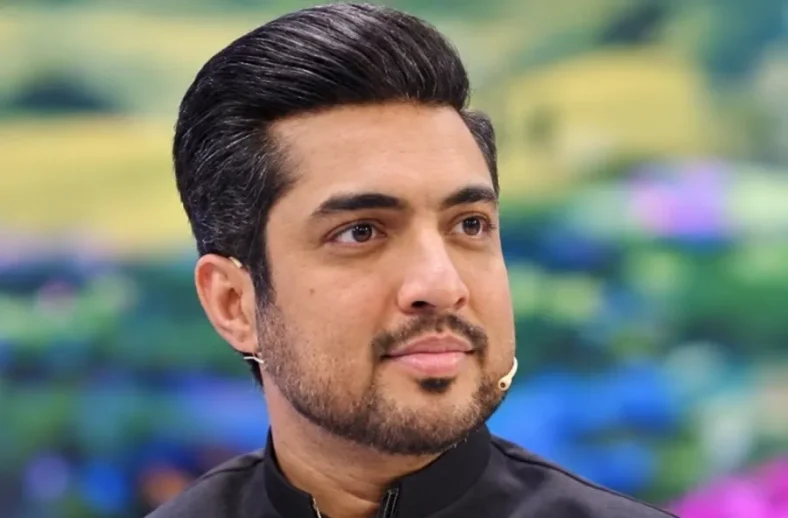
Senior journalist and political commentator Irshad Bhatti has launched a wide-ranging criticism of the government, questioning its spending priorities, economic performance and treatment of former prime minister Imran Khan while drawing comparisons with facilities previously provided to PML-N leader Nawaz Sharif.
Speaking during a television discussion, Bhatti reacted strongly to remarks concerning Imran Khan’s health, arguing that access to appropriate medical care and meetings with family members should be regarded as the right of a prisoner rather than a political concession.
Also Read:
Bhatti questioned whether Nawaz Sharif, Asif Ali Zardari or Maryam Nawaz had ever faced prolonged restrictions preventing them from meeting family members, personal doctors or political colleagues while in custody. He argued that the same standards should apply to Imran Khan.
Referring to Nawaz Sharif’s health during his imprisonment, Bhatti recalled that doctors from Lahore, Karachi and Islamabad were involved in assessing his condition and that the courts also examined concerns surrounding his health. He said Nawaz Sharif was allowed temporary relief from prison before eventually travelling abroad by air ambulance.
Bhatti further recalled that Imran Khan, despite his political differences with Nawaz Sharif, had publicly expressed concern for his rival’s health at the time. He used the comparison to argue that political differences should not influence the medical treatment or fundamental rights available to a prisoner.
The journalist then turned his attention to the Punjab government’s aircraft, questioning why a new plane was required and demanding transparency over its purchase.
Bhatti asked the provincial government to disclose what happened to its previous aircraft, whether it had been sold and, if so, for how much. He also questioned which company supplied the newer aircraft, its purchase price and its annual operating expenditure.
He criticised the decision to acquire what he described as a luxury 19-seat Gulfstream jet and questioned whether its reported fuel consumption, operating costs and pilots’ salaries represented an appropriate use of public money.
Bhatti argued that describing the aircraft as belonging to the people was not sufficient and said the government remained accountable for explaining how taxpayers’ money was being spent.
He also questioned the naming of publicly funded projects after members of the Sharif family, asking what justified attaching political leaders’ names to schemes financed through government resources.
Bhatti criticised what he described as extensive official protocol provided to Nawaz Sharif and questioned the former prime minister’s role in government-related bodies despite not holding an elected executive position.
Turning to Punjab’s economic situation, Bhatti challenged claims that small farmers were satisfied with the provincial government’s performance. He questioned whether farmers had received meaningful relief in diesel and petrol prices, irrigation and other major agricultural expenses.
He argued that agriculture, industry and real estate were facing serious difficulties and said the government needed to explain how its policies were improving conditions for ordinary citizens.
Bhatti also criticised government expenditure on publicity, advertisements, official vehicles and fuel, arguing that billions of rupees in public resources should instead be assessed against the economic pressures facing households.
The sugar sector was another major focus of his remarks. Referring to criticism previously raised by former finance minister Miftah Ismail, Bhatti questioned policies involving sugar exports and imports and alleged that influential groups had benefited through subsidies, tax concessions and higher domestic prices.
He called for scrutiny of individuals and groups benefiting from the sugar industry in Punjab, Sindh and other parts of the country, arguing that powerful commercial interests should not remain beyond accountability.
Bhatti also discussed Pakistan’s power sector and independent power producers, citing figures which he said showed that Rs13,397 billion was paid to IPPs between April 2022 and April 2026. According to the figures presented by him, around Rs7,121 billion of that amount consisted of capacity payments, compared with Rs6,275 billion attributed to the cost of electricity actually consumed.
He questioned why consumers continued to face high electricity and gas bills despite such substantial payments and called for greater scrutiny of the people and companies benefiting from the existing power-sector structure.
Bhatti also pointed to the price of flour and other everyday necessities while questioning the overall impact of government economic policies on ordinary Pakistanis.
Discussing Pakistan’s growing debt burden, he demanded greater transparency over how borrowed money had been spent and argued that governments should be required to explain the results produced through massive increases in public borrowing.
Bhatti warned that political parties should also consider the long-term consequences of laws and institutional changes introduced while they are in power. He argued that measures currently used against political opponents could eventually be applied to those responsible for introducing or supporting them.