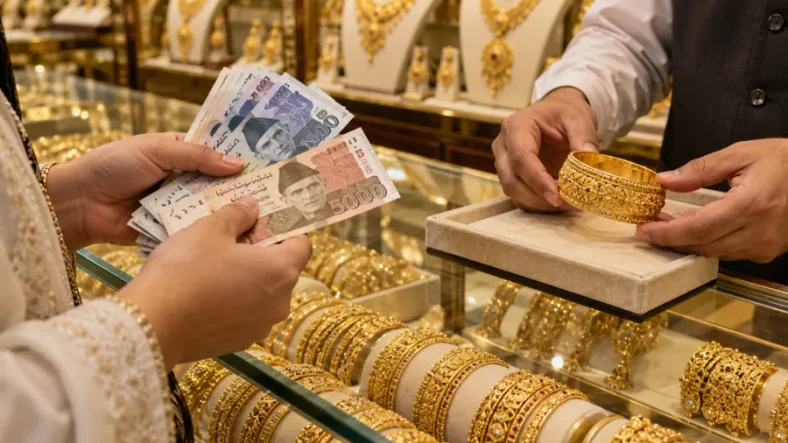
Gold Prices Jump Over 2% After Hitting One-Year Low as Oil Prices Decline
- International gold prices climbed more than 2% on Monday, recovering from their lowest level since October 2025.
- Spot gold reached $3,957.19 per ounce, while US gold futures rose to $3,967.40 amid falling oil prices.
- Investors are closely monitoring US Federal Reserve interest rate expectations and the November 3 midterm elections.
International gold prices recorded a strong recovery on Monday, November 2, 2026, rising more than 2% after falling to a one-year low in the previous trading session, as declining crude oil prices eased inflation concerns and encouraged renewed buying in precious metals.
According to market figures reported by Business Recorder, spot gold increased by 2.1% to $3,957.19 per ounce at 10:49 a.m. Eastern Time (14:49 GMT), reversing part of the losses recorded on Friday.
Also Read:
Gold had fallen 3.6% in the previous session, touching its lowest level since October 2025 amid widespread selling across financial markets.
US gold futures for December delivery also moved higher, gaining 1.77% to reach $3,967.40 per ounce.
The recovery came as international crude oil prices declined sharply, reducing some of the inflationary pressures that had been influencing expectations for US monetary policy.
Oil prices dropped more than 6% on Monday following a third consecutive day of discussions between Iran and Qatar aimed at ending the ongoing US-Israeli conflict involving Iran.
The decline in energy prices provided some relief to investors concerned that prolonged geopolitical tensions could push inflation higher and force central banks to maintain tighter monetary policies.
Peter Grant, vice president and senior metals strategist at Zaner Metals, said lower oil prices had helped reduce inflation concerns, although financial markets continued to anticipate another interest rate increase by the US Federal Reserve in December.
He noted that expectations for a rate increase had moderated slightly during recent trading sessions, while movements in the US dollar were also providing some support to gold.
According to CME Group’s FedWatch Tool figures cited in the report, traders assigned a 77% probability to a Federal Reserve interest rate increase in December, compared with approximately 80% a week earlier.
Gold prices are particularly sensitive to changes in US interest rate expectations because the metal does not generate interest income. Higher interest rates can increase the appeal of interest-bearing investments, while lower borrowing costs generally make gold relatively more attractive.
The precious metal’s recent decline was also linked to heavy selling in global equity markets, particularly technology companies and businesses associated with artificial intelligence.
Analysts said a sharp decline in technology and AI-related stocks on Friday triggered margin calls, prompting some investors to sell other assets, including gold, to meet their financial obligations.
This selling pressure affected gold despite its traditional reputation as a safe-haven investment during periods of market uncertainty.
Technical indicators also suggested that the precious metal had started recovering from heavily oversold conditions.
Gold’s 14-day Relative Strength Index (RSI), a widely followed technical indicator used to assess buying and selling momentum, climbed to approximately 37 on Monday after falling below 30 on Friday.
An RSI reading below 30 is commonly interpreted as indicating oversold market conditions. The recovery above that level suggested that some of the intense selling pressure had eased.
Meanwhile, investors were turning their attention towards the US midterm elections scheduled for November 3, with the results expected to influence market sentiment and expectations surrounding American fiscal and geopolitical policies.
Carsten Menke, an analyst at Julius Baer, said the outcome of the elections was unlikely to significantly change the broader fiscal environment supporting gold.
He indicated that US government budget deficits were expected to continue regardless of the election results, with the country’s debt burden and interest expenses remaining longer-term factors supporting demand for the precious metal.
Other precious metals also recorded gains during Monday’s trading session.
Silver prices increased by 3.7% to $50.91 per ounce, recovering after slipping below the $50 level in the previous session for the first time since late November 2025.
Platinum rose 1.9% to $1,457.96 per ounce, while palladium remained largely unchanged at $976.13 per ounce.
Both platinum and palladium had experienced substantial selling pressure on Friday, with platinum touching its lowest level in 13 months and palladium falling to a 17-month low before recovering.
The figures have also been cross-checked against Reuters’ November 2 market coverage. The reported gold, silver, platinum and palladium prices are consistent with its latest report.
These are international market prices quoted in US dollars per troy ounce, not Pakistan’s domestic gold rates.