CDF Munir Heads to Tehran as Iran Threatens to Halt Gulf Oil Trade Over US Sanctions
- Field Marshal Asim Munir is due to visit Tehran amid escalating tensions between Iran and the United States.
- Washington is preparing a major new financial offensive targeting Iran and potentially countries maintaining economic ties with Tehran.
- A senior Iranian official has warned that no oil would leave the Persian Gulf if the US-led “economic war” continues.
- Pakistan, which previously helped broker a ceasefire, continues diplomatic efforts aimed at restoring regional peace and stability.
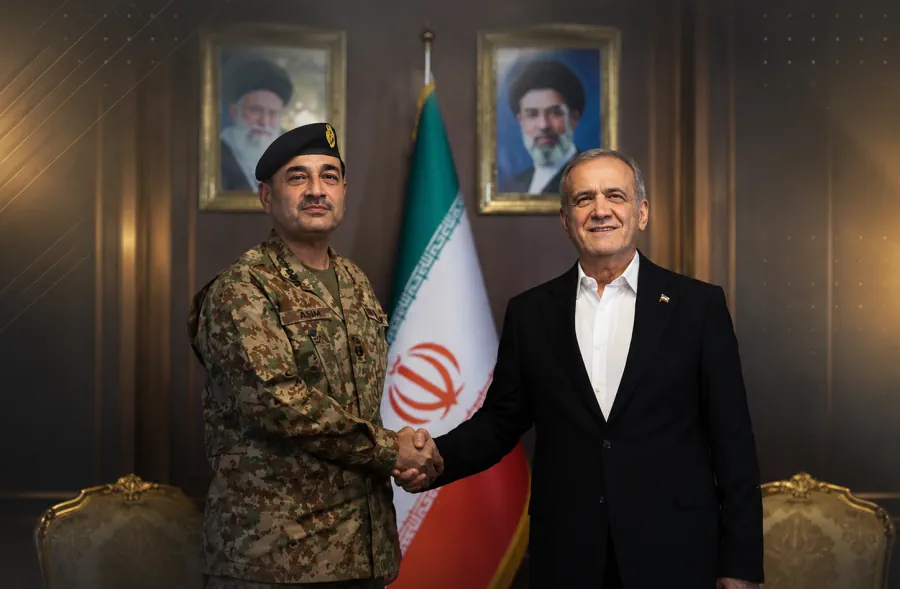
Chief of Defence Forces (CDF) and Chief of Army Staff Field Marshal Asim Munir is due to visit Tehran on Monday as tensions between Iran and the United States intensify over Washington’s plans for a sweeping new sanctions campaign and Tehran threatens to disrupt oil exports from the Gulf.
The visit comes as US Treasury Secretary Scott Bessent prepares to announce further economic measures against Iran. Bessent is scheduled to hold a press conference at 2pm EDT (1800 GMT) on Monday, with Washington describing the upcoming measures as an unprecedented financial offensive against Tehran.
Also Read:
Iranian officials have said Field Marshal Munir’s visit is part of diplomatic efforts to restore peace and security in the region. A Pakistani government source said discussions are expected to cover the latest regional developments, including US President Donald Trump’s threat to impose tougher sanctions on Iran.
Two Pakistani government sources confirmed Munir’s planned visit to Reuters, with one saying Islamabad and Tehran remain in direct contact.
Another source said the CDF would discuss peace efforts under Islamabad’s memorandum of understanding, Trump’s latest warning, developments following the Pakistan-Turkiye-Saudi Arabia agreement and issues involving the Houthis during meetings with Iranian leaders.
Pakistan has played an active diplomatic role in the conflict. The government led by Prime Minister Shehbaz Sharif brokered a two-week ceasefire on April 8, bringing an end to six weeks of fighting. Islamabad has since continued to relay messages between Washington and Tehran in an effort to prevent renewed escalation.
Munir’s visit comes at a particularly sensitive moment, with Iran warning that further US economic pressure could trigger a military and economic response.
Writing in the Financial Times on Sunday, Bessent said a major US financial campaign against Iran would begin at dawn, describing it as the most extensive economic offensive Washington had ever assembled against an adversary.
The confrontation follows months of conflict in the region. Thousands of people, mainly in Iran and Lebanon, have been killed since the United States and Israel launched strikes on February 28. The attacks significantly weakened parts of Iran’s conventional military capabilities, damaged infrastructure and intensified pressure on its economy. Iranian Supreme Leader Ayatollah Ali Khamenei was also killed during the conflict.
Despite the damage, Iran is believed to retain sufficient missile and drone capabilities to threaten neighbouring Gulf states and shipping through the Strait of Hormuz. Disruptions in the strategically important waterway have already placed pressure on global energy markets. The precise condition of Iran’s nuclear programme, which Washington and Israel have sought to dismantle, remains unclear.
Bessent did not provide full details of the new sanctions but indicated that Washington could also target countries continuing to engage with Iran’s economy and financial system. He warned nations pursuing economic relations with Tehran to consider the consequences of supporting the Iranian economy.
Iran, meanwhile, has been preparing for additional sanctions and has issued increasingly strong warnings about its potential response.
Mohsen Rezaei, secretary of Iran’s Supreme National Security Council, warned on Sunday that Tehran could prevent oil exports throughout the region if economic pressure continues.
“If the economic war continues, not a single drop of oil will be exported, neither through the Strait of Hormuz nor from anywhere in the Persian Gulf,” Rezaei said in a social media post.
He further warned that Iran would consider participation in or support for Washington’s economic campaign against the Iranian people an act of war.
China has also emerged as an important factor in the dispute. Bessent previously urged Beijing to cooperate with Washington, pointing out that China receives around half of its oil imports from the Gulf region.
A spokesperson for the Chinese embassy in Washington rejected pressure-based measures, saying sanctions would not help resolve the dispute and calling instead for diplomacy.
Iran’s economy was already facing considerable pressure before the latest conflict, including international sanctions, high inflation, a weakening currency, energy shortages and longstanding structural problems.
The recent fighting has added damaged infrastructure, disrupted trade, lost production and major reconstruction costs to those challenges. Iranian officials have acknowledged that further economic pressure could deepen public hardship, fuel renewed unrest and further weaken confidence in the country’s political system.
Despite Tehran’s defiant public position, the growing economic and military pressure has increased international efforts to find a diplomatic solution.
Formal face-to-face talks between the United States and Iran have not taken place since negotiations in Switzerland in June. In their absence, countries including Pakistan, Qatar and Turkiye have sought to facilitate dialogue and reduce the risk of another major escalation.
The wider conflict has already imposed a heavy human cost. US-Israeli strikes on Iran and Israeli attacks in Lebanon have killed thousands and displaced millions of people. The United States has reported 18 military personnel killed and more than 750 wounded.
Field Marshal Munir’s Tehran visit is therefore expected to take place against the backdrop of mounting military, economic and diplomatic pressure, with Pakistan seeking to use its contacts with the parties involved to prevent renewed fighting and support efforts toward regional stability.