University of Swat and Sri Lankan institute sign agreement on Gandhara research
- The agreement covers joint research on Gandhara civilisation and Buddhist archaeology, as well as student and faculty exchanges.
- The University of Swat proposed joint excavations, international conferences and cooperation on heritage conservation.
- The Sri Lankan delegation toured the university’s archaeology museum and joined a tree-planting ceremony.
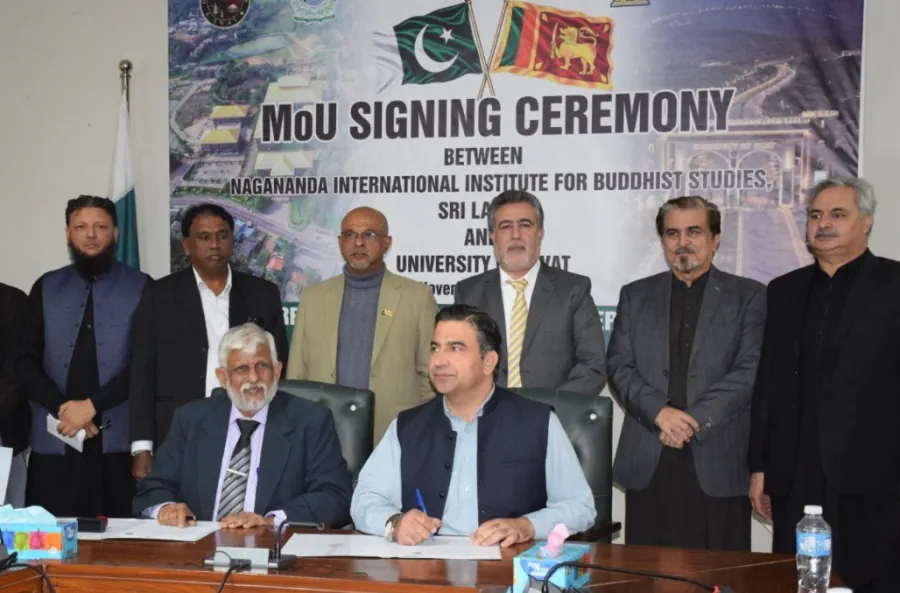
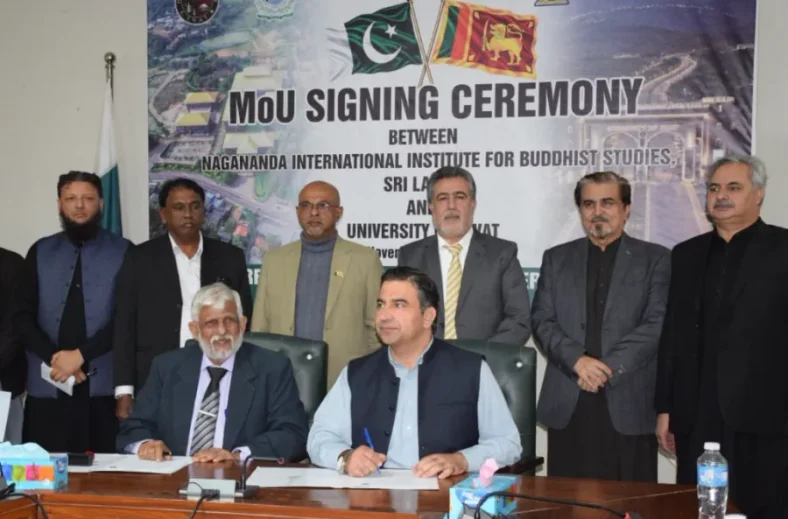
The University of Swat and Sri Lanka’s Nagananda International Institute for Buddhist Studies (NIIBS) have signed a memorandum of understanding to promote academic cooperation and jointly study Gandhara civilisation and Buddhist archaeological heritage.
University of Swat Registrar Dr Arshad Ali Khan and NIIBS representative Prof P D Mandawala signed the agreement through the university’s Office of Research, Innovation and Commercialization (ORIC). Sri Lankan High Commissioner to Pakistan Rear Admiral Fred Seneviratne and University of Swat Vice Chancellor Prof Dr Husnul Amin attended the ceremony.
Also Read:
In a presentation to the delegation, Dr Arshad Ali Khan said Swat, historically known as Uddiyana, was one of the most important centres of Buddhist heritage. He said the valley was home to hundreds of Buddhist archaeological sites, including Butkara-I, Saidu Sharif Stupa, the Jahanabad Buddha, Ghalegay, Barikot and Nemogram.
The registrar said these sites reflected Gandhara’s artistic achievements, religious tolerance and cultural exchanges. He identified them as opportunities for researchers from both institutions to study the region’s shared heritage.
Prof Husnul Amin said Swat was a major centre of Gandhara civilisation, which linked South and Central Asia through the exchange of knowledge, spiritual traditions and art. He called for sustained cooperation through student and faculty exchanges, joint archaeological excavations, collaborative research and international conferences.
The vice chancellor also proposed extending the partnership to environmental sciences, biodiversity conservation, cultural tourism and sustainable development. He pointed to the growing threats that climate change and environmental degradation pose to historical sites. He pledged the university’s full academic and administrative support and said he hoped the agreement would strengthen educational and cultural ties between Pakistan and Sri Lanka.
Earlier, Rear Admiral Seneviratne thanked the university for its hospitality and called for joint efforts to foster a peaceful and welcoming environment for researchers, tourists and people from both countries.
Sri Lankan Deputy High Commissioner Christy Ruban, the ORIC director, University Treasurer Prof Dr Anwar Hussain, artist Mahboob-ur-Rahman, Jamal Shah and university faculty members also attended the ceremony.
The delegation toured the university’s Archaeology Department Museum, where Dr Zarawar Khan briefed the visitors on its collection. The guests and university officials also planted trees outside Academic Block B to mark the growing friendship between the two institutions.