Senate Panel Seeks Closure of Two Dozen Federal Ministries and Departments
- A Senate sub-committee has directed the federal government to close around two dozen ministries and departments under the 18th Amendment framework.
- Around a dozen federal bodies have been recommended for transfer to the Council of Common Interests within two weeks.
- The panel opposed the privatisation of power distribution companies without CCI approval, saying provincial rights must be protected.
- It also called for print media regulation to be transferred to provinces and broadcasting rights to be shared with them.
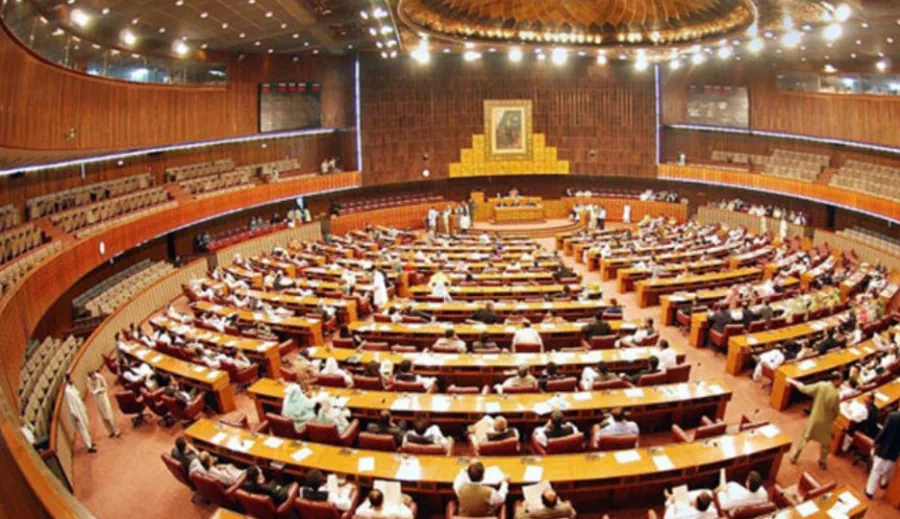
A Senate parliamentary oversight body has directed the federal government to close around two dozen ministries and departments and transfer nearly a dozen other institutions to the Council of Common Interests (CCI), as part of what it described as the proper implementation of the 18th Constitutional Amendment.
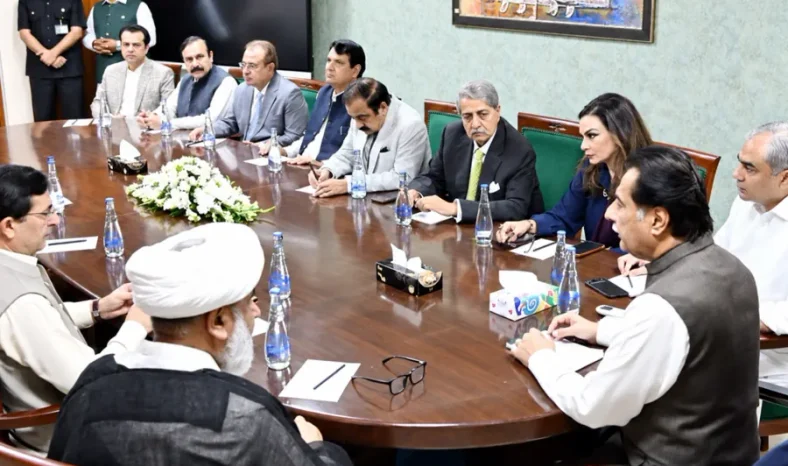
The directions were issued on Monday by a sub-committee of the Senate Functional Committee on Devolution, chaired by PPP Senator Zamir Hussain Ghumro. The committee gave the government two weeks to begin implementing its recommendations.
Also Read:
The panel also called for the reconstitution of the CCI, sharing of media broadcasting rights with the provinces and an end to federal regulation of the print media in accordance with its interpretation of the constitutional framework.
In another significant direction, the committee opposed the federal government’s planned privatisation of power distribution companies, arguing that the DISCOs fall within provincial interests under the Constitution and cannot be privatised without the CCI’s approval.
Officials from the power and information ministries, provincial departments and the CCI attended the meeting.
Senator Ghumro said the Functional Committee was different from a conventional standing committee and maintained that its directions were binding on the government. He asked the Cabinet Division to submit an initial implementation report after 15 days.
The directions came as the meeting also discussed proposals to create new provinces or administrative units to improve governance and public service delivery.
Ghumro described the Functional Committee as a continuation of the Implementation Commission established in connection with the 18th Amendment. He said non-compliance with its directions could result in matters being referred to the Privilege Committee under the Members of Parliament (Powers, Privileges and Immunities) Act 2014.
The Functional Committee serves as a permanent Senate oversight mechanism intended to protect the constitutional balance between the federation and the provinces.
According to the committee chairman, federal government expenditure has increased to around Rs19 trillion and should be brought down to approximately Rs13 trillion by eliminating ministries and departments that, in the committee’s view, are inconsistent with the post-18th Amendment constitutional structure.
Among the ministries identified for closure were health, education, national food security, water resources, climate change, housing, special initiatives, culture and heritage, railways, industries, statistics, petroleum, inter-provincial coordination, narcotics, and planning and development.
The departments and institutions identified included the Evacuee Trust Property Board, Zakat and Ushur, Naya Pakistan Housing Authority, Employees’ Old-Age Benefits Institution (EOBI), Police Service of Pakistan, Pakistan Medical and Dental Council (PMDC), Korangi Fish Harbour, Press Information Department, Sindh Infrastructure Development Company Limited (SIDCL), and Water and Power Development Authority (WAPDA).
The committee observed that several ministries had continued to operate despite the devolution of relevant subjects to the provinces. It alleged that retaining such ministries primarily accommodated federal ministers and secretaries while adding to government expenditure and debt.
Referring to Interior Minister Mohsin Naqvi’s July 31 remarks about creating additional federating units or provinces, Ghumro said the country’s governance system required restructuring but argued that the proposed solution was unconstitutional.
He also referred to Pakistan’s recent military and diplomatic developments involving India, saying such successes should ultimately translate into tangible benefits for ordinary citizens.
The committee separately directed that the proposed privatisation of DISCOs be referred to the CCI, citing the Supreme Court’s 1993 judgment in the Mian Nawaz Sharif case. Ghumro said the provinces should preferably assume ownership of the distribution companies.
According to the committee, any attempt by the Power Division or Privatisation Commission to privatise IESCO, FESCO, LESCO, GEPCO, SEPCO or HESCO without CCI approval would violate Articles 154 and 157 of the Constitution.
The panel also raised objections over several regulatory bodies and authorities being placed under the Cabinet Division.
It directed that key institutions covering areas such as railways, ports, planning and development and regulatory functions should come under the CCI rather than remain under the federal cabinet.
The committee rejected the federal government’s reliance on the Supreme Court’s 1997 Gadoon Amazai ruling, arguing that Parliament had subsequently addressed issues surrounding the frequency of CCI meetings by requiring the constitutional body to meet at least once every three months, or earlier when urgent matters arise.
It further directed that matters constitutionally assigned to the CCI should not be decided by the federal cabinet. The committee said the prime minister should bring such matters before the CCI and convene meetings frequently to safeguard provincial rights.
The panel also called for the CCI to be reconstituted in a manner that ensures equality among the provinces.
According to the committee, the CCI should exercise supervision and control over matters involving electricity, petroleum, gas and medicine prices, maintaining that the federal cabinet’s executive powers remain subject to constitutional limitations.
The committee criticised the federal government for retaining authority over matters it said belonged either to the provinces or to Part II of the Federal Legislative List. These included railways, petroleum, electricity and ports, as well as regulatory bodies such as OGRA, NEPRA, PEMRA and PTA.
It argued that these subjects fall within the CCI’s jurisdiction under Article 154 and said federal cabinet intervention in these areas conflicted with the constitutional distribution of powers under Articles 97 and 154.
CCI Secretariat Secretary Omar Rasool told the committee that he had no objection to its directions and agreed that the federal government should operate according to the constitutional framework.
The committee also turned its attention to the media sector, observing that the Ministry of Information continued to regulate print media while broadcasting rights had not been shared with the provinces.
Press Information Department Director General Ashiq Sheikh told the panel that provincial governments had not yet formally requested the federal government to share broadcasting rights.
The committee nevertheless directed that responsibility for regulating print media be transferred to the provinces. It also asked the information ministry to provide details of government advertisements released to newspapers and television channels during the past three years.
The panel criticised the alleged practice of withholding government advertisements as a means of pressuring media organisations, specifically referring to Dawn during the discussion.
Senior officials from the relevant federal and provincial departments attended the meeting as the committee sought an initial report on implementation of its directions within 15 days.