COMSATS University Launches AI-Driven Reform Agenda To Transform Higher Education
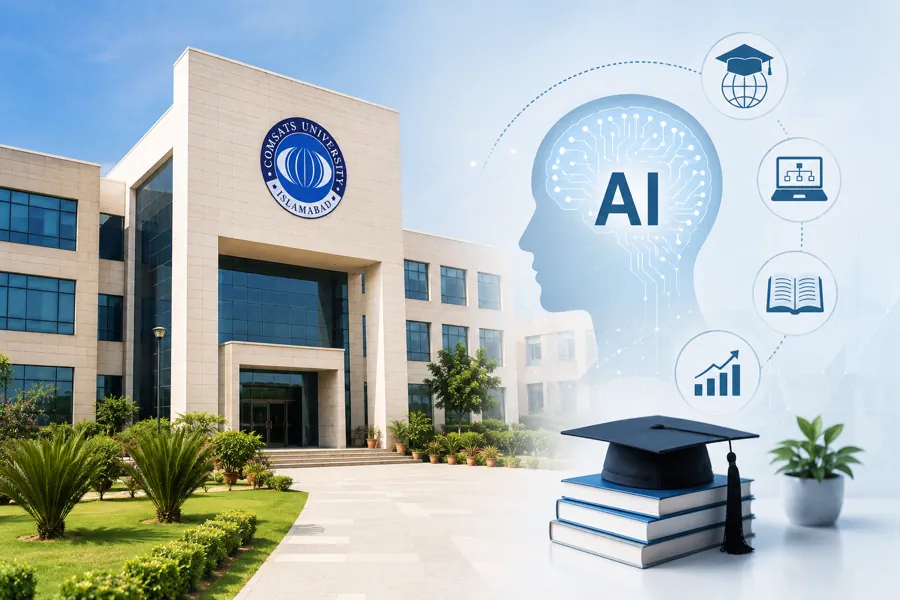
COMSATS University Islamabad (CUI) has unveiled an ambitious institutional reform programme aimed at transforming the university into a digitally empowered, AI-enabled and globally competitive higher education institution. The initiative focuses on strengthening governance, improving academic quality, enhancing student experience and preparing graduates for the demands of a rapidly evolving technology-driven world.
The reform agenda was announced by Rector Prof. Dr. Raheel Qamar during the first Conference of Campus Directors held at COMSATS University Islamabad. The gathering brought together leadership from all constituent campuses to review progress, discuss future priorities and align efforts under the university’s broader transformation strategy.
Also Read:
Addressing participants, Prof. Dr. Raheel Qamar highlighted several key achievements during the first three months of his tenure. One of the major priorities was ending years of ad hoc administrative arrangements by appointing regular Campus Directors and Principal Officers across the university system.
The Rector described the Conference as a significant milestone in the institution’s development, noting that stable and permanent leadership structures are now in place throughout all campuses. He said this step would help improve accountability, decision-making and long-term institutional planning.
The university has also implemented a range of administrative and operational reforms aimed at increasing efficiency and reducing costs. These measures include sustainability-focused initiatives that have reportedly generated measurable savings while improving governance and service delivery standards across the institution.
A central pillar of the university’s new strategy is digital transformation.
Prof. Qamar directed all campuses to accelerate the digitisation of legacy records, academic systems and administrative processes as part of a broader effort to establish a paperless university environment. He emphasized that digital governance and artificial intelligence will play a key role in shaping the institution’s future operations and academic ecosystem.
The university’s leadership believes that integrating AI-driven technologies into governance and learning systems will improve efficiency, decision-making and educational outcomes while creating a more modern and responsive academic environment.
Among the most significant academic initiatives announced was the launch of a new Adaptive Learning Model that will operate through the COMSATS Virtual Campus.
The model is designed to enhance the delivery of advanced, specialised and general education courses across all campuses. University officials expect the initiative to improve consistency in educational quality, broaden access to learning resources and reduce dependence on visiting faculty members.
The adaptive system will also support personalised learning experiences and help ensure that students across different campuses receive comparable academic opportunities and standards.
The Rector informed participants that the university’s flagship 6-C Framework has entered a new implementation phase.
Under this framework, academic programmes are being redesigned to equip students with six critical competencies considered essential for future careers:
- Coding
- Cloud Computing
- Cybersecurity
- Communication Skills
- Co-Intelligence
- Creativity
According to university officials, the framework aims to prepare graduates for emerging opportunities in technology, innovation and digital industries while ensuring they possess both technical expertise and soft skills required in modern workplaces.
Campus leaders also held extensive discussions on opportunities and challenges facing various campuses.
Participants agreed that enhancing student experience, improving learning outcomes and strengthening student support services would remain key priorities under future institutional initiatives. The university plans to introduce measures that improve academic engagement, student wellbeing and access to educational resources.
The Rector further stressed the importance of faster decision-making and reducing delays in routine administrative matters, calling for greater efficiency throughout the university system.
Recognising the demands of a rapidly evolving technological landscape, Prof. Qamar emphasized the need to continuously upgrade the skills of faculty and administrative staff.
He called for comprehensive upskilling programmes to ensure employees are equipped to operate effectively within the university’s emerging digital and AI-driven ecosystem. The initiative is expected to help educators adopt new teaching methodologies and technology-enhanced learning approaches.
The university also announced a strong commitment to gender inclusivity and diversity in governance.
Prof. Qamar called for greater representation of women in leadership and decision-making roles across all campuses, setting a target of achieving 50 percent female participation in governance positions. The move is intended to promote inclusive leadership and equal opportunities within the institution.
On the infrastructure front, the Rector revealed that discussions are underway with the Ministry of Science and Technology to secure funding for the expansion of campuses in Abbottabad, Attock, Quetta and Islamabad.
These projects are expected to improve academic facilities, increase enrolment capacity and support the university’s long-term growth plans.
The university also plans to strengthen engagement with its global alumni network, which now includes more than 114,000 graduates worldwide. Officials believe alumni can play an important role in mentoring students, supporting research initiatives and contributing to institutional development.