468 Tourists Among Hundreds Missing as Nepal-Tibet Flood Disaster Kills at Least 165
- At least 165 people have been killed as catastrophic flash floods and landslides hit Nepal and Tibet.
- Nepal says 468 tourists and travellers remain out of contact, including 393 foreign nationals.
- Chinese authorities report 558 people missing in Tibet, including 260 foreigners, as large-scale rescue operations continue.
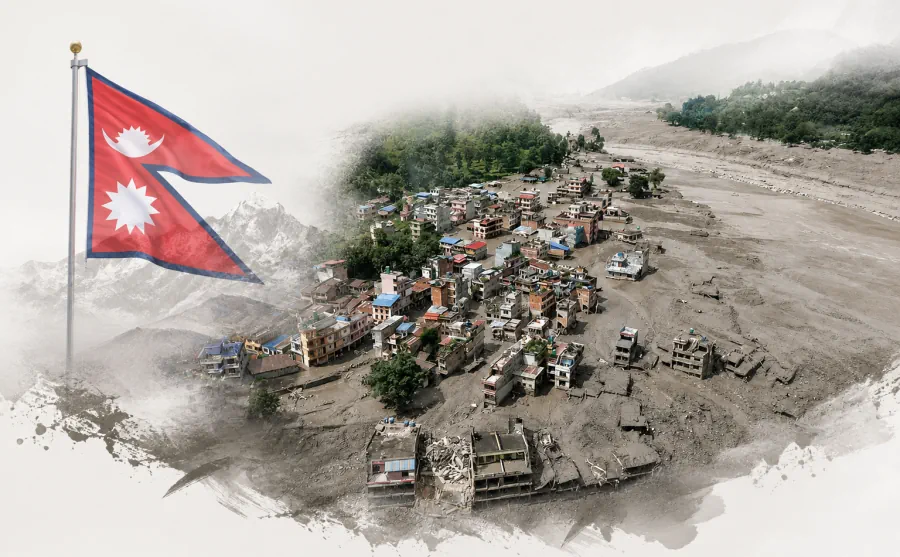
Rescue operations intensified on Thursday along the Nepal-Tibet border after devastating flash floods and landslides killed at least 165 people and left hundreds more missing, including a large number of foreign tourists.
Nepal’s tourism authorities said 468 tourists and travellers remained out of contact around 24 hours after the disaster. Of those missing, 393 are foreigners and 75 are Nepali nationals.
Also Read:
Ground level footage shows people running for their lives as a sudden flash flood tears through the Nepal–Tibet region pic.twitter.com/kTY1bg2HJJ
— Surajit (@surajit_ghosh2) August 26, 2026
On the Chinese side of the border, authorities reported that 558 people remained missing following a major mudslide in Tibet. Officials said 260 of those unaccounted for were foreign nationals. Three deaths have been confirmed in Tibet, while two people were rescued from the landslide-hit Gyirong area.
The disaster struck communities along the Nepal-China border on Wednesday, sending enormous quantities of water, mud and debris through villages and towns. Entire houses and market areas were swept away, while vehicles, including buses and cars, were carried away by the powerful surge.
Following devastating flash floods in Nepal today, 19 bridges and 40km of roads have been washed away. 13 hydropower projects are damaged and over 200 trucks were swept away. India and China have offered assistance, and Nepal's government is calling on NGOs for rescue and relief.… pic.twitter.com/D3cUohurS5
— Polymarket Intel (@PolymarketIntel) August 26, 2026
In Nepal, police recovered 162 bodies as floodwaters moved through areas along the Bhote Koshi and Trishuli rivers. Rasuwa district in northern Nepal was among the first areas to be hit, but deaths were later reported across seven districts as floodwaters travelled downstream towards Chitwan near the Indian border.
The disaster has severely affected areas popular with tourists and pilgrims. Syabrubesi, a gateway to well-known trekking routes, was among the locations hit. The region is also used by pilgrims travelling towards Mount Kailash, a sacred destination for Buddhists and Hindus.
If Nature's wrath had a face ..#nepaltragedy #Nepal #NepalFloodNews pic.twitter.com/Q8JFWPkSbz
— Zeeshan Ahmad (@shaansitive) August 27, 2026
Earlier figures showed more than 400 tourists missing in Nepal, including 341 foreigners. The number later increased to 468. Among the foreign nationals reported missing were 142 Indians, while travellers from Australia, Britain, Malaysia, the Netherlands, Portugal, South Africa, South Korea and the United States were also among those unaccounted for.
Rescue workers have been searching through deep mud and debris for survivors, including around multi-storey buildings whose lower floors were buried by the flooding. Nepal’s army has also carried out rescue flights and evacuated scores of people, while residents living in vulnerable areas near rivers have been instructed to move to safer locations.
On the Tibetan side, nearly 800 emergency personnel and around 150 vehicles were mobilised for rescue operations. Sniffer dogs and speed boats were also deployed as teams searched affected areas around Gyirong Port.
Authorities remain concerned that the danger has not passed. A blockage remains upstream on a river near the Nepal-China border, raising fears that another sudden release of water could trigger a second flood. Roads in parts of Tibet’s Shigatse region have also been considered unsafe because of the continuing threat of mudslides.
Initial seismic activity associated with the disaster was believed to have been an earthquake. However, subsequent analysis indicated that it was a glacial collapse and debris flow, which produced catastrophic downstream flooding.
The disaster comes during South Asia’s annual monsoon season, when heavy rains regularly cause floods and landslides across mountainous areas. Scientists have warned that climate change is increasing the frequency and severity of extreme weather events in the region.
Despite many trekking companies reducing operations during the monsoon, significant numbers of tourists and religious pilgrims were still travelling through the affected region when the disaster struck.
Rescue teams on both sides of the border are continuing their search for survivors as authorities assess the full scale of destruction and remain alert to the possibility of further flooding.