US, Iran Prepare to Sign Interim Peace Agreement as Key Details Emerge
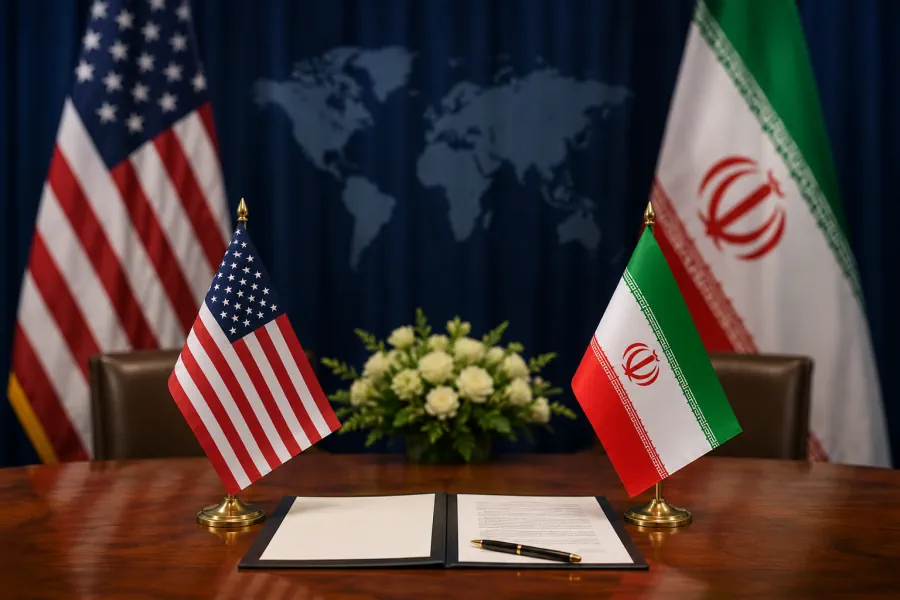
The United States and Iran are expected to formally sign an interim peace agreement in Geneva on June 19, marking a significant diplomatic development after months of behind-the-scenes negotiations. While both governments are portraying the proposed arrangement as a major achievement, important aspects of the agreement remain unclear, with differing interpretations emerging from Washington and Tehran.
The agreement, structured as a memorandum of understanding (MoU), is designed to create a 60-day negotiation period during which both sides will seek to address Iran’s nuclear programme, regional security concerns, sanctions relief and the future direction of bilateral relations.
Also Read:
From Bloomberg | Read the 14-Point Draft Memorandum Between the US & Iran#USIranWar pic.twitter.com/31gz2fX5L2
— CNBC-TV18 (@CNBCTV18Live) June 17, 2026
According to reports, the latest draft framework contains 14 key points and includes provisions aimed at reducing tensions between the two countries. Among the reported measures are an immediate ceasefire extension, temporary sanctions relief and steps to ease regional tensions.
The framework is also expected to facilitate the reopening of the Strait of Hormuz for commercial maritime traffic and provide limited sanctions waivers, particularly relating to Iranian oil exports. US officials have suggested that easing restrictions on Iranian oil sales could increase global energy supplies during the negotiation process.
The proposed arrangement would reportedly extend an existing ceasefire for another 60 days, giving negotiators additional time to pursue a broader and more permanent agreement.
Both countries have highlighted different aspects of the deal as evidence of success. Washington has focused on commitments related to Iran’s nuclear activities, while maintaining that no direct US taxpayer funds would be used under the arrangement. Reports indicate that any reconstruction assistance would be financed by regional partners rather than the United States.
Tehran, on the other hand, is emphasising the economic advantages of the agreement, including sanctions relief and recognition of Iran’s sovereignty. Reports have also linked the framework to a potential reconstruction package valued at up to $300 billion, funded by Gulf countries and dependent on Iran meeting future obligations.
The nuclear issue remains one of the most sensitive aspects of the negotiations. The draft reportedly reaffirms that Iran will not pursue nuclear weapons, while future talks may address the fate of Tehran’s stockpile of enriched uranium.
However, several major disputes remain unresolved. Iran’s missile programme, regional influence through allied groups and other security concerns are not believed to be fully addressed within the interim framework and are expected to remain subjects of future negotiations.
Despite growing optimism surrounding the diplomatic effort, questions remain about how and when various provisions would be implemented. Analysts note that enforcement mechanisms, timelines for sanctions relief and the reopening of key shipping routes have yet to be clearly defined.
The proposed agreement represents only a temporary framework rather than a final settlement, making the upcoming 60-day negotiation period critical in determining whether the breakthrough can develop into a lasting agreement between the two long-time adversaries.