Qatari LNG Cargo Reaches Port Qasim After Crossing Strait of Hormuz
- The Al Marrouna delivered around 81,936 metric tonnes of Qatari LNG to Pakistan after safely passing through the Strait of Hormuz.
- The shipment is expected to provide short-term relief to the power sector amid prolonged loadshedding in several parts of the country.
- Future supplies remain vulnerable to regional tensions, higher shipping costs and possible disruptions along the key energy route.

Pakistan received a fresh liquefied natural gas shipment from Qatar on Thursday after the carrier successfully navigated the Strait of Hormuz amid heightened regional tensions.
The LNG vessel Al Marrouna arrived at Port Qasim carrying approximately 81,936 metric tonnes of gas from Qatar’s Ras Laffan terminal. It crossed the strategically important waterway on September 7 under a government-to-government supply arrangement between Pakistan and Qatar.
Also Read:
The cargo is expected to provide temporary relief to Pakistan’s power sector, as several parts of the country continue to experience daily loadshedding lasting between six and 12 hours. The shipment was reportedly secured at a price equivalent to 13.37% of Brent crude.
Its safe passage has also drawn attention in global energy markets, where concerns have grown over possible interruptions to Qatar’s LNG exports. The development helped ease fears of an extended supply disruption and placed downward pressure on the Asian Platts JKM benchmark as well as LNG prices in Northwest Europe.
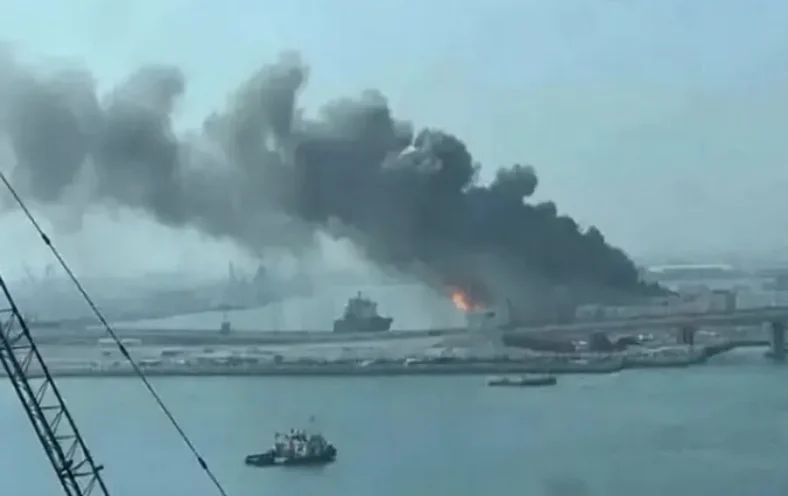
Shipping activity through the Strait of Hormuz has faced mounting uncertainty due to escalating tensions in the region. Security concerns surrounding the critical maritime route have pushed up insurance costs and intensified fears of further disruptions to international energy supplies.
The shipment carries particular significance for Pakistan, as it is reportedly the first Qatari LNG cargo to leave the Persian Gulf since tensions around the Strait intensified in July.
Separately, Pakistan LNG Limited has cancelled a spot LNG tender issued on September 5, which had been scheduled to open on September 8.
Although the arrival offers immediate support to Pakistan’s energy system, concerns over future LNG supplies remain unresolved. Any renewed disruption in the Strait could raise procurement and transportation costs, weaken the country’s energy security and affect electricity generation.