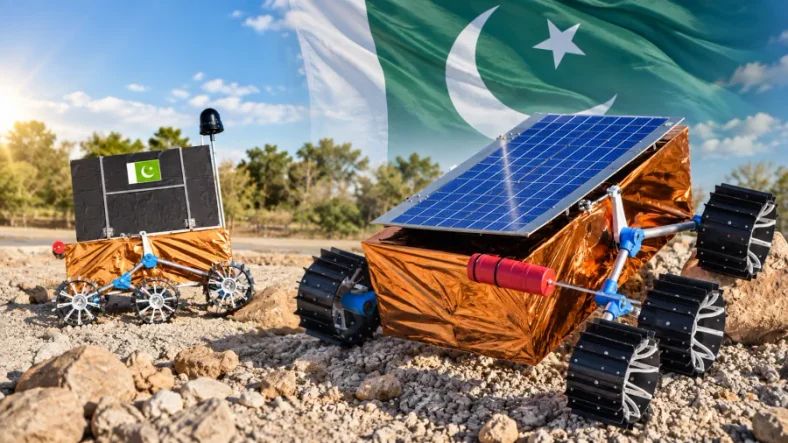
Pakistan prepares Jinnah-1 lunar rover for China’s 2028 Moon mission
- Jinnah-1 will travel aboard China’s Chang’e-8 mission and explore the lunar south pole.
- Pakistan’s six Earth observation satellites support agriculture, planning and disaster management.
- Two Pakistani astronaut candidates are training in China ahead of a planned space station mission.
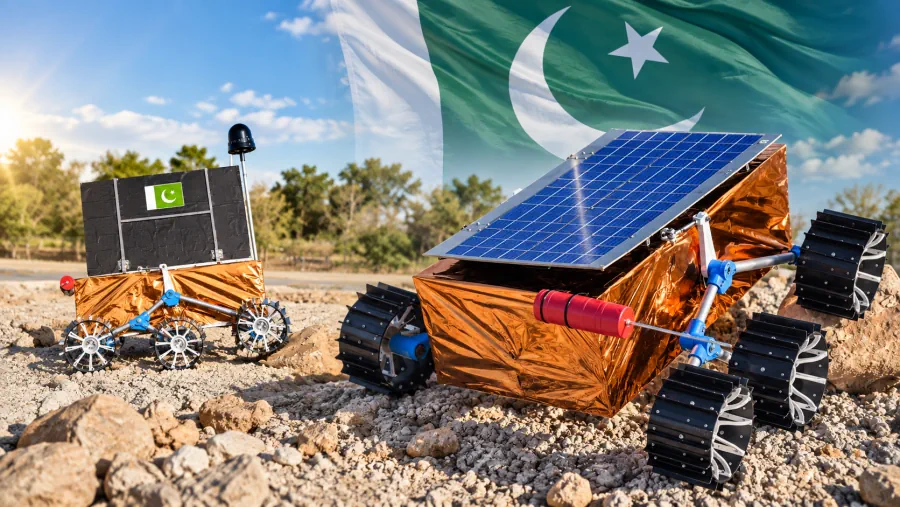
Pakistan has begun developing its first indigenous lunar rover, Jinnah-1, for a mission to the Moon in partnership with China, SUPARCO Chairman Muhammad Yousaf Khan said at a World Space Week Pakistan event.
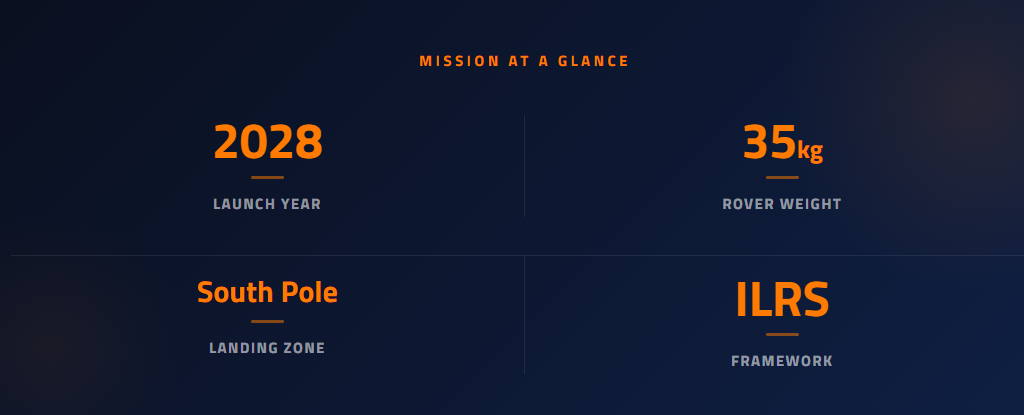
The rover is scheduled to travel aboard China’s Chang’e-8 mission in 2028 and be deployed at the lunar south pole. The project forms part of Pakistan’s expanding space programme, which includes lunar exploration, satellite development and preparations for its first astronaut mission.
Also Read:
According to SUPARCO, the approximately 35-kilogram rover will study lunar soil, terrain and the space environment. It will also test technologies that could support future exploration of the Moon.
The agency’s official programme lists the mission for 2028, while its August announcement confirmed plans for Jinnah-1 to launch aboard Chang’e-8 and operate at the lunar south pole.
Pakistan previously reached lunar orbit through ICUBE-Qamar, a satellite launched in May 2024 as part of China’s Chang’e-6 mission. It marked the country’s first lunar-orbit mission.
Speaking about the practical benefits of Pakistan’s space programme, Khan said six Earth observation satellites were supporting work in agriculture, urban planning and disaster management.
SUPARCO’s satellite-based remote sensing capabilities are also used to monitor water resources, agricultural resources and environmental conditions, providing information for development planning and disaster response.
The agency describes EO-2, launched in 2026, as Pakistan’s second indigenous Earth observation satellite and the sixth addition to its national Earth observation fleet.
Pakistan is also preparing to send its first astronaut to the China Space Station under an agreement between SUPARCO and the China Manned Space Agency.
Two Pakistani candidates are undergoing training in China, after which one will be selected for a future mission. The chosen astronaut will serve as a scientific payload specialist and carry out experiments aboard the station.
Zeeshan Ali and Khurram Daud were reported to be training in Beijing in September, with the final selection expected in October 2026.