Pakistan Inflation Hits Two-Year High Of 11.7% As Energy And Living Costs Rise
- Pakistan’s inflation rose to 11.7% in May, the highest level in two years and the second consecutive month of double-digit inflation.
- Rising fuel and energy costs linked to Middle East tensions have increased pressure on households and businesses.
- Transport, housing, food, education and healthcare expenses all recorded significant annual increases.
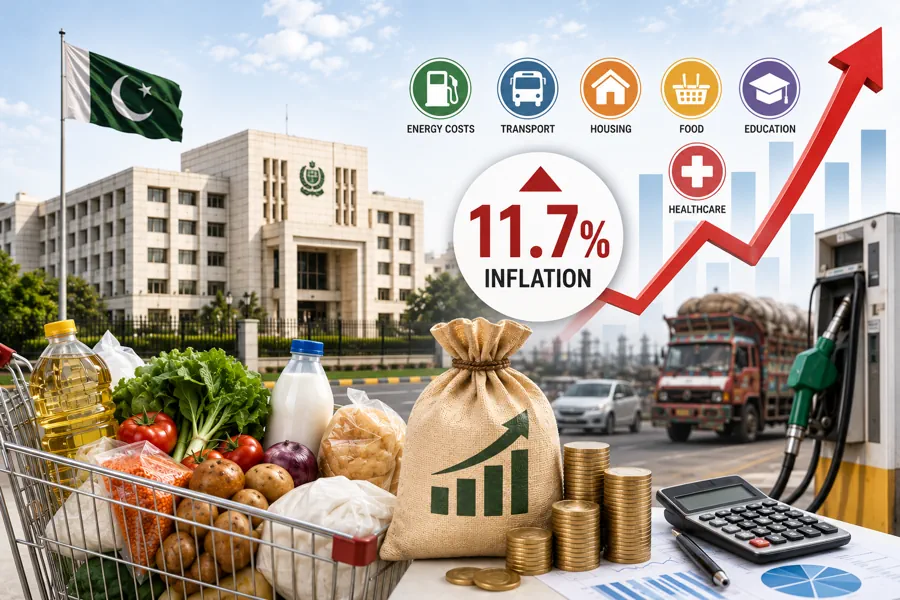
Pakistan’s inflation rate climbed to 11.7 percent in May, reaching its highest level in two years as rising energy costs, higher transport expenses and increasing prices of essential goods continued to put pressure on consumers across the country.
According to data released by the Pakistan Bureau of Statistics, the Consumer Price Index (CPI) increased by 11.7 percent compared with the same month last year. The figure marks a rise from 10.9 percent recorded in April and represents the second consecutive month of double-digit inflation.
Also Read:
Although the latest reading was lower than economists’ expectations of 12.2 percent, it highlights the continuing challenges facing households amid rising living costs and broader economic pressures.
Analysts attribute much of the recent inflationary surge to higher global energy prices driven by tensions and conflict in the Middle East. As a fuel-importing nation, Pakistan has been particularly vulnerable to rising international oil prices, which have increased import costs and added pressure on inflation and external accounts.
Since the start of the Middle East conflict, authorities have repeatedly revised fuel prices. Petrol prices remain around 48 percent higher than pre-conflict levels, while diesel prices are approximately 38 percent above earlier levels.
The impact of higher energy costs has spread throughout the economy. Transport fares recorded one of the sharpest increases, rising by 37 percent compared to a year earlier. The increase has affected commuting, logistics and freight costs, contributing to broader price pressures.
Housing, water, electricity, gas and other fuel-related expenses increased by 17 percent during the year. Official data showed housing and energy costs rose by 16.8 percent in May, remaining among the largest contributors to overall inflation.
Food inflation also remained elevated, with prices increasing by around 8 percent year-on-year. Food costs rose at a faster pace than in April, reflecting continued pressure on household budgets.
Several commonly used food items recorded significant price increases. Wheat prices rose by 7.7 percent, while wheat flour became 11.2 percent more expensive. Other products showing notable increases included potatoes, bakery items, meat, fresh milk, dry milk, cooking oil and ghee.
The rise in prices was not limited to food and energy. Clothing and footwear costs increased by 8.7 percent over the past year, adding further strain on consumers. Education expenses rose by 8.37 percent, while healthcare costs increased by 7.4 percent. Restaurant and hotel charges also moved up by 5.7 percent.
Core inflation, which excludes food and energy prices and is often viewed as a measure of underlying inflationary trends, stood at 9.8 percent. The figure suggests that price pressures have become widespread across different sectors of the economy.
Monthly data also revealed sharp increases in several categories. Footwear prices surged by 29 percent during the month, postal service charges rose by 9 percent, and motor fuel prices increased by 7.6 percent.
The persistent rise in inflation has added to concerns about the cost of living and economic stability. In response to mounting price pressures, Pakistan’s central bank raised its benchmark interest rate in April for the first time in nearly three years. Policymakers are expected to closely monitor inflation trends ahead of the next monetary policy meeting scheduled for June 15.