Ontario Wildfire Smoke Turns Sky Yellow as Air Quality Reaches Dangerous Levels
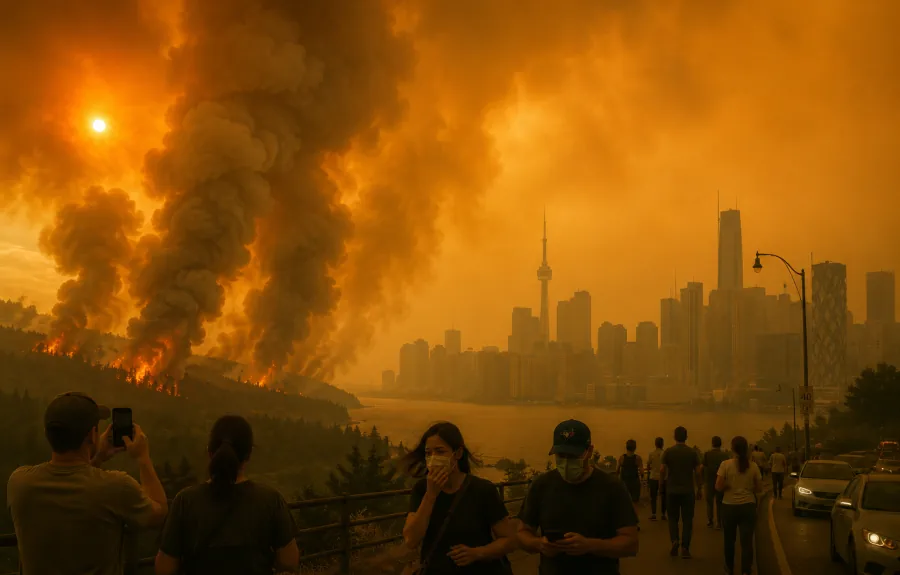
- Smoke from wildfires in northern Ontario has spread across Toronto and other parts of the province.
- Thick haze has turned the sky yellow and orange while reducing visibility.
- Air quality in some areas has reached the very high-risk category.
- Residents have been advised to limit outdoor activity and protect themselves from smoke exposure.
Smoke from wildfires burning in northern and northwestern Ontario has spread across large parts of the province, turning the sky yellow and orange and creating dangerous air-quality conditions.
Residents in Toronto and across the Greater Toronto Area reported thick haze, reduced visibility and a noticeable smell of smoke as winds carried wildfire pollution hundreds of kilometres south.
Also Read:
The unusual colour of the sky was caused by tiny smoke particles in the atmosphere. These particles blocked and scattered sunlight, allowing more yellow, orange and red light to reach the ground. The effect also made the sun appear unusually red in some areas.
Air-quality conditions worsened sharply, with Toronto reaching the highest very high-risk category on the Air Quality Health Index. The smoke also affected several other communities across southern and eastern Ontario.
Although the wildfires are located far from Toronto, changing wind patterns carried dense smoke into heavily populated areas. Poor air quality was expected to continue before gradually improving as weather conditions shifted.
The smoke caused disruptions in parts of Toronto, with some outdoor events cancelled or postponed because of health concerns. Residents were also advised to reconsider exercise and other strenuous activities outside.
The wildfire situation remains serious in northern Ontario, where some communities have faced evacuation orders and transportation disruptions. Rail operations in certain areas were temporarily affected after fires moved close to tracks and surrounding infrastructure.
Several First Nations communities in remote parts of northwestern Ontario have also been threatened by the fires, leading authorities to move residents to safer locations.
Children, elderly people, pregnant women and those with heart or lung conditions are considered most vulnerable to wildfire smoke. However, even healthy people may experience coughing, headaches, throat irritation, chest discomfort or difficulty breathing.
Health officials have advised residents to keep windows and doors closed where possible, use air-conditioning or air purifiers and avoid unnecessary time outdoors. A properly fitted N95 mask can also help reduce exposure to harmful smoke particles when going outside.