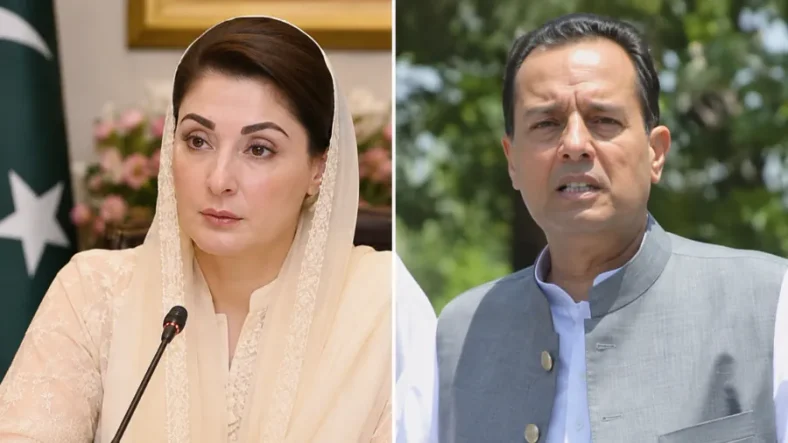
Maryam Nawaz Expresses Regret Over Captain Safdar’s Remarks on Women and Cancer Patients
- Captain (Retd) Muhammad Safdar faces widespread criticism over controversial remarks linking the slogan “Mera Jism, Meri Marzi” with women suffering from cancer.
- Punjab Chief Minister Maryam Nawaz responds with an emotional statement highlighting the silent struggles and hardships faced by women.
- Politicians, journalists and social media users condemn Safdar’s comments while praising Maryam Nawaz for publicly expressing her concerns.
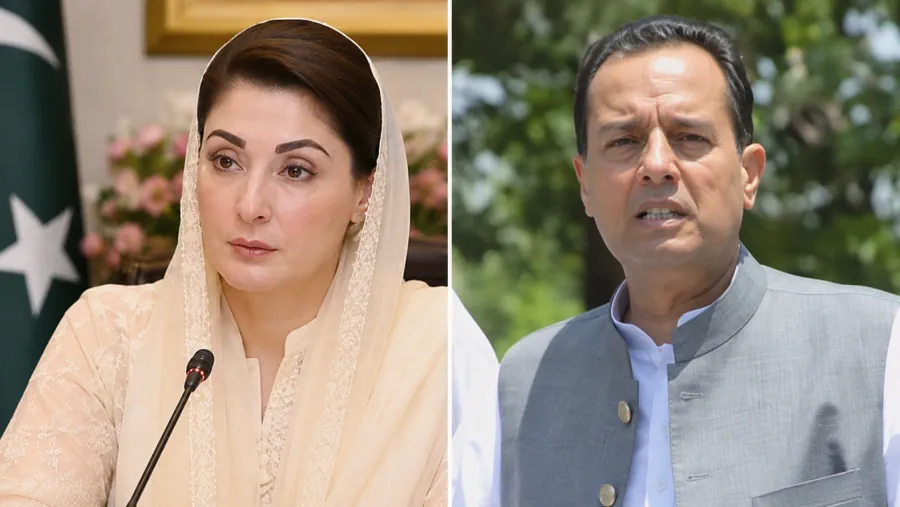
Punjab Chief Minister Maryam Nawaz has expressed regret over controversial remarks made by her husband, Captain (Retd) Muhammad Safdar, concerning women’s bodily autonomy and cancer patients, after his statements sparked widespread criticism on social media.
The controversy began following Safdar’s speech at a Khatm-e-Nabuwwat gathering in Chiniot earlier this week, where he criticised the feminist slogan “Mera Jism, Meri Marzi” (My Body, My Choice) and questioned women who advocate for control over their bodies.
Also Read:
During his address, Safdar referred to women suffering from serious illnesses, including cancer, and questioned why those supporting the slogan turned to religious scholars for prayers and spiritual assistance when facing health problems.
He argued that women who claimed authority over their bodies should also be capable of curing themselves when they became ill.
According to Safdar, the human body ultimately belongs to God, and individuals cannot exercise complete control over their health or physical well-being.
Heartbreaking. 💔 The silent battles a woman, a wife, fights behind closed doors… The strength she must find even when she feels like breaking. Some battles are fought in silence, and some wounds are invisible. 💔
— Maryam Nawaz Sharif (@MaryamNSharif) October 30, 2026
His remarks quickly attracted criticism, particularly because of their references to cancer patients and women dealing with life-threatening medical conditions.
Many social media users described the statements as insensitive towards people battling serious illnesses and questioned the appropriateness of using cancer patients to criticise a slogan associated with women’s rights.
The controversy intensified when Punjab Chief Minister Maryam Nawaz publicly responded to a post on X discussing her husband’s comments.
In her response on Friday, Maryam described the situation as heartbreaking and highlighted the emotional difficulties women often experience privately.
“Heartbreaking. The silent battles a woman, a wife, fights behind closed doors… The strength she must find even when she feels like breaking. Some battles are fought in silence, and some wounds are invisible,” she wrote on her official X account.
Her statement drew considerable attention, with many interpreting it as a public expression of disagreement with Safdar’s remarks.
The chief minister’s reference to the struggles of women and wives also prompted discussions about the emotional challenges women may face within their personal and family lives.
Several social media users praised Maryam Nawaz for speaking publicly about women’s hardships despite the controversy involving her husband.
Former federal minister Fawad Chaudhry was among those who appreciated the Punjab chief minister’s response, commending her for taking what he described as a clear position on the matter.
Journalist Benazir Shah also expressed support for Maryam Nawaz, saying that publicly addressing such a sensitive issue required courage.
“It takes real courage to take a public stand like this. More power to you, Maryam Nawaz Sharif,” she wrote.
Journalist Ajmal Jami strongly criticised Captain Safdar’s comments, sharing his personal experience of having a family member diagnosed with cancer.
He recalled the difficult period his family experienced while his mother was undergoing treatment for the disease.
“My Maa jee has been a cancer patient, and God knows how we managed to get through those difficult times. Her survival was nothing short of a miracle,” he said.
Jami described Safdar’s remarks as shameful and disgraceful, expressing disappointment over the use of cancer patients in arguments concerning women’s rights.
The incident has generated a wider debate on social media about sensitivity towards people suffering from serious illnesses, the interpretation of women’s bodily autonomy and the responsibility of public figures when discussing personal and religious matters.
While Safdar’s comments attracted strong condemnation, Maryam Nawaz’s response received support from several political commentators, journalists and members of the public who viewed her statement as an acknowledgment of the difficulties and emotional struggles experienced by women.