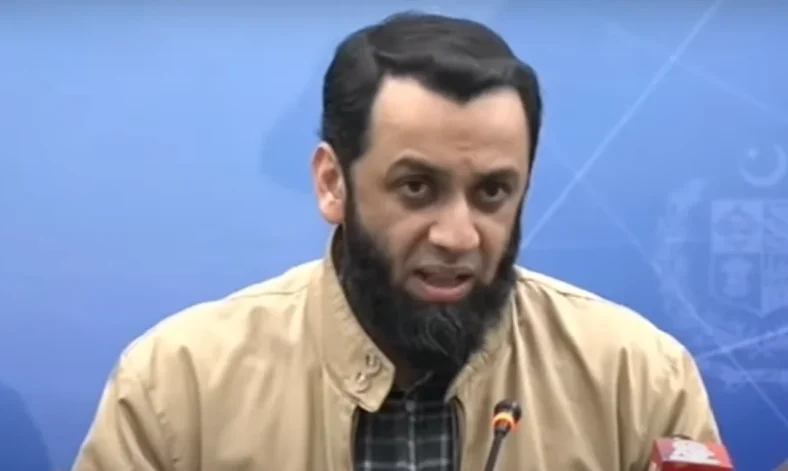
Attaullah Tarar Proposes National Cybersecurity Council, Mandatory AI Content Labelling
- Information Minister Attaullah Tarar proposes establishing a National Cybersecurity and Social Media Awareness Council to tackle online threats and misinformation.
- The minister calls for mandatory labelling of AI-generated content and deepfakes across social media platforms.
- Tarar recommends introducing digital literacy education in schools, colleges and universities, alongside specialised cybersecurity training for government officials.

Federal Minister for Information and Broadcasting Attaullah Tarar on Saturday proposed the establishment of a National Cybersecurity and Social Media Awareness Council, alongside mandatory identification of artificial intelligence (AI)-generated content, to strengthen Pakistan’s response to misinformation, deepfakes and emerging digital security threats.
Speaking at the inauguration of Cybersecurity Awareness Week 2026, organised by the Pakistan Telecommunication Authority (PTA), the minister emphasised the importance of developing a coordinated national framework to protect citizens and institutions from growing cybersecurity risks.
Also Read:
The awareness campaign was launched under the theme “Building a Safe, Secure and Resilient Cyberspace,” highlighting the need for stronger digital safeguards, public education and cooperation among government departments, regulatory bodies and technology platforms.
Tarar warned that rapid developments in artificial intelligence had made it increasingly difficult for internet users to distinguish genuine information from digitally manipulated images, videos and other forms of online content.
He said deepfake technology and AI-generated material presented serious challenges to information credibility, public trust and digital security, requiring effective regulatory measures and greater transparency.
The minister called on social media companies to clearly identify content produced or significantly modified using artificial intelligence so that users could recognise manipulated or artificially generated material.
According to Tarar, TikTok was the only major social media platform that had made AI content labelling mandatory so far.
He maintained that introducing consistent labelling requirements across digital platforms would help users make informed decisions about the information they encounter online and reduce the potential misuse of emerging technologies.
Addressing Pakistan’s preparedness for cybersecurity challenges, the information minister highlighted the absence of a standardised digital literacy curriculum in the country’s educational institutions.
He proposed incorporating digital literacy into the academic programmes of schools, colleges and universities to ensure that students develop essential skills for navigating the online environment safely.
Tarar stressed that such educational programmes should be regularly revised to reflect technological advancements and changing cybersecurity threats.
He particularly emphasised the importance of teaching children about responsible social media use, online privacy, personal data protection and the risks associated with sharing sensitive information on digital platforms.
The minister said young internet users needed practical guidance to identify suspicious online activities, protect their personal information and understand the consequences of unsafe digital behaviour.
Beyond educational institutions, Tarar recommended establishing dedicated digital literacy cells across government departments to improve awareness and strengthen institutional cybersecurity practices.
He also proposed specialised training programmes for public-sector employees to enhance their understanding of digital security, responsible online communication and emerging cyber threats.
Explaining the proposed National Cybersecurity and Social Media Awareness Council, the minister said the body could serve as a platform for cooperation among federal ministries, government divisions, provincial administrations and relevant regulatory authorities.
The council would help develop a coordinated approach to cybersecurity education, digital safety and public awareness while improving communication between institutions responsible for managing online risks.
Tarar assured that the federal government and the Ministry of Information and Broadcasting would provide full support for establishing the proposed body.
He said the council could also coordinate with the Social Media Protection and Regulatory Authority and the National Cyber Crime Investigation Agency (NCCIA), both of which had already begun functioning.
Referring to recent institutional developments, the minister disclosed that Pakistan’s first Digital Communication Department had been established within the Ministry of Information and Broadcasting.
He said the department was intended to strengthen the government’s ability to respond to challenges arising from the rapidly changing digital information environment.
The information minister identified misinformation as one of the most serious problems associated with the expansion of social media, noting that the speed and scale of online communication had complicated efforts to establish effective regulatory systems.
He observed that false or misleading information could spread rapidly across digital platforms, making it essential to improve public understanding of online content and strengthen mechanisms for addressing harmful digital activities.
Tarar also warned that seemingly routine online interactions could expose individuals to serious privacy and security risks.
He said even a single click could potentially compromise personal information or provide unauthorised access to sensitive data, demonstrating the importance of educating internet users about safe digital practices.
The minister stressed that cybersecurity awareness should not be treated as an activity limited to a designated week or occasional public campaigns.
Instead, he called for a sustained national effort involving government institutions, educational organisations, regulators, technology companies and other stakeholders.
He suggested that awareness programmes should be designed according to the needs of different sections of society rather than relying on a single communication strategy for all audiences.
According to Tarar, cybersecurity messages intended for students, professionals, government employees and other groups should be presented in formats that are relevant and easily understood by their intended audiences.
He also highlighted the potential role of micro-influencers in spreading digital safety information, particularly among communities that may be more effectively reached through smaller and specialised social media networks.
The minister maintained that public education campaigns should be supported by practical arrangements through which citizens could report digital security problems and seek appropriate assistance.
He emphasised that awareness alone would not be sufficient unless people also had access to effective mechanisms for addressing cyber threats, privacy violations and other online security concerns.
Tarar appreciated the contributions of the Pakistan Telecommunication Authority and the United Nations Development Programme (UNDP) towards strengthening Pakistan’s cybersecurity environment.
He acknowledged their efforts in policy development, regulatory improvements, implementation and public awareness, describing cooperation among these institutions as important for improving the country’s ability to respond to evolving digital threats.