Iran Offers $30,000 Reward for Killing or Capturing US Soldiers, Army Chief Says
- Iran’s army has announced a $30,000 reward for anyone who kills or captures what it describes as an “invading” US soldier.
- Army chief Amir Hatami said the reward would be doubled if the action was carried out by a woman.
- Hatami also warned that US forces would no longer be allowed to enter the Persian Gulf, Gulf of Oman or Strait of Hormuz.
- The announcement comes amid heightened regional tensions and a series of military and political developments involving Iran and the United States.
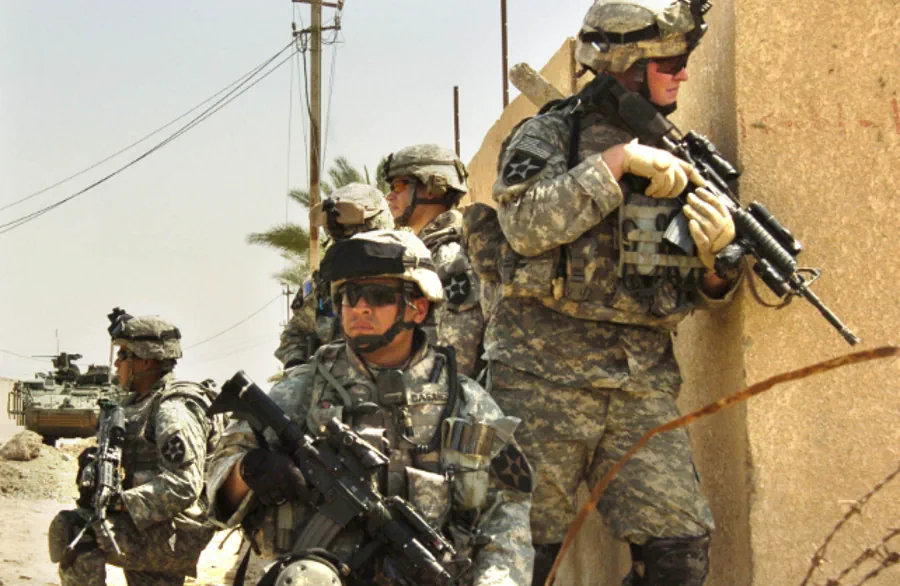
Iran’s military has announced a reward equivalent to $30,000 for anyone who kills or captures an “invading” US soldier, as tensions between Tehran and Washington remain elevated following the Middle East conflict.
Iranian Army chief Amir Hatami announced the initiative on Sunday, saying it had been developed following what he described as a large number of requests from people seeking to participate, according to Iran’s state-run IRNA news agency.
Also Read:
Hatami said anyone who kills or captures and hands over an American military member described by Tehran as an invader would receive five billion tomans, equivalent to around $30,000. He added that the amount would be doubled for women who carry out such an action.
Hatami did not specify where or under what circumstances the offer would apply. There has been no known deployment of US ground forces inside Iran during the conflict, apart from a reported rescue mission in April involving a downed American airman.
The Iranian army chief also renewed Tehran’s demand for US forces to leave the region. He claimed American forces would no longer be permitted to enter the Persian Gulf, Gulf of Oman or Strait of Hormuz.
His comments also included a response to US President Donald Trump over remarks concerning the Strait of Hormuz. Hatami warned against treating the strategically important waterway lightly and said Iranian forces were prepared to defend it.
He further claimed that American forces had effectively been pushed out of the region and said US military bases would not be allowed to return to their previous positions.
The latest remarks come as Iran and Qatar are also engaged in a dispute over three Iranian pilots whom Tehran claims were captured during the conflict.
General Mohammad Bagherzadeh of Iran’s armed forces said an Iranian Air Force team had been waiting for months for permission to travel to Qatar to investigate what happened to the pilots. He accused Qatari authorities of delaying the process and called on Doha to allow the Iranian team to conduct an on-site investigation.
Bagherzadeh had earlier alleged that three Iranian pilots were captured while carrying out an operation targeting the US Al Udeid Air Base in Qatar in early March.
Qatar has denied holding the pilots. Doha said Iran had been invited to receive information about search-and-rescue operations conducted in April but claimed the Iranian side had yet to respond.
Separately, Iran’s parliament on Sunday approved the general principles of legislation that could criminalise interviews and other forms of communication with media organisations considered hostile to the Islamic Republic.
The proposed legislation would cover US and Israeli media as well as outlets financed by either country. Under the proposal, prohibited interviews or participation in discussions with such organisations could carry prison sentences ranging from six months to two years.
Interviews with other foreign media would require notification to Iran’s intelligence ministry. Certain contacts with foreign embassies, international organisations or other non-Iranian institutions without the required approval could also result in penalties.
The legislation has not yet become law. Its individual provisions must be debated and approved by parliament before the final text is reviewed by Iran’s Guardian Council.
In another development, Iranian media reported that Shahram Sadeghi was executed after being convicted of deliberately driving a vehicle into police officers during anti-government protests in Karaj in January. He was accused of injuring seven officers in the January 8 incident, including one who was reportedly left in a coma for three months.
Iranian Parliament Speaker Mohammad Bagher Ghalibaf, meanwhile, claimed that Iran had “truly won” its war with the United States and Israel, arguing that Tehran had secured both military and political gains.
Iranian media also released footage said to show the Islamic Revolutionary Guard Corps Aerospace Force shooting down a US MQ-1C drone on May 31, 2026, using an advanced air-defence system.
At the same time, Tehran, Qom and Mashhad are preparing to host mourning ceremonies marking the 40th day since the burial of former Supreme Leader Ali Khamenei. According to the reported official announcement, current Supreme Leader Mojtaba Khamenei will preside over the ceremonies.
The wider conflict has also affected regional energy supplies. India has set a maximum daily cooking gas production target of 63,810 metric tons for state-run and private refineries as it seeks to protect domestic supplies and build reserves following disruptions linked to the US-Israel conflict with Iran.
Saudi Arabia’s civil defence, meanwhile, said on Sunday that an earlier potential danger in Jazan province had passed after authorities had issued an alert for the area.
Reports have also emerged of previously undisclosed communications between Washington and Iran’s Islamic Revolutionary Guard Corps. Axios reported that the Trump administration used Kurdistan Regional Government President Nechirvan Barzani as a backchannel to establish contact with senior IRGC leadership.
According to the report, former US Director of National Intelligence Tulsi Gabbard contacted Barzani with Trump’s approval on May 10 and asked him to determine whether senior IRGC officials supported negotiations being pursued by Iranian Parliament Speaker Ghalibaf and Foreign Minister Abbas Araghchi.
Barzani subsequently contacted IRGC commander Ahmad Vahidi, who reportedly told him during a May 14 phone call that he and the IRGC supported resolving the crisis through negotiations.
The possibility of holding secret talks in Erbil was later discussed, but the meeting did not materialise amid Iranian security concerns, including fears about possible Israeli intelligence activity in Iraqi Kurdistan.
Meanwhile, US Central Command chief Admiral Brad Cooper praised the crew of the USS Abraham Lincoln following a visit to the aircraft carrier. Cooper acknowledged the challenges of prolonged deployments at sea while praising the crew’s resilience and the ship’s leadership for its focus on mental health.